Start with the right units
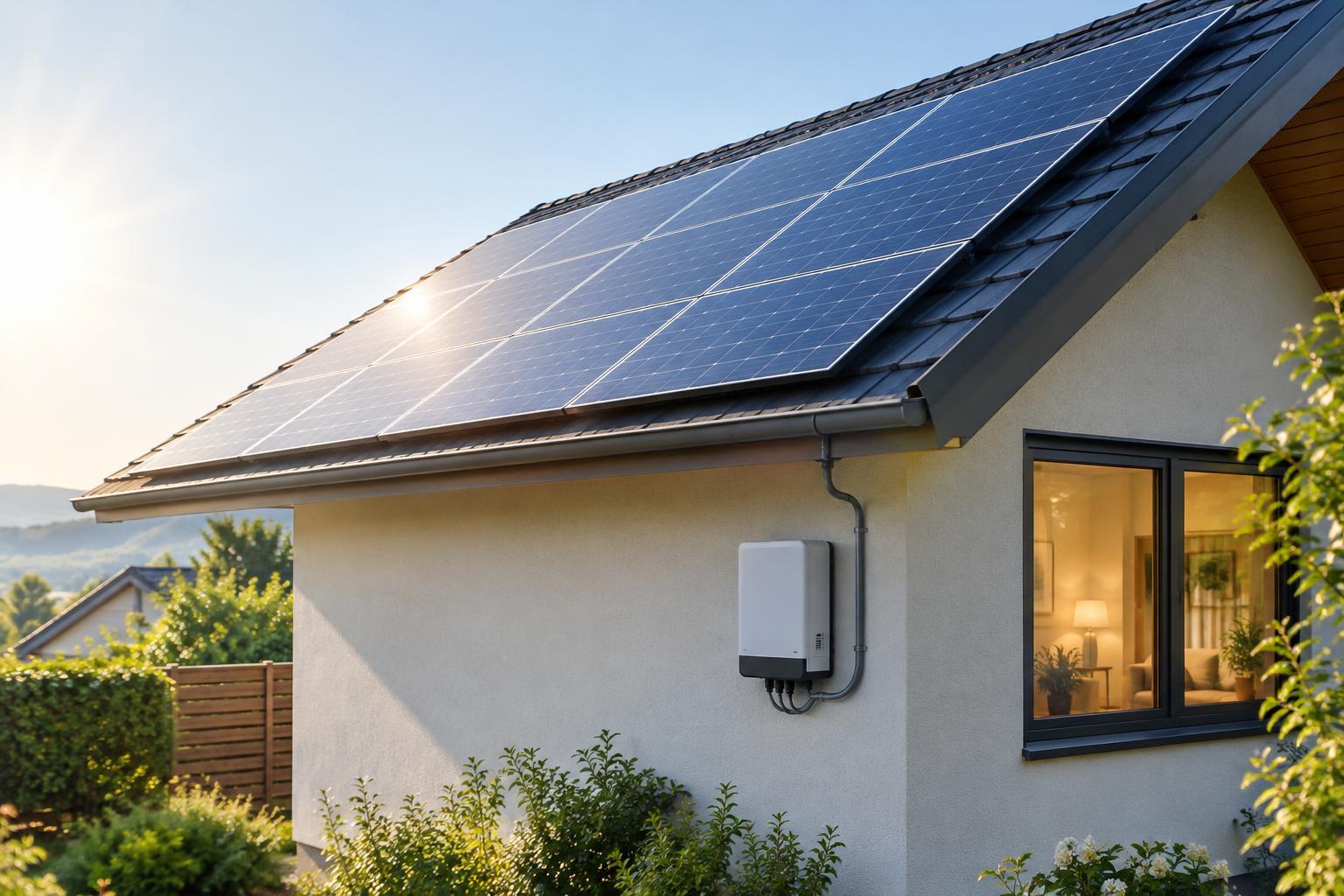
Solar panels are usually described by their power rating, measured in watts or kilowatts. Electricity produced over time is measured in kilowatt-hours (kWh). A 4-kilowatt (kW) rooftop system does not necessarily deliver 4 kW throughout the day. Its rating describes output under specified test conditions; actual output rises and falls with sunlight and other conditions.
Think of power as the rate of production and energy as the amount produced. A system delivering 2 kW for one hour produces 2 kWh. This distinction matters when comparing a proposed solar system with household electricity use, which is commonly shown in kWh on a bill. It also helps explain why a roof’s panel rating alone cannot tell you its daily output.
Make a first estimate
A simple starting formula is: daily electricity in kWh ≈ system size in kW × peak sun hours per day × performance factor. Peak sun hours compress a day’s changing sunlight into an equivalent number of hours at strong, standard sunlight. They are not the number of hours between sunrise and sunset. The performance factor is a rough allowance for losses between the panels’ rated output and the usable electricity the system delivers.
For example, suppose a proposed system is rated at 4 kW, the location averages 4 peak sun hours per day for the period you are estimating, and you use a performance factor of 0.8. The calculation is 4 × 4 × 0.8 = 12.8 kWh per day. For a hypothetical 30-day month with those same average conditions, that becomes 384 kWh. These are example inputs, not a forecast for a particular roof.
For a yearly estimate, use representative peak sun hours for each month, calculate each month separately, then add the results. Multiplying one sunny day’s output by 365 is likely to give a misleading picture where sunlight varies across seasons. If you do not have monthly figures, treat any single annual estimate as a broad range rather than a precise answer.
Check what your roof can actually support
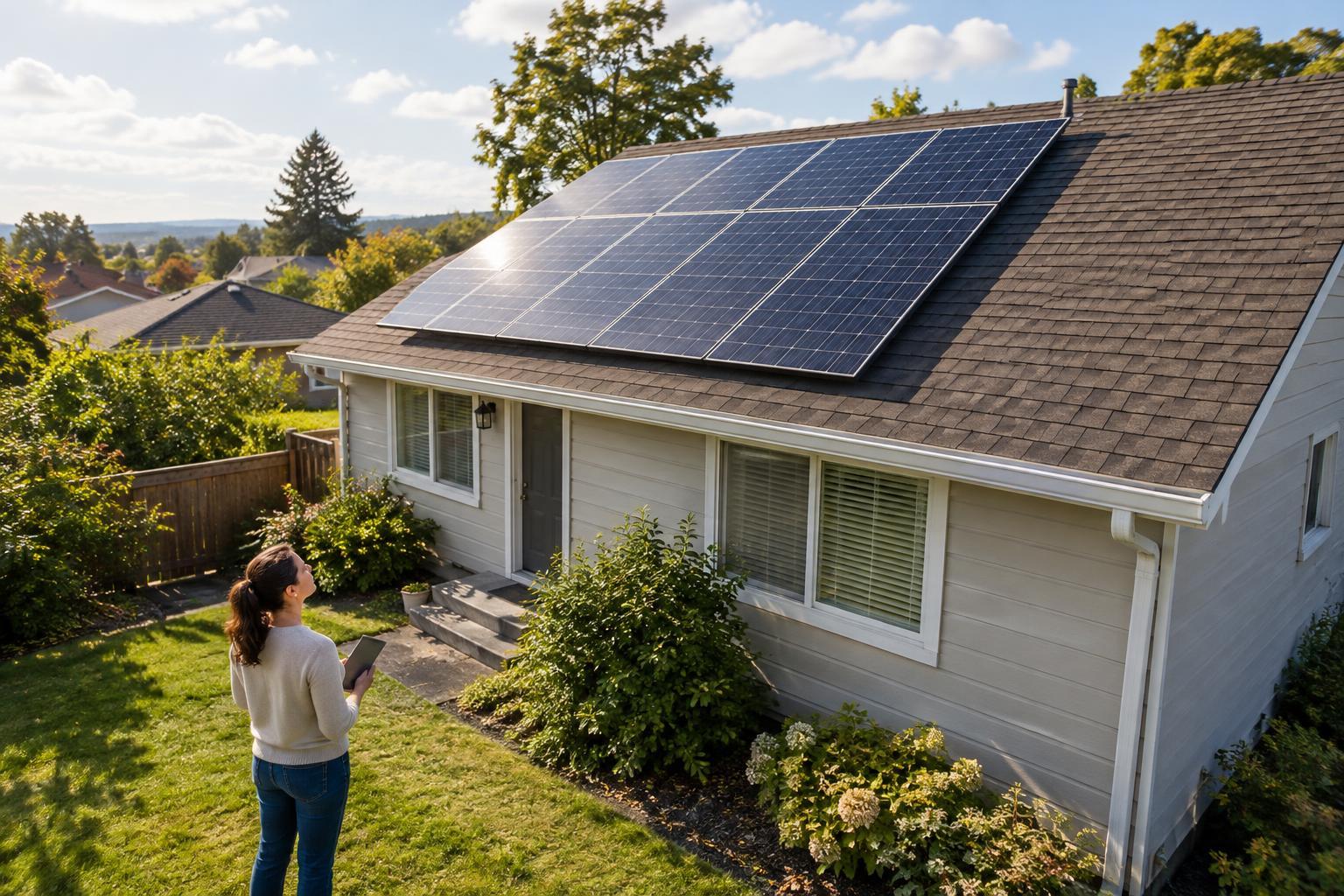
If you already have a system design, use its stated panel capacity in kW as your starting size. If you are estimating from an empty roof, do not divide the roof’s total area by one panel’s area and assume every resulting space can hold a panel. Roof edges, vents, skylights, access space and awkward shapes can reduce the usable area. Panel dimensions and ratings also vary.
Sun exposure is just as important as space. Note the direction each roof section faces, its slope and anything that casts shade. A nearby tree may shade panels only in the morning, while a chimney may cast a shifting shadow across them. Shading can affect connected panels in different ways depending on the system design, so a quick visual check is useful but cannot fully predict its effect. For a closer estimate, use a proposed panel layout and an assessment of shade throughout the year.
Allow for real-world losses and changing weather
Panels are tested under controlled conditions, but rooftops are not. Hot panels may produce less power than their rating suggests. Inverters, wiring and other equipment introduce losses when converting and carrying electricity. Dirt, snow where relevant, and periods of partial shade can also reduce output. A performance factor keeps these effects visible in the calculation, but no single factor accurately describes every installation.
Weather makes daily results uneven even when the system itself is working normally. A cloudy day may produce far less than the monthly average, while a clear day may produce more. The estimate is most useful for understanding likely output over longer periods, not for predicting what will happen on a particular afternoon. If you have monitoring data from an existing system, compare it with your estimate and adjust your assumptions rather than expecting a perfect match.
Use the estimate as a planning tool
An output estimate tells you how much electricity a rooftop system might generate, not how much of it your household will use directly. Production often peaks around the brighter part of the day, while household demand may peak at other times. Grid exports, batteries and changes to appliance use can affect where the electricity goes, but they do not change the basic distinction between generation and consumption.
Keep your calculation in a small table with system size, monthly peak sun hours, performance factor and estimated kWh. Label assumptions and try a lower and higher set of inputs to see how sensitive the result is. That gives you a clearer question to ask about a proposed design: not simply “How many panels fit?” but “How much electricity might this particular roof and system produce across the year?”