One system, many buildings
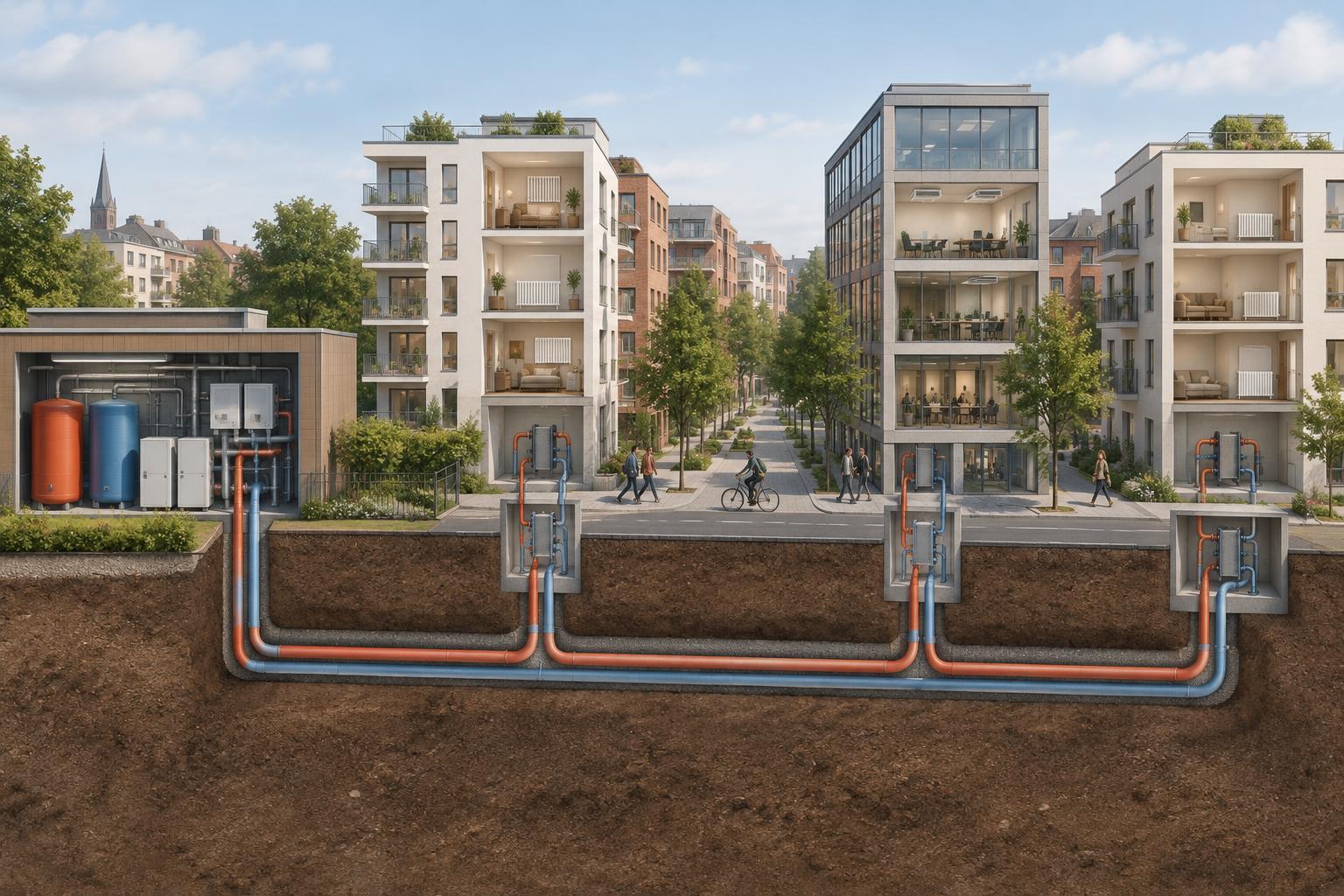
Most buildings heat and cool their rooms using equipment on site. A district energy system takes a different approach: it connects several buildings to a shared network that moves thermal energy through pipes. A heating network might circulate hot water from a central plant to apartments, offices or public buildings. A cooling network might deliver chilled water that absorbs heat from those buildings.
The idea is established, not a futuristic substitute for every boiler or air conditioner. District systems are most practical where buildings are close enough for pipes to serve them economically. A compact campus, hospital complex or dense neighborhood offers a different starting point from scattered homes separated by long stretches of road.
What happens between the plant and the room
In a typical hot-water network, a plant warms water using one or more sources, such as a boiler, a large heat pump or recovered heat from another process. Pumps move it through insulated supply pipes. At each building, a heat exchanger usually transfers warmth into the building’s own heating or hot-water system without mixing the two water circuits. Cooler water then returns to the plant to be heated again.
Cooling follows a similar loop, but the network supplies chilled water. Inside a building, that water helps remove heat from the air; warmer water returns to be cooled. Residents and workers may still use familiar radiators, underfloor heating or air-handling equipment. What changes is where much of the heating or cooling is produced and how it reaches the building.
Why sharing can be useful
A shared network can make certain energy sources easier to use across multiple buildings. For example, a large heat pump may draw heat from water or another available source, while a nearby facility may have surplus heat that would otherwise be released. Connecting buildings gives that heat somewhere useful to go, provided its temperature, availability and location suit the network.
Sharing equipment can also free individual buildings from installing and maintaining some of their own major heating or cooling machinery. It does not eliminate work: the central plant, pumps, pipes and building connections all need oversight. Some networks can combine several heat sources, allowing operators to change how heat is supplied over time. Whether that flexibility produces an environmental benefit depends on the sources actually used and the electricity that runs the system.
The appeal of lower-temperature networks
Traditional heating networks often deliver water hot enough for a building to use with relatively little additional warming. Lower-temperature designs move less-hot water through the neighborhood and may use heat pumps at individual buildings to raise it to the temperature needed indoors. Some designs also allow buildings that need cooling to pass heat into the shared loop for others to use.
Lower pipe temperatures can reduce heat lost along the route, but they change the demands on buildings. Older radiators, poor insulation or high hot-water needs may call for equipment changes or higher delivery temperatures. Heat sharing also works best when useful sources and users are available at compatible times. It is a design option, not a guarantee that every connected building will consume less energy.
How to judge a proposed network
The first question is what supplies the heat or cooling, both initially and if that source becomes unavailable. A network fed mainly by fossil-fuel combustion has a different emissions profile from one using suitable recovered heat or electrically driven heat pumps. The pipes matter too: longer routes, inadequate insulation and pumping requirements can erode the advantages of sharing energy.
It is also worth asking how buildings will connect, who will maintain the equipment and what happens during a plant or pipe outage. Installing buried pipes can be disruptive, especially in an existing neighborhood, while a new development may be able to plan routes before streets are finished. District energy is best understood as infrastructure that creates options. Its value comes from matching a practical network design to local buildings and dependable energy sources.