Accessibility begins before the vehicle arrives
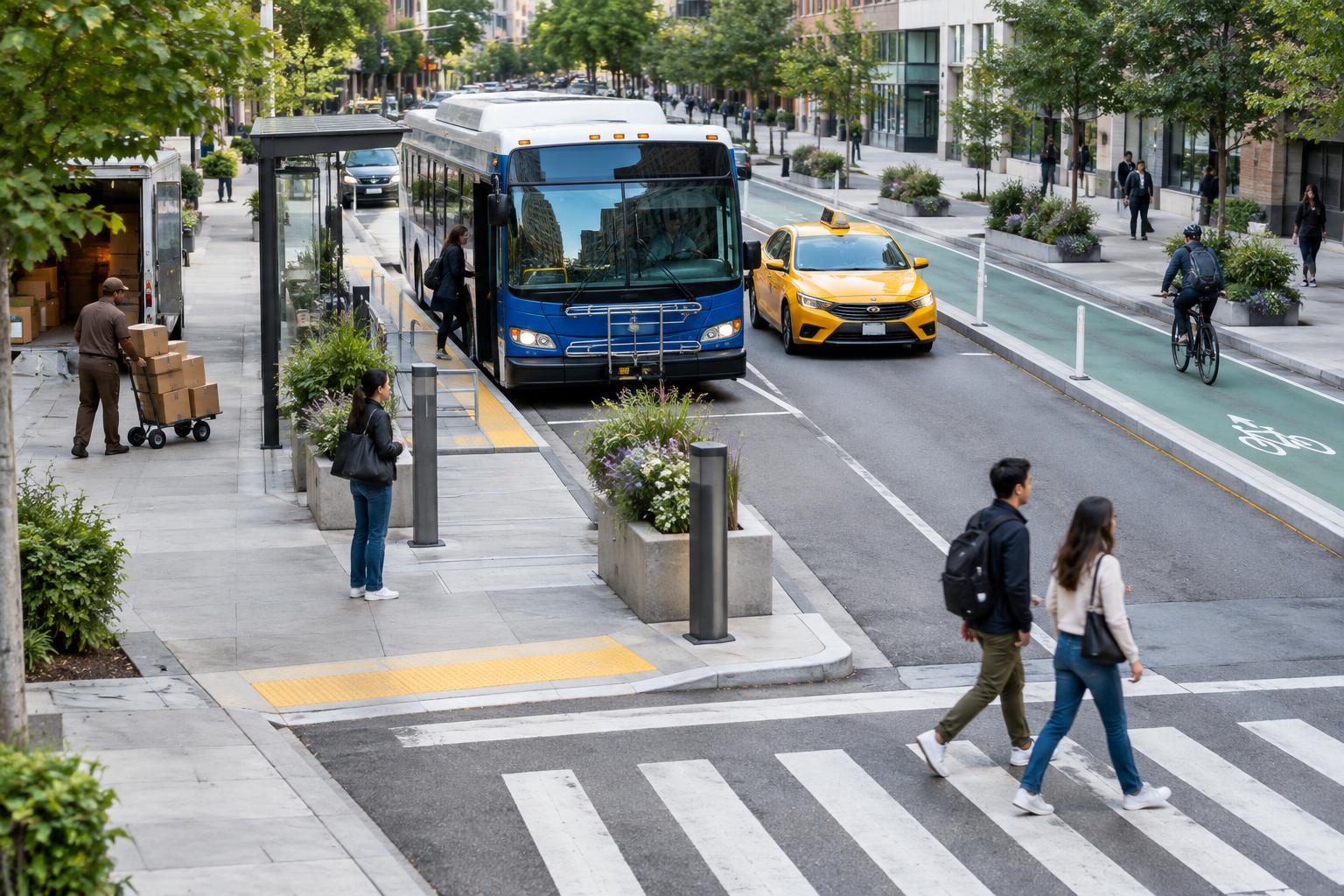
Boarding is often described as a single moment: a passenger steps onto a bus or train. In practice, it begins much earlier. A person must be able to reach the stop, identify the right service, wait in a usable space and get to the door when it opens. A low-floor bus offers little benefit if the path to its stop has an impassable curb or the boarding area is blocked.
Good stop design considers people with different needs, including wheelchair users, people with limited stamina, passengers with visual or hearing impairments, and anyone carrying luggage or travelling with a child. Firm, even surfaces, seating, shelter and space to move around other waiting passengers can all help. Clear signs should be readable from a useful distance and should not rely on colour alone to convey essential information. These are established design choices, not futuristic features.
Close the gap at the door
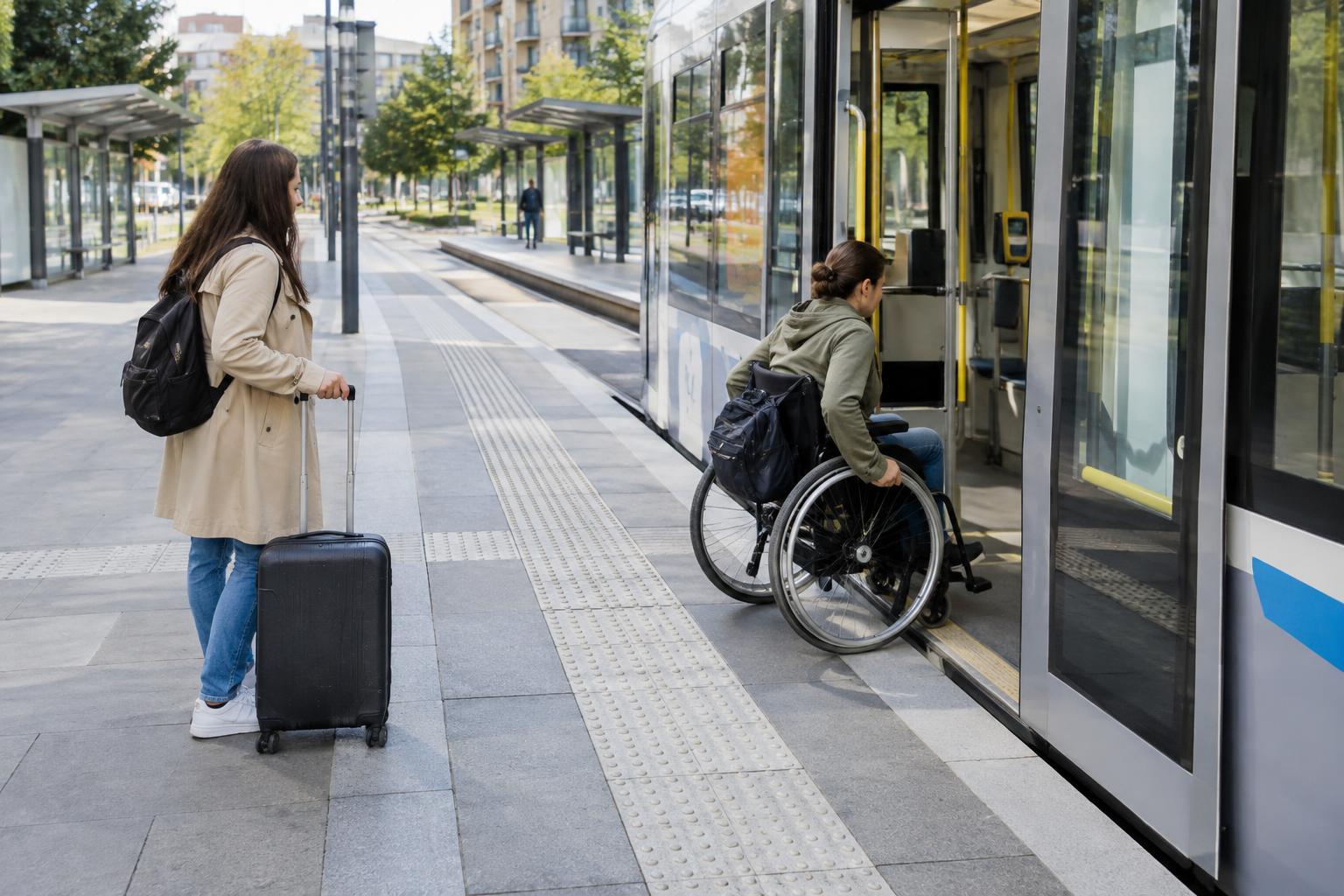
The height and distance between a vehicle and a platform or curb can determine whether boarding feels straightforward or impossible. Level boarding reduces the need to climb a step, while a small, predictable gap makes entry easier for mobility devices, walking aids, strollers and wheeled bags. Where level boarding is not possible, a well-maintained ramp or lift can provide access. Its usefulness depends on whether staff can deploy it promptly and whether the boarding area leaves enough room to use it.
Vehicle interiors matter too. A wide doorway is less helpful if passengers must immediately make a tight turn or find the designated space occupied by equipment. Handrails placed where people naturally reach, clear routes through the vehicle and secure spaces for mobility devices support a smoother trip. Operators also need enough time for people to board safely. An accessible vehicle cannot compensate for a boarding process that assumes every passenger moves at the same speed.
Make the next step easy to understand
A transfer asks passengers to solve several problems at once: where to go, how long it will take and whether the connecting service is still available. Simple wayfinding reduces that burden. Consistent names for stops, platforms and exits should appear on signs, maps, announcements and journey-planning tools. Directions such as “Platform 2 via lift” are more useful than a symbol pointing toward a corridor with no indication of what comes next.
Information should be available in more than one form. Visual displays help when announcements are hard to hear; spoken announcements help when screens are difficult to see. Both need to be timely and specific, especially when a platform changes or a lift is unavailable. Digital journey planners can show step-free routes and transfer details, but they should complement clear information at the station. A passenger whose phone battery is flat still needs to find the right connection.
Design transfers as part of one journey
A transfer can look short on a map while requiring a long walk, a difficult crossing or a detour to reach a lift. Planning should consider the route a passenger actually takes between vehicles, not just the distance between platforms. Short, direct paths, places to rest and crossings with sufficient time can make connections less tiring. Where a step-free route differs from the main route, it should be clearly marked and kept open during operating hours.
Schedules are part of accessibility as well. A connection that works only if a passenger walks quickly may not be a practical connection for everyone. Allowing realistic transfer time and communicating disruptions early can reduce the pressure to rush. At larger interchanges, clear meeting points and staff who can give consistent directions may be as valuable as a new sign. The goal is not to prescribe one pace, but to let more passengers travel with confidence.
Reliability matters more than novelty
New technology may improve access: for example, better vehicle positioning could help align doors with platforms, and digital tools could provide more detailed route guidance. Such ideas should be assessed against everyday conditions, including crowded stops, service changes and people who do not use smartphones. A feature is not dependable simply because it works in a demonstration.
The strongest improvements often combine familiar infrastructure with routine care. Lifts need maintenance, ramps need to be available, signs need to match the routes they describe and staff need workable procedures when something fails. Listening to passengers with different access needs can reveal problems that a plan or simulation misses. Accessible boarding and transfers are not separate extras added to a journey; they are what make the journey usable from beginning to end.