Start with the service, not the vehicle
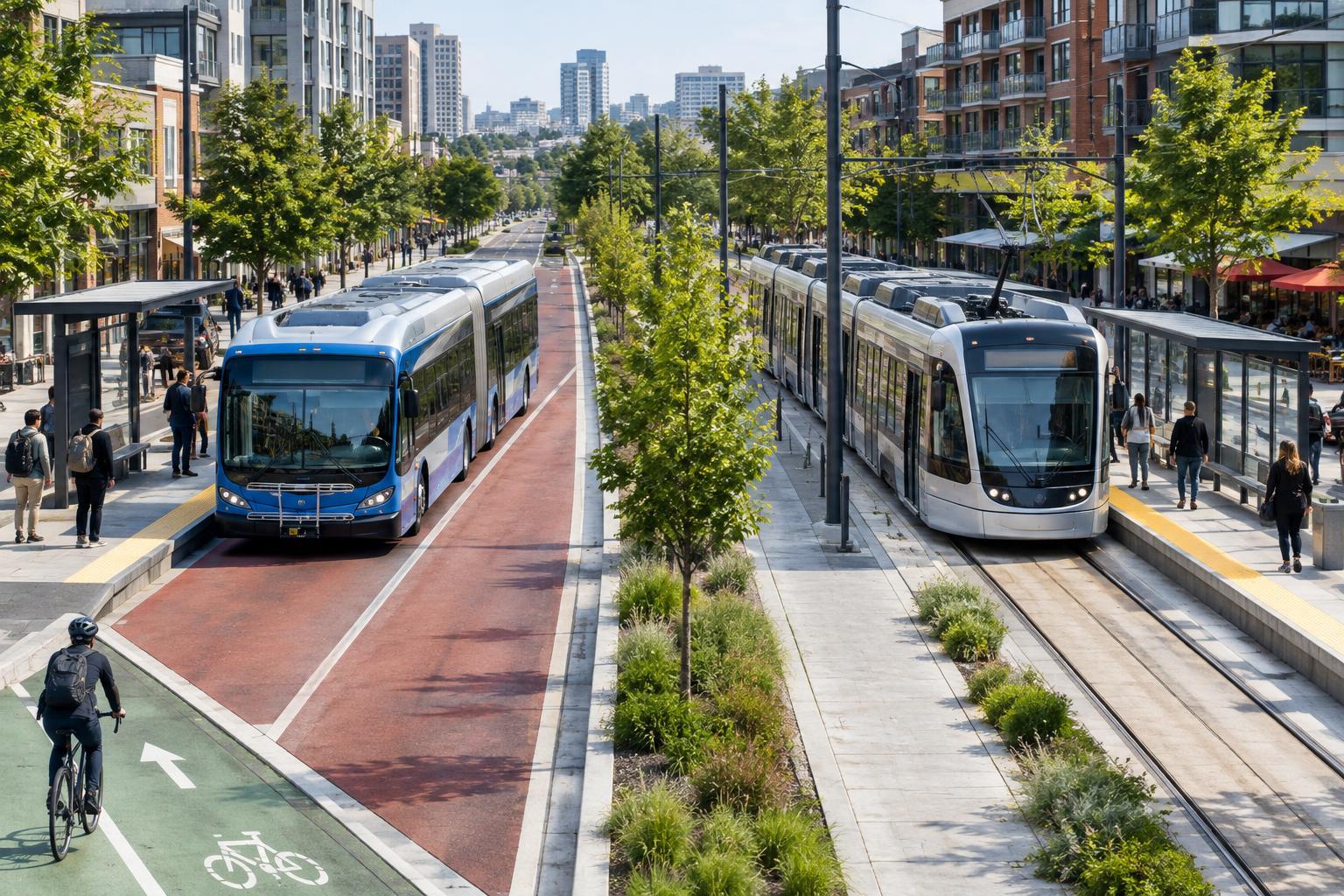
A useful transport corridor helps people reach destinations reliably, at a frequency that makes a timetable less of a barrier. Bus rapid transit, or BRT, aims to deliver that kind of service with buses, typically using features such as dedicated lanes, prominent stations and faster boarding. Light rail uses trains running on tracks, usually with substantial stops and, where possible, space separated from other traffic. Both are established forms of urban transport. Neither name alone guarantees a fast or convenient trip.
The first question for a city is therefore not “bus or train?” but “what problem must this corridor solve?” A route connecting dense neighborhoods, jobs and transfer points may need frequent service all day. A different route may face its worst crowding during a short commuting period. Planners also need to ask where passengers begin and end their journeys. A quick ride between stations offers less benefit if stops are hard to reach on foot or transfers are confusing.
Street priority often matters more than the mode
A bus stuck in traffic cannot provide rapid service simply because it has a special label. Likewise, a light-rail train delayed at every junction will struggle to keep a dependable schedule. Dedicated space, well-designed intersections and signals that reduce unnecessary waiting can make either option more reliable. Stations also affect travel time: boarding through multiple doors and paying before boarding, where appropriate, can shorten stops.
Giving transit priority usually requires a choice about limited street space. A city may need to change parking, turning movements, loading areas or general traffic lanes. Those changes can be difficult regardless of whether the vehicle has tires or rails. A fair comparison should show the complete street design for each option, including crossings, cycling connections, deliveries and emergency access, rather than comparing a fully protected rail line with buses left in mixed traffic.
Match capacity and flexibility to the corridor
Light rail can carry many passengers in coupled vehicles, which may suit a busy corridor with concentrated demand. BRT capacity depends on vehicle size, station design, service frequency and how many buses can pass through the busiest stops and intersections. Either mode can become crowded if a city builds too little station or vehicle capacity. Estimates should test not only average demand but also the busiest segments and the practicality of operating the proposed service.
Buses offer routing flexibility: some services can use a dedicated corridor for the busiest part of a trip and continue onto ordinary streets. That may reduce transfers, but too many overlapping routes can make stations and schedules harder to manage. Rail follows a fixed path, which can make the network easy to understand and the investment visible to people making long-term decisions about where to locate. Fixed tracks are less adaptable if travel patterns change. Flexibility and permanence are advantages only when they serve the corridor’s needs.
Compare the whole project, not just construction
Rail projects often involve substantial work on tracks, power supply and streets. BRT may be simpler to build in some locations, but a strong BRT project can also require major stations, road reconstruction and changes to intersections. Local conditions matter: utilities beneath a street, bridges, available right-of-way and space for depots can all shape cost and disruption. A comparison is most useful when both options are designed to meet the same service goals.
Operating needs deserve equal attention. Cities must plan for vehicles, maintenance facilities, staff, power or fuel, station upkeep and eventual replacement. Electric buses and electric light rail can both support a move away from combustion at the vehicle, but their charging or power systems differ, and their broader environmental impact depends on factors such as electricity supply, construction and how many people ride. It is safer to examine those conditions than to call one mode inherently clean.
Choose a network people can use
The best option may become clearer when a city traces a complete passenger journey. Can someone reach a stop safely? Is the platform accessible? Will the service come often enough in the evening? Are transfers straightforward, and can the city keep buses or trains running reliably when something goes wrong? These questions affect everyday usefulness more directly than a rendering of a new vehicle.
A sensible decision sets goals first, then compares realistic versions of BRT and light rail against them. Those goals might include travel time, reliable frequency, room for future passengers, accessible stops, manageable disruption and an operating plan the city can sustain. The outcome need not be the same everywhere: one corridor may justify rail, another may work well with protected bus lanes, and some may need better ordinary bus service before a larger project. What matters is whether the chosen system delivers a dependable journey, not which mode wins an abstract contest.