Sensing is the first step, not the whole drive
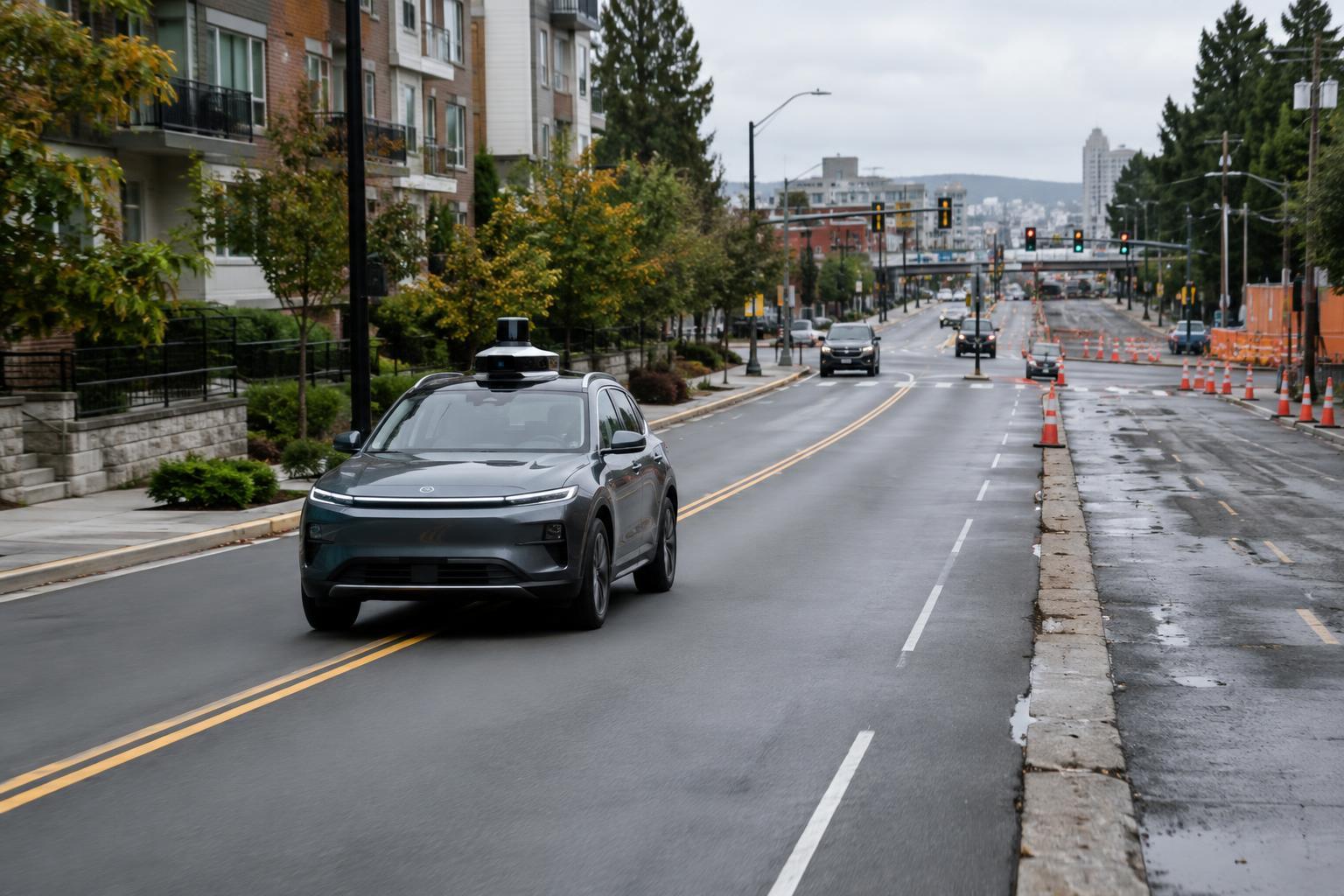
To move through traffic, an automated vehicle needs to estimate what is around it: where the road runs, which objects are nearby and how those objects might move. Sensors gather the raw observations. Software then interprets them, predicts possible movements and chooses an action. Detecting a cyclist, for example, is different from deciding how much space to leave when passing.
Many driver-assistance features already use sensors to help with tasks such as maintaining distance or warning about nearby vehicles. More ambitious automated driving systems must handle a wider range of situations within their intended operating conditions. Neither a collection of sensors nor a sophisticated-looking display guarantees that a vehicle can drive itself everywhere. The sensors each offer a partial view, and the software must work with uncertainty.
Cameras: rich visual detail
A camera captures images much like those a person sees. Its strength is visual detail: software can look for lane markings, traffic lights, signs, pedestrians and the shape of the road. Cameras can also help identify an object rather than merely noting that something is present. A painted arrow and a raised obstacle may occupy similar positions on the road, but their appearance helps distinguish them.
Images do not automatically reveal how far away something is. Distance can be estimated by comparing views from multiple cameras, tracking an object across frames or combining images with other sensor data, but estimates can be uncertain. Glare, darkness, heavy rain, dirty lenses and partially hidden objects can also make interpretation harder. Even a clear image can be ambiguous: a vehicle needs to work out whether a pedestrian near the curb is waiting or about to cross.
Radar: measuring distance and movement
Radar sends out radio waves and examines the returning signals. Those returns can help estimate an object's distance and its movement toward or away from the sensor. That makes radar useful for following traffic and noticing a vehicle closing in from behind. Its signals can remain useful in some conditions that make camera images difficult to read, though performance still depends on the equipment and the surroundings.
Radar does not usually provide the same visual detail as a camera. A return may indicate something ahead without clearly showing whether it is a bicycle, a sign or part of the roadside. Reflections from several surfaces can complicate the picture, too. The challenge is not simply to collect more returns; it is to decide which returns correspond to relevant objects and where those objects are.
Lidar: mapping nearby shapes
Lidar uses emitted light and its reflections to estimate distances to surrounding surfaces. The result can be represented as a collection of points outlining vehicles, buildings, barriers and other features. This three-dimensional view helps software reason about the shape of the space around a vehicle, including where an obstruction begins and where there may be room to travel.
Lidar has limits of its own. Its points describe surfaces, not intentions: an outline of a person cannot tell the vehicle whether that person plans to step into the street. Rain, fog, spray or a sensor blocked by dirt can affect the observations, depending on the system and conditions. Lidar systems also vary in range, detail, size and cost. Some automated-vehicle designs use lidar; others aim to rely on different combinations of sensors.
Putting the views together
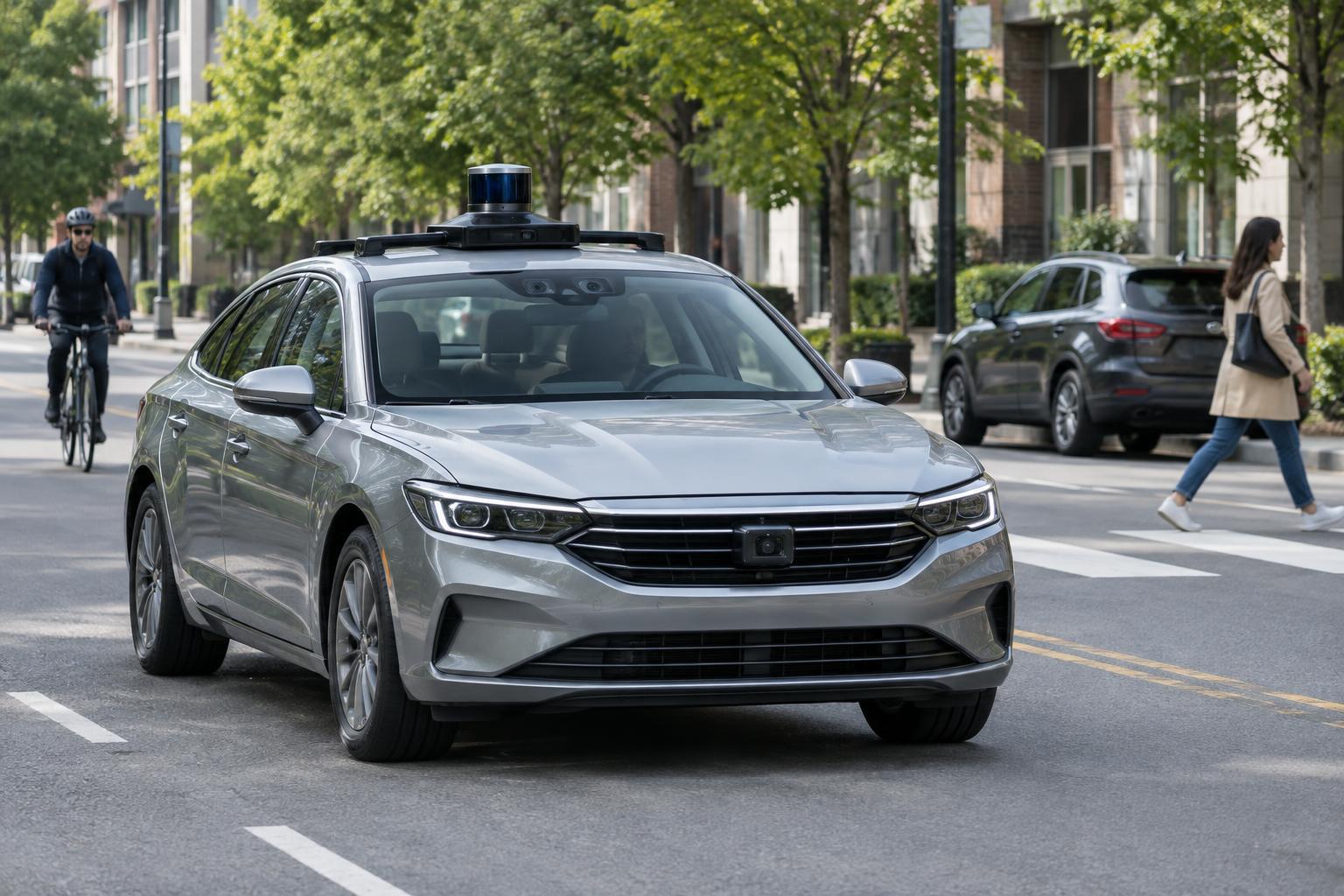
Consider a car approaching an intersection where a cyclist is partly obscured by a parked van. A camera might identify the visible portion of the bicycle, radar might help track movement, and lidar might outline the van and the open space beside it. Combining these observations can help the vehicle build a more useful picture than any one signal provides. That process is often called sensor fusion.
Fusion is not a simple vote in which two sensors always overrule one. Sensors may disagree because an object is hidden, the weather interferes or each one observes a different aspect of the scene. The system must associate observations with the right objects, account for uncertainty and respond conservatively when the picture is unclear. It also needs to know when conditions exceed what it was designed to handle.
This is why a sensor list alone says little about a vehicle's capabilities. What matters is how the complete system performs in the situations it is meant to handle, including unusual but plausible ones. Cameras, radar and lidar are tools for observing the world; reliable driving also depends on interpretation, decisions and a clear understanding of the system's limits.