Start with the delivery, not the vehicle
A cargo bike and a delivery van may both bring a parcel to the same doorstep, but they solve different parts of the transport problem. A van can carry a broad mix of goods across a wide area. A cargo bike is better suited to smaller loads and shorter rounds, especially where stops are close together. Asking which one is better without looking at the route is a bit like asking whether a backpack or a suitcase is better: the answer depends on what needs to move and how far.
The useful comparison starts with parcel size and weight, the number of stops, distance between them and access to each address. A neighborhood with many small deliveries may suit a cargo bike. A route that includes bulky furniture, dispersed homes or large collections may need a van. Neither vehicle has to handle every leg of a parcel’s journey.
Where cargo bikes have an advantage
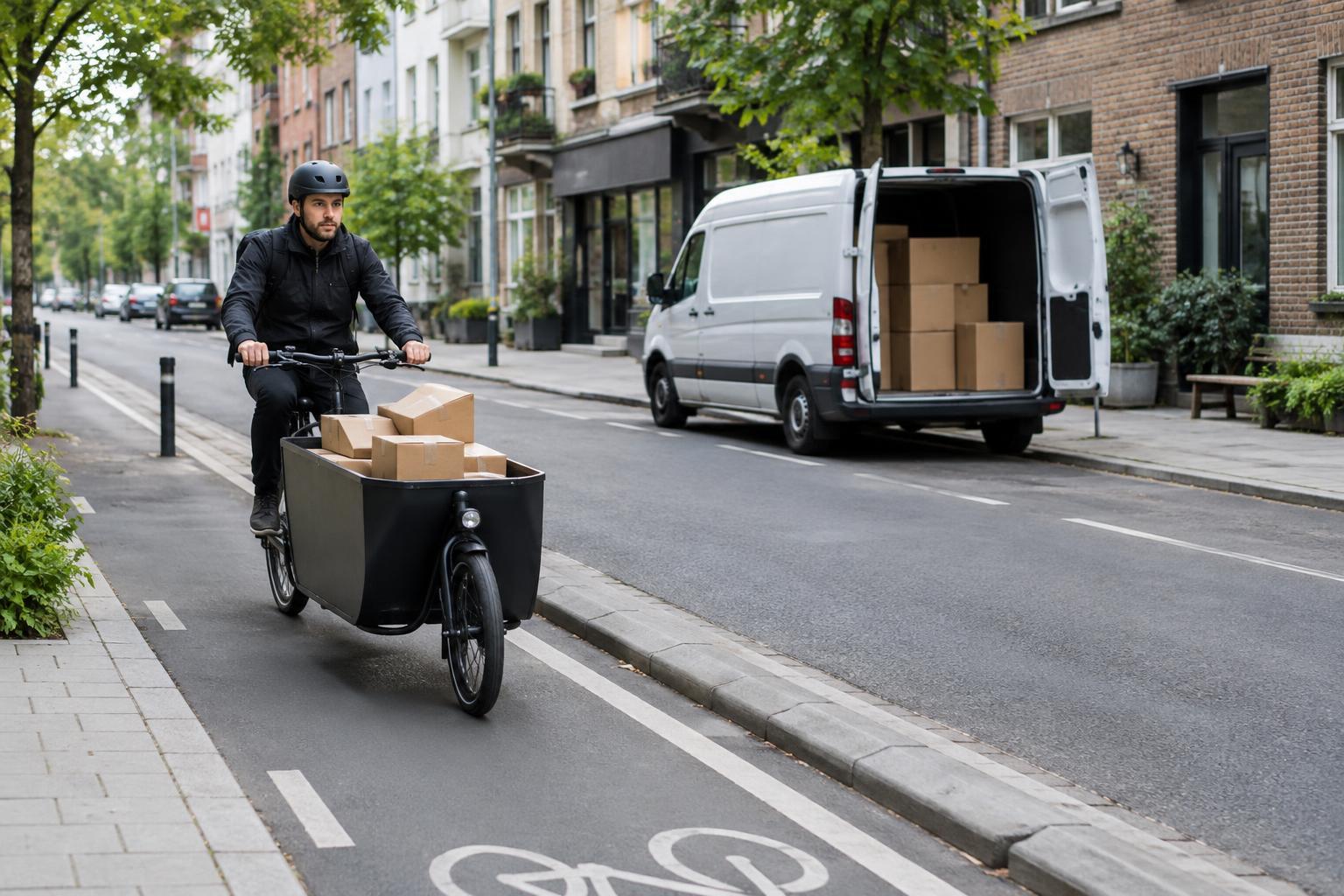
Cargo bikes can be practical in dense streets where finding a place to stop a van takes time. Their smaller footprint may make it easier to reach a delivery point, provided local rules allow the rider to use the route and stop safely. An electric-assist cargo bike can help a rider move a loaded bike without turning it into a substitute for a van’s carrying capacity. It still has limits on load, range and the kinds of goods it can carry.
For nearby deliveries, a bike may also reduce noise and avoid exhaust emissions at the point of use. That does not make every bike-based delivery automatically low-impact: the bike, battery, charging and any supporting transport all matter. A bike loaded at a depot across town, or repeatedly restocked by a van, is part of a wider system. The clearest benefit comes when it replaces a suitable van journey rather than adding another trip.
Cargo bikes are already used for some delivery work; they are not merely a future concept. Their usefulness, however, depends on secure loading space, workable streets and a route planned around their capacity.
What vans still do well
A delivery van offers room for large or numerous parcels, equipment and returns. It can cover longer distances between stops and may be the more straightforward choice for a route that shifts between neighborhoods. An enclosed vehicle also keeps goods in a protected cargo area and gives the driver a place to manage a varied load. Those advantages matter even on a day when most individual packages are small.
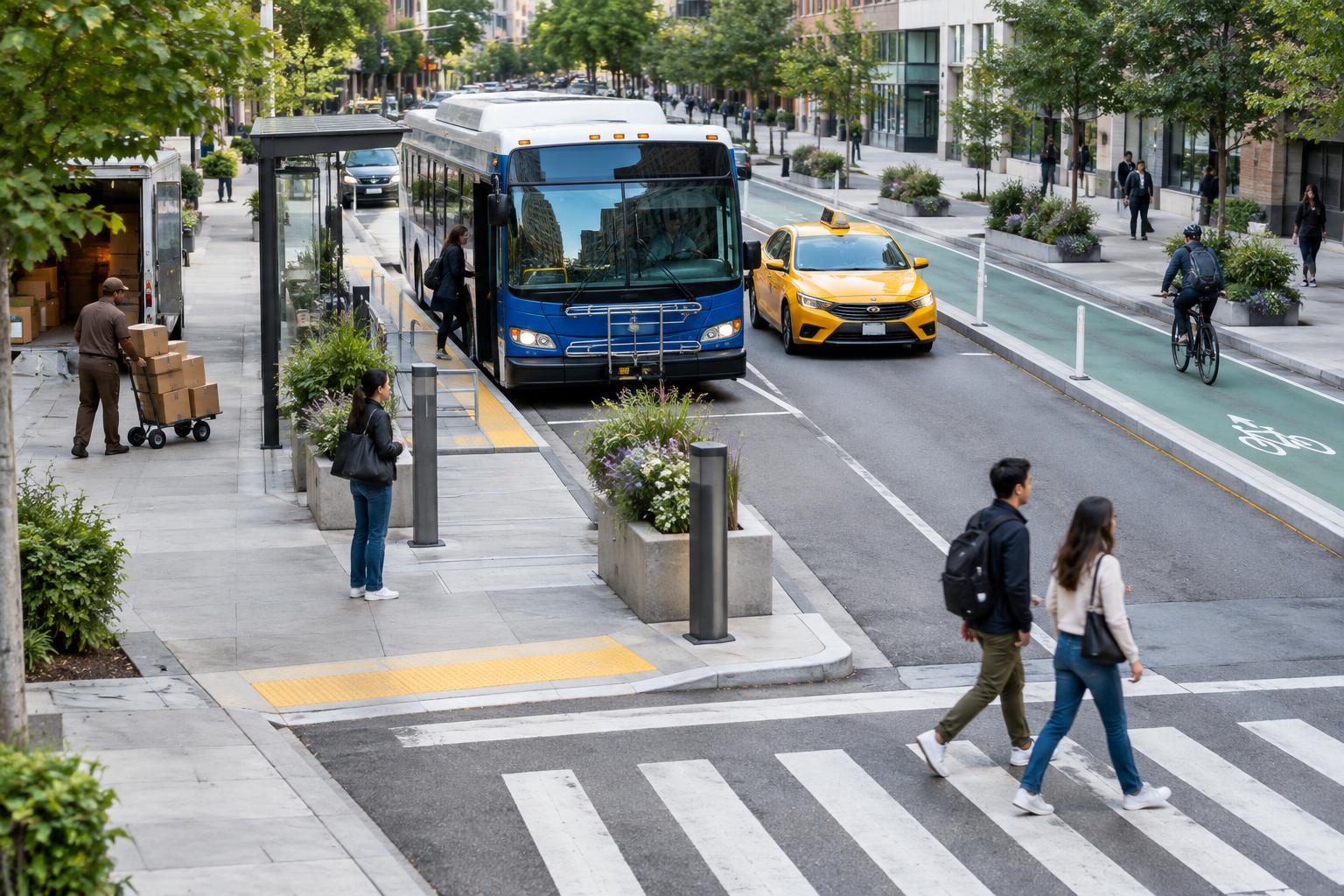
Vans have drawbacks in crowded areas. They need space to maneuver and stop, and a driver may have to walk from a suitable stopping place to the door. A van that carries plenty of parcels on paper can spend much of its route navigating streets where its size is a disadvantage. Electric vans can avoid exhaust emissions at the point of use, but they remain large vehicles with charging and parking needs. Comparing an electric van with an electric-assist cargo bike therefore involves more than comparing their motors.
The street and the workday shape the result
Vehicle choice affects the person making the deliveries as well as the goods being moved. A cargo-bike rider needs a safe place to travel, a practical way to secure the bike during stops and a plan for rain, heat or poor visibility. A van driver needs legal stopping space and enough time to unload without obstructing other road users. Neither approach works well if its schedule assumes that every address offers easy access.
Local conditions can change the balance. Hills, narrow paths, busy crossings and restrictions on motor vehicles may each favor or complicate a bike route. Loading areas, traffic patterns and the distance to a depot affect van routes. Businesses also have to consider how parcels are sorted: a bike round works best when the right goods are grouped together before the rider leaves. Without that preparation, frequent returns for missed items can erase the convenience of a compact vehicle.
A mixed fleet may be the most useful answer
Cargo bikes and vans need not compete for the same job. A van can move goods to a local distribution point, while bikes handle suitable nearby stops. Vans can take heavy or distant deliveries, leaving compact routes to bikes. This arrangement may reduce van trips through busy streets, but it also creates a handoff that needs space, staff time and careful organization. A small business may find a direct van route simpler than adding a separate transfer point.
The sensible way to choose is to sort deliveries by load, distance and access, then consider the full route rather than a single trip to the door. Some routes will clearly favor a van; others may give a cargo bike a useful role. Future designs could make bikes easier to load or help fleets coordinate handoffs, but those possibilities do not remove today’s basic limits. The best local delivery vehicle is the one that fits the goods, the streets and the people doing the work.