Treating every scooter like one you already know
A shared e-scooter may look familiar while feeling different from the last one you rode. Throttle response, brake placement, wheel size and acceleration can vary between models. Before joining traffic, locate the brakes and controls while the scooter is stationary. Start in an open, permitted area at a low speed so you can feel how it steers and stops.
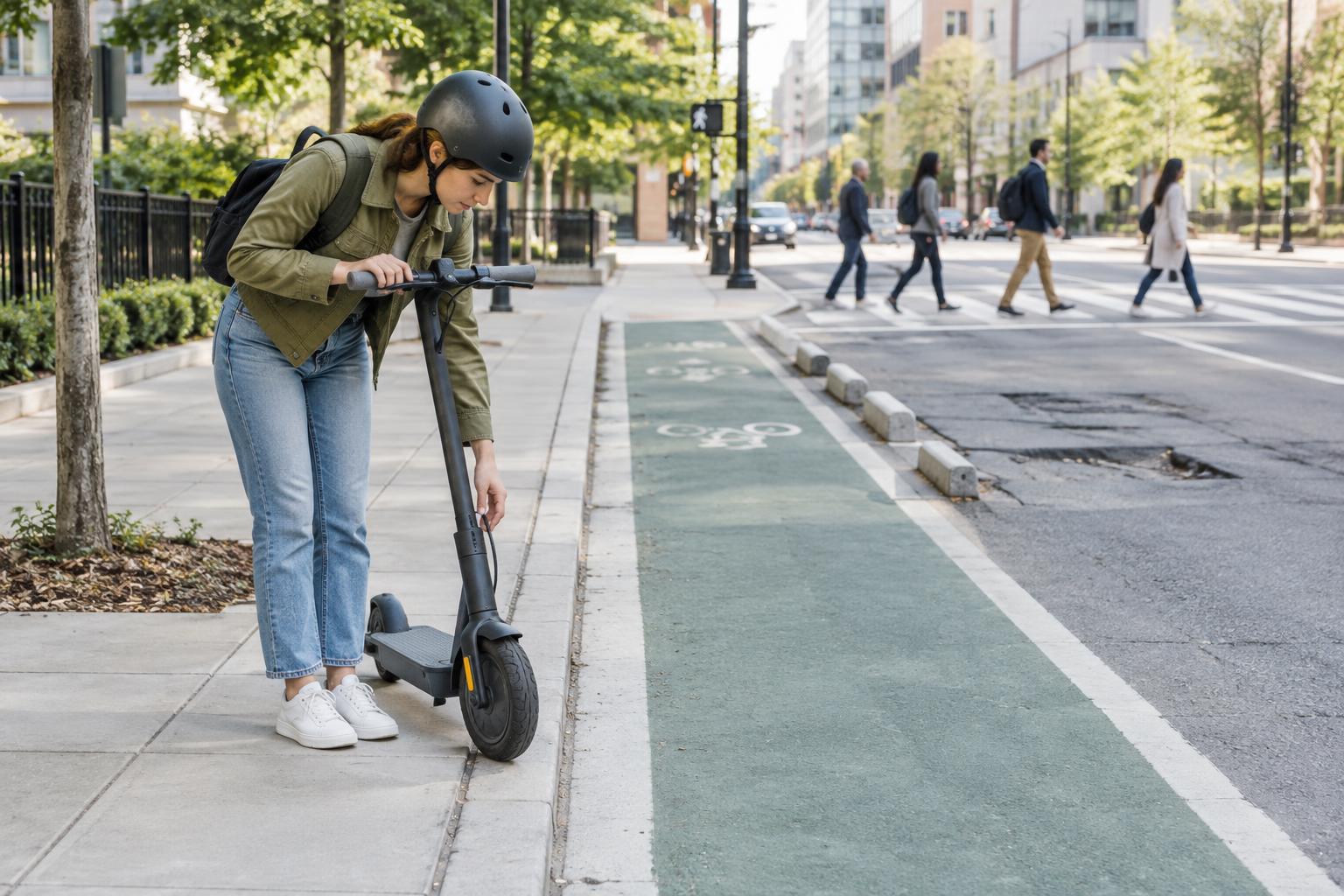
Another common mistake is unlocking a scooter and leaving immediately without checking it. Look for visibly damaged tyres, loose handlebars, a wobbly stem, brake problems or parts that do not seem secure. Check that the scooter has enough charge for your intended trip; a low battery could leave you needing to stop somewhere inconvenient. If anything feels wrong, do not ride it. End or cancel the rental as the service allows, and report the problem through its app.
Letting a short trip replace basic preparation
The thought that you are only going a few blocks can make preparation feel unnecessary. A helmet, if available and properly fitted, is a sensible precaution. Choose shoes that give you a stable footing, and keep both hands free for the handlebars. Bags that swing into the wheels or change your balance can make an ordinary turn harder to manage.
Check your route before you set off rather than looking at a phone while moving. A direct route is not always a comfortable one: crossings, uneven pavement, steep slopes and busy junctions may make another route preferable. Riding permissions and speed limits vary by location, so check local requirements and any guidance shown in the rental app. Do not assume that a scooter may be ridden on every pavement, path or road.
Riding too fast for the surface
Small wheels can respond sharply to potholes, raised edges, loose gravel, wet leaves and other surface changes. A mistake is to notice a hazard only when you are nearly on top of it. Look ahead, leave room to steer around obstacles and slow down before rough ground or a tight turn. If a surface looks difficult to cross while riding, stop and walk the scooter through when it is safe and permitted to do so.
Stand with your feet in a stable position on the deck and keep your knees slightly relaxed. Avoid sudden steering movements or abrupt braking, particularly while turning or on a slippery surface. Give yourself extra space to stop when conditions are poor. Shared scooters are generally designed for one rider; carrying a passenger can make balance and braking harder and may be prohibited by the service or local rules.
Assuming other people know what you will do
At junctions and driveways, do not rely on a driver, cyclist or pedestrian having seen you. Slow down early, watch for vehicles turning across your path and be prepared to stop. Leave space when passing others, and avoid weaving between people or vehicles to save a few seconds. Predictable movement gives everyone more time to respond.
A shared e-scooter can be especially easy to misjudge in crowded spaces because it is small and relatively quiet. Where riding near pedestrians is allowed, travel at a considerate speed and yield space rather than expecting people to move aside. In low light, check that the scooter’s lights work and consider clothing or accessories that help others see you. Lights improve visibility, but they do not replace looking ahead or slowing down.
Ending the ride without thinking about the next person
Safety does not end when you step off. Stopping suddenly in a travel lane or leaving a scooter across a walkway can create an obstacle for other riders and pedestrians, including people using mobility aids. Choose a permitted parking place, move fully out of the flow of travel and leave clear access to crossings, entrances and ramps.
Before walking away, make sure the scooter is stable and the rental has ended according to the app’s instructions. Shared e-scooters are useful partly because they can be picked up for an unplanned trip. Taking a moment to inspect, ride and park one thoughtfully helps make that convenience less disruptive for everyone sharing the space.