A helping hand is not a replacement driver
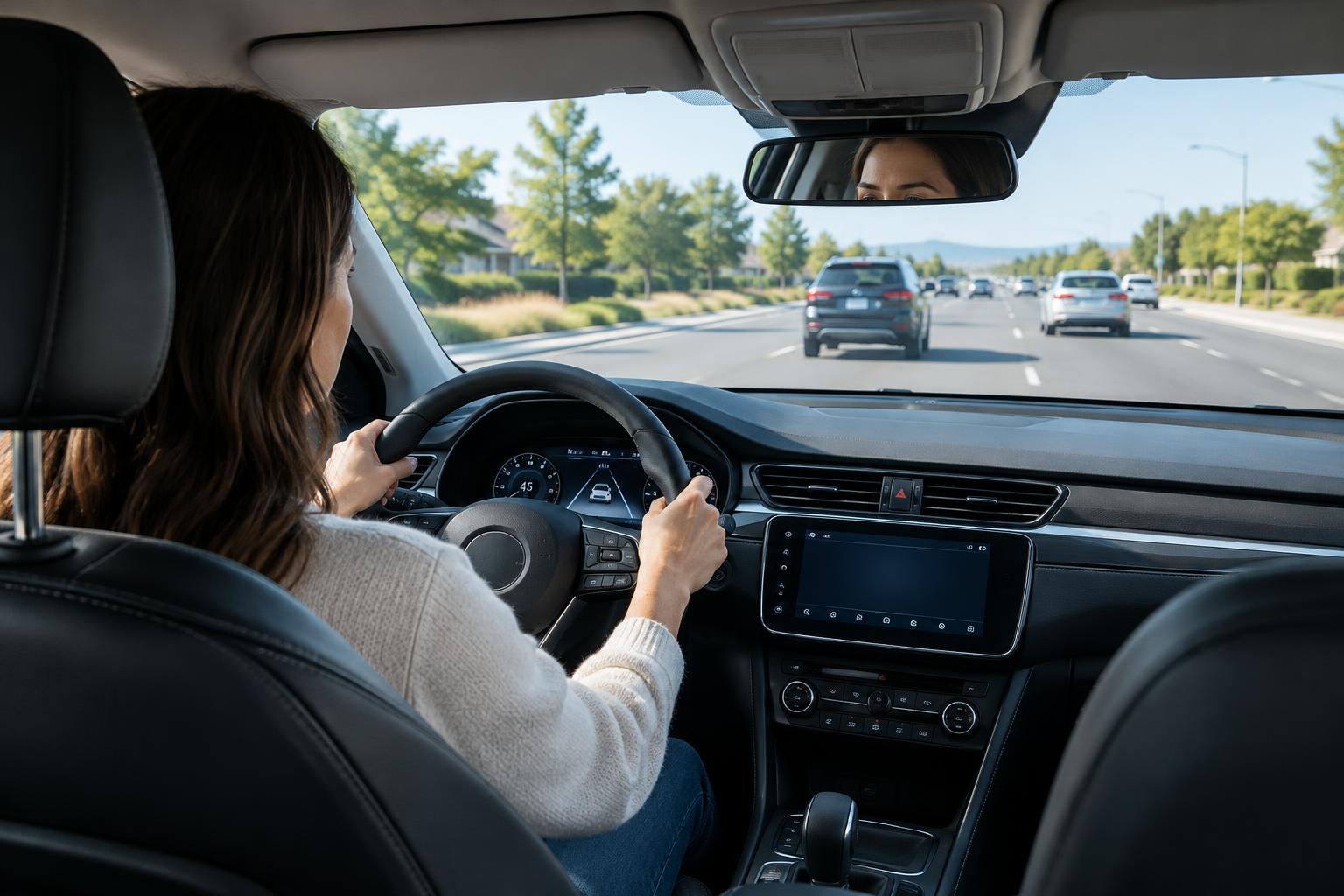
Imagine a car on a motorway that keeps a steady distance from traffic ahead and gently adjusts its steering to stay in its lane. The experience can feel remarkably hands-off, but that feeling does not tell you who is responsible for watching the road. In a driver-assistance system, the human driver remains the active supervisor. The car helps with selected tasks; the driver must stay ready to respond to a vehicle cutting in, a faded lane marking or an unexpected obstacle.
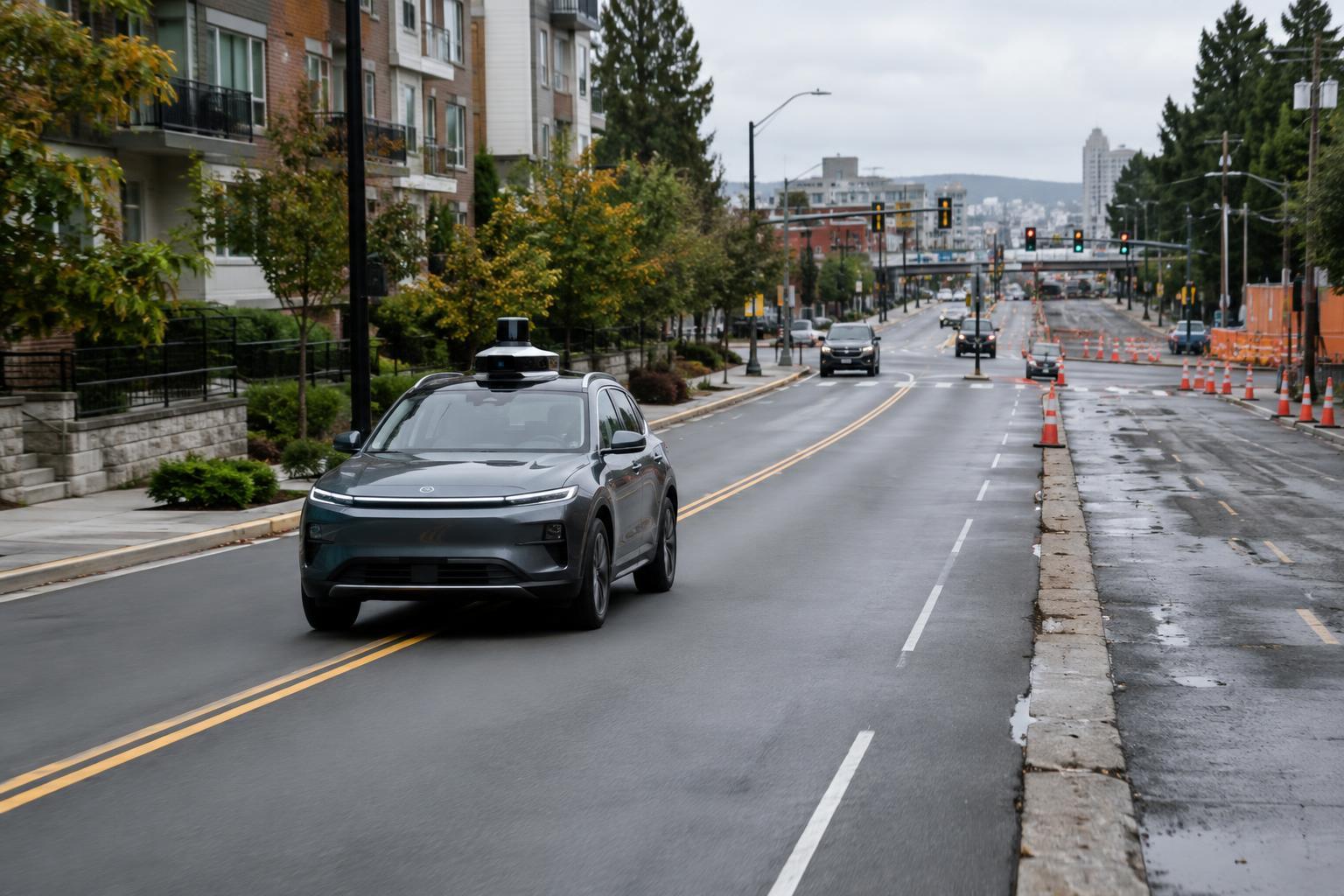
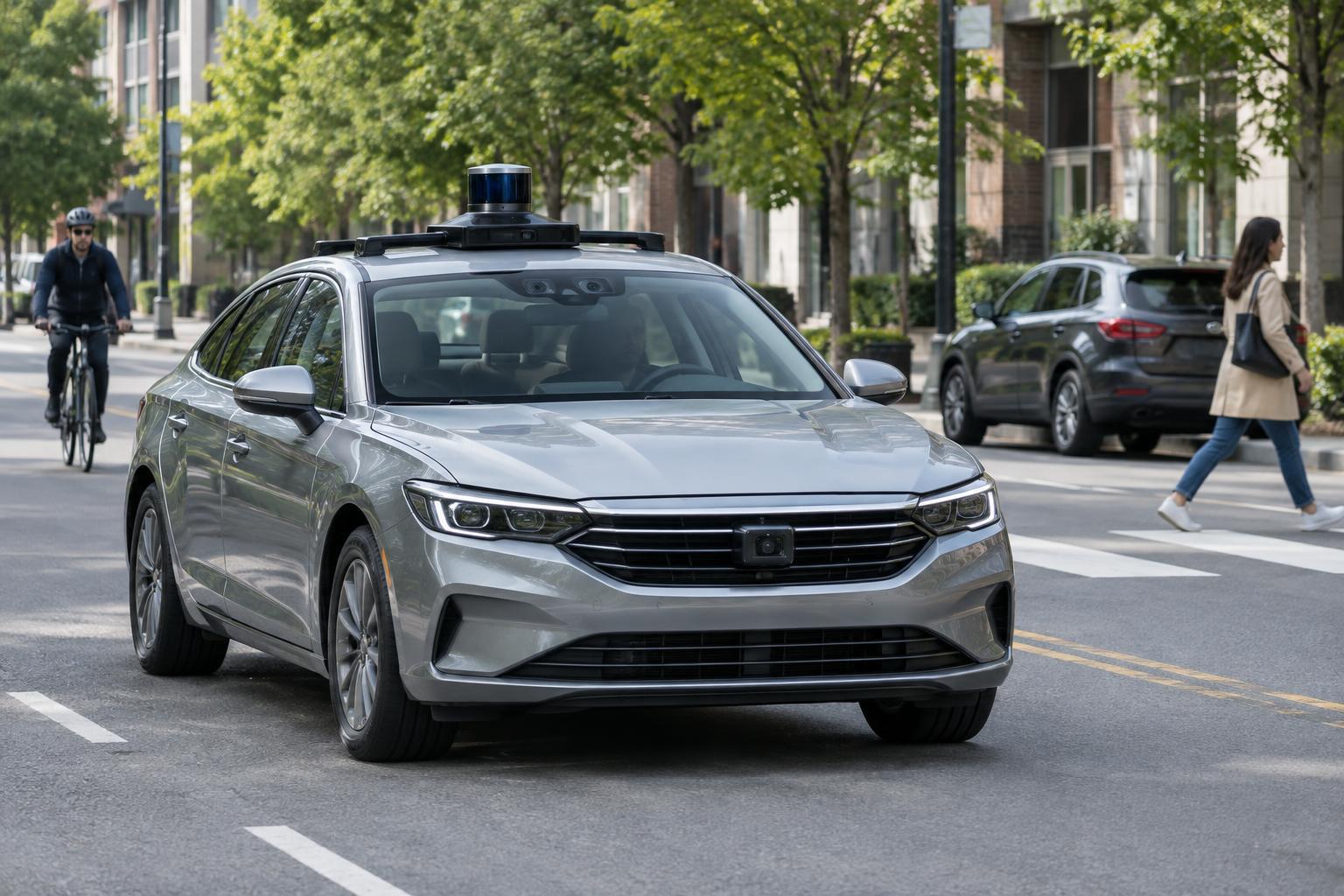
Self-driving describes a different arrangement: within specified conditions, the vehicle performs the driving task and monitors its surroundings rather than relying on a human to supervise every moment. That does not mean it can drive anywhere. A system may be designed for a particular area, type of road or set of conditions. The crucial question is not simply whether the wheel turns by itself. It is who must notice trouble and decide what to do next.
Features can look alike while demanding different behavior
Adaptive cruise control can manage speed and following distance. Lane-centering assistance can help keep a car positioned on a marked road. Parking assistance may steer into a space while the driver controls other parts of the maneuver. These features can reduce the effort involved in specific tasks, but none should be assumed to understand every situation a driver might encounter. A system that works smoothly on a clear motorway may struggle with roadworks, unusual markings or a person directing traffic.
Names on a dashboard or in an advertisement do not settle the question. Terms such as “autopilot” or “hands-free” can describe an experience without explaining the system’s limits. A hands-free feature, for example, may still require the driver to watch the road continuously. To understand a feature, look for a plain description of what it controls, where it may be used, whether the driver must monitor the road and what the vehicle does when the feature reaches its limits.
The boundary of operation matters as much as the technology
A self-driving system needs a defined operating environment: the conditions in which it is intended to work. Those limits might involve mapped streets, certain road types, weather or visibility. A vehicle that can complete a trip without a human driver inside one designated area is not necessarily capable of doing the same on an unfamiliar rural road. Success in a narrow setting should not be confused with universal driving ability.
The transition out of that setting is especially important. If a system expects a human to take over, it needs a way to communicate the request, and the person needs enough time and awareness to act. This is harder than it may sound: someone who has not been monitoring the road may not immediately understand a complicated situation. A system designed to operate without human supervision in its permitted area must instead have a plan for handling problems it cannot resolve, such as stopping safely. The appropriate response depends on how that particular system is designed.
Why confusion changes everyday decisions
The distinction affects how people behave in the vehicle. If a driver-assistance feature is mistaken for self-driving, someone may look away for too long or assume the car will recognize an unusual hazard. The feature may perform exactly as designed while the person expects it to do more. Clear explanations help people use assistance for its intended purpose rather than treating convenience as proof of independence.
It also changes how to judge progress. A car that can stay centered on a motorway and a vehicle that can complete a journey inside a limited service area solve different problems. Comparing them by how rarely a person touches the controls misses the more useful questions: Who watches the environment? Who handles surprises? What happens when the system cannot continue? Those answers reveal more than a dramatic demonstration or a confident product name.
A practical way to read the next claim
When you encounter a claim about automated driving, break it into three parts: task, territory and fallback. Task means what the vehicle actually does, such as controlling speed and steering or handling the full driving task. Territory means the roads and conditions in which it is designed to do so. Fallback means what happens when it reaches a limit: does a human need to take over, or can the vehicle manage a safe response without one?
This simple test leaves room for both useful technology and honest uncertainty. Driver assistance can make parts of a journey less demanding when used as intended. Self-driving systems may serve particular routes or areas without being able to go everywhere. Keeping those ideas separate makes it easier to understand what a vehicle can do today, what remains limited and what is still a future ambition.