Start with the trip, not the vehicle
For a short journey, the best vehicle is the one that fits the whole trip: the road or path, what you need to carry, where you can leave it and how you will get home. An e-bike is a bicycle with a motor that assists your pedaling. In this article, an e-scooter means a standing electric kick scooter, not a seated mobility scooter. Both can be useful, but their differences become clearer when you picture a regular journey rather than a single ride.
Think about your most common destination. Does the trip include hills, rough pavement or a stretch where you would feel uncomfortable standing? Will you need to carry groceries or bring the vehicle onto public transport? A compact scooter may suit a simple trip with limited storage at either end. An e-bike may be more appealing when comfort, cargo and longer rides matter.
Comfort and control on familiar routes
E-bikes offer a seat and, on many models, larger wheels than standing e-scooters. Those features can make uneven surfaces feel less demanding, though tires, frame design and rider fit also matter. Pedal assistance can reduce the effort of riding uphill without removing the option to pedal. An e-bike still requires balance and attention, just like a conventional bicycle.
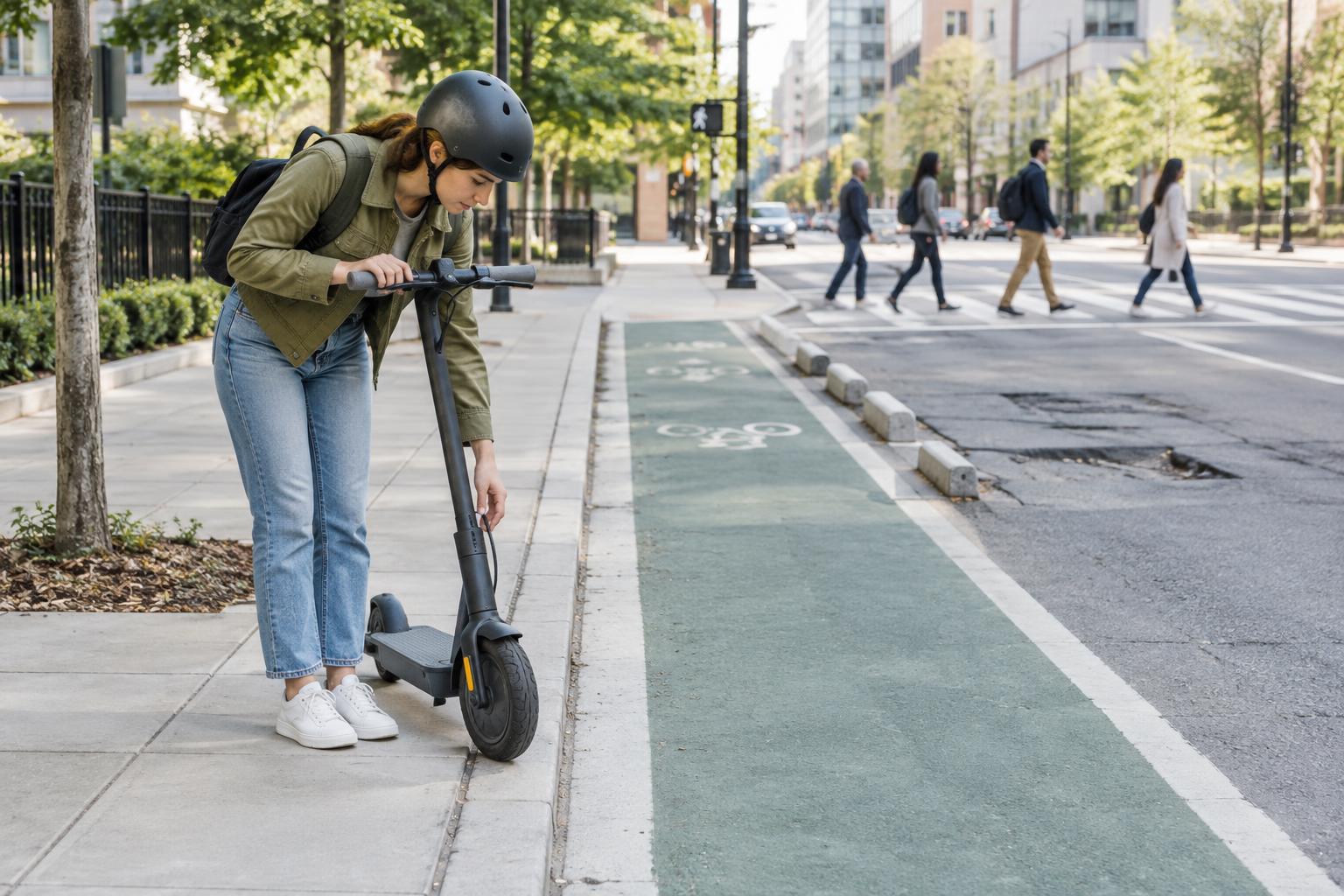
Standing e-scooters can feel nimble on smooth, straightforward routes. Their smaller wheels and standing position, however, can make potholes, loose gravel and abrupt changes in pavement more troublesome. Standing may also become tiring over a trip that looked short on a map. Test the type of surface you expect to use, if you can, and consider how the ride would feel in wind or rain. Either vehicle needs enough space to brake and turn safely; a motor does not make a crowded route easier to navigate.
Storage, carrying and the last few steps
A folding e-scooter may be easier to keep in a small home or take through a building than a full-size e-bike. Folded does not necessarily mean easy to carry, though. Weight, awkward handles and stairs can turn a portable-looking design into a daily chore. Check the actual dimensions and try lifting a prospective vehicle before relying on its portability.
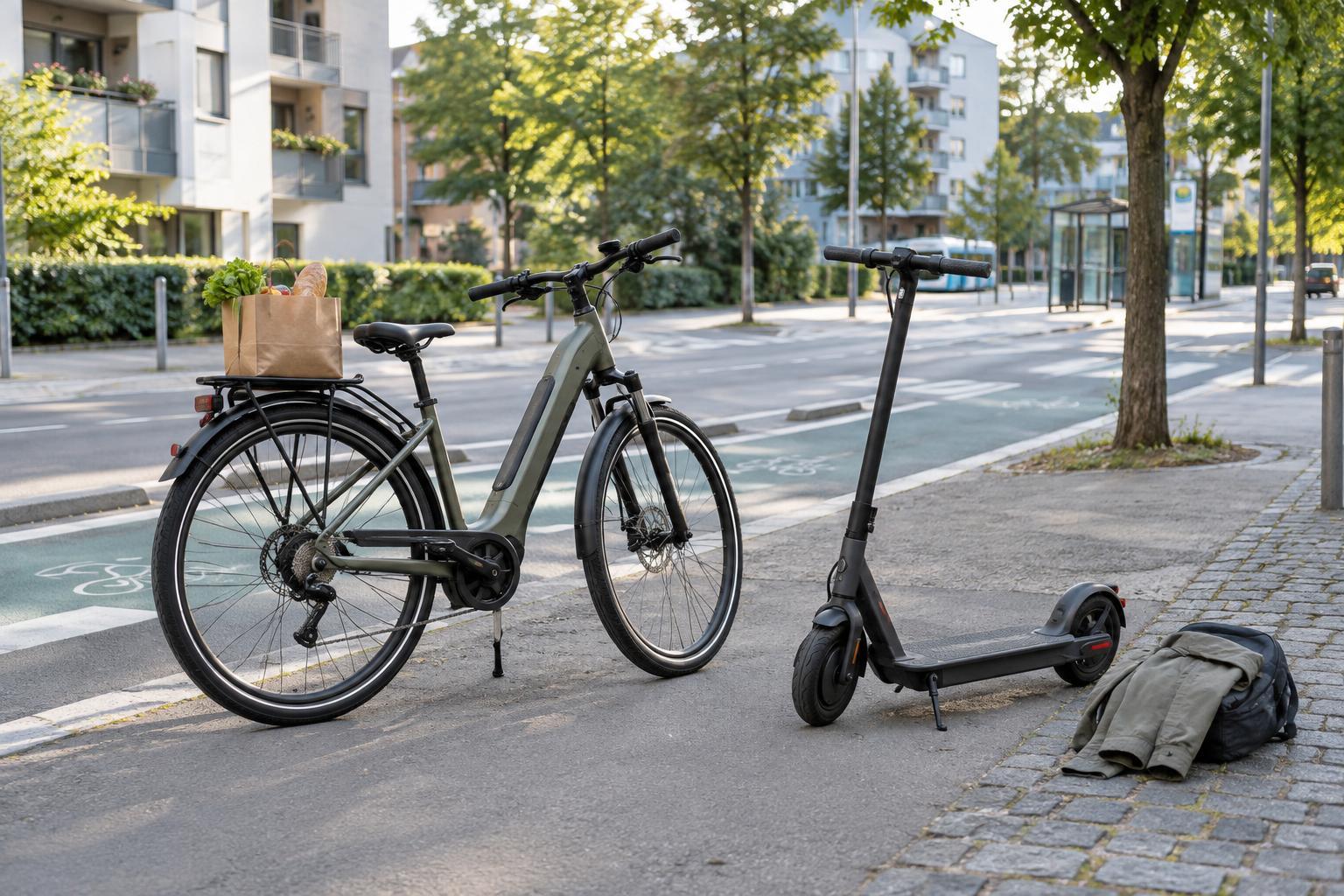
E-bikes usually need more parking space and a suitable place to lock them. In return, many can accommodate a rack, panniers or a basket for a bag or small shopping load, provided the accessories and load suit the bike. Carrying things on an e-scooter is generally less convenient, especially if a bag affects your balance or steering. Think about the last few steps of every trip: getting the vehicle through a doorway, storing a helmet, securing it at your destination and returning to it later.
Battery expectations and everyday costs
Advertised range is a starting point, not a promise for every ride. Hills, rider and cargo weight, tire condition, temperature, speed and the level of motor assistance can all affect how far a charge lasts. On an e-bike, you can generally keep pedaling if the battery runs low, although a heavy bike may take more effort. A standing e-scooter with an empty battery may be inconvenient to push or carry. Choose a vehicle with a comfortable margin for your round trip and a charging routine you can maintain.
Purchase price is only part of the decision. Allow for a suitable lock, lights, tires, brakes and eventual battery replacement. Service availability matters too: a vehicle that a nearby shop can maintain may be easier to live with than one that is difficult to repair. If you are not ready to buy, trying a rental where available can help you judge comfort and route suitability, though a shared vehicle may differ from a model you would own.
Make the choice around your routine
An e-bike is often the stronger candidate when trips involve hills, variable surfaces, cargo or a desire to sit while riding. A standing e-scooter may make more sense for a light, direct trip when compact storage is a priority. Neither choice is automatically faster or more practical: traffic, parking, route access and the time spent getting ready can matter more than the vehicle’s top speed.
Before buying, confirm where you may ride and park the specific vehicle, since local rules can differ for e-bikes and e-scooters. Look for dependable brakes and lights, follow the manufacturer’s charging guidance and choose routes that match your confidence. The most useful short-trip vehicle is not the one with the most features. It is the one you can comfortably store, maintain and use for the journeys you actually take.