From underground heat to electric power
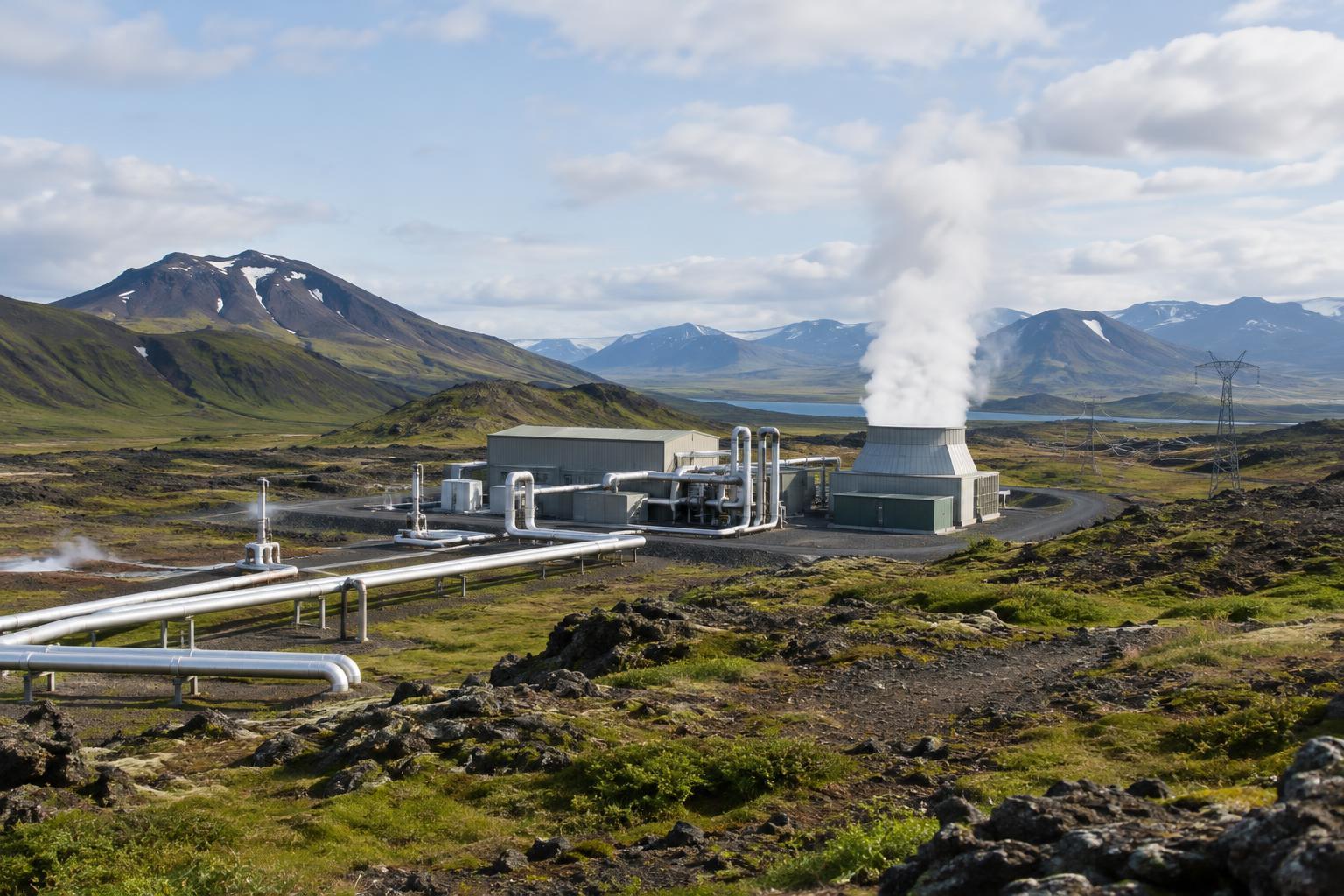
Geothermal electricity begins with heat inside the Earth. In some places, that heat warms water trapped in permeable rock deep underground. Wells bring hot water or steam to the surface, where a power plant uses it to spin a turbine connected to a generator. The cooled water is often sent back underground through another well. This circulation helps maintain the underground reservoir and provides a way to manage the used fluid.
A geothermal power plant needs more than hot rock. Conventional projects also need a practical way for fluid to move through that rock and wells that can reach it. Geothermal heat can also serve buildings directly through heating systems, but producing electricity generally calls for higher temperatures. That distinction helps explain why geothermal heating may be possible in places where a conventional geothermal power plant is not.
Why location matters
Conventional geothermal electricity works best where useful heat is relatively close to the surface and underground conditions allow water to circulate. Such conditions are often associated with volcanic regions, tectonic boundaries and other areas of elevated heat flow. Even within a promising region, one site may be more suitable than another: temperature, rock permeability, fluid chemistry and drilling depth all affect whether a project is practical.
Developers investigate a site before building a plant, but a well is still a test of what lies underground. Drilling can be costly, and a well may reveal less usable heat or fluid flow than expected. A promising resource also needs a way to connect to the electricity grid and a plan for managing water, land use and local impacts. Geothermal power is therefore not a technology that can simply be installed wherever electricity is needed.
Three established ways to make electricity
The plant design depends largely on what comes out of the well. At a dry-steam plant, steam from underground drives a turbine directly. At a flash-steam plant, very hot water rises and encounters lower pressure at the surface. Some of it turns into steam, which drives the turbine. Both approaches rely on a suitable underground resource rather than creating heat at the plant.
A binary-cycle plant keeps the geothermal water separate from the turbine equipment. Heat from the geothermal fluid passes through a heat exchanger to a second fluid that boils at a lower temperature. Vapor from that second fluid spins the turbine, then cools and circulates again in a closed loop. This design can make use of resources that are not hot enough for some steam-based plants, although the site must still deliver sufficient heat to generate useful electricity.
What makes geothermal useful—and what needs managing
Unlike solar panels or wind turbines, a geothermal plant does not depend on the weather at the moment it generates power. A well-performing resource can provide steady electricity, which may help complement more variable sources. Its output is not automatically limitless, however. Operators have to manage how quickly heat and fluid are drawn from the reservoir, and a plant’s performance can change over time.
Geothermal plants also have environmental and operational considerations. Drilling and surface equipment affect the site, while some underground fluids contain minerals or gases that require careful handling. Water use, corrosion and mineral buildup can shape plant design. Moving fluids underground may, in some circumstances, contribute to small earthquakes; projects need monitoring and operating plans suited to local geology. These issues vary by resource, so the details matter more than a blanket claim that every plant has the same footprint.
Could newer methods work in more places?
Enhanced geothermal systems aim to use hot rock that lacks enough natural fluid circulation for a conventional plant. The approach involves drilling wells and improving pathways for fluid to move through the rock and collect heat. It could widen the range of usable sites, but creating and managing those pathways presents technical challenges, including the need to monitor seismic activity.
Another developing idea is the closed-loop geothermal system. Instead of relying on fluid flowing through an underground reservoir, it circulates a working fluid through sealed underground pipes to collect heat. Designs differ, and whether they can produce electricity competitively at a given site remains a practical question. For now, established geothermal electricity is most closely tied to favorable underground resources. New approaches are attempts to loosen that geographic constraint, not proof that every community can generate power from the ground beneath it.