What makes hydrogen “green”?
Hydrogen is a fuel and an industrial ingredient, not a source of energy found ready to use. It must be separated from another substance before it can be stored or consumed. Today, hydrogen can be produced in several ways. “Green hydrogen” generally means hydrogen made by splitting water with electricity from renewable sources, such as wind or solar power.
That distinction matters because using hydrogen does not tell the whole emissions story. A fuel cell, for example, produces electricity from hydrogen without releasing carbon dioxide at the point of use. But the climate impact also depends on how the hydrogen was made, compressed or converted, transported and delivered. Calling hydrogen green is most meaningful when its renewable electricity supply can be accounted for across that process.
How water becomes a usable fuel
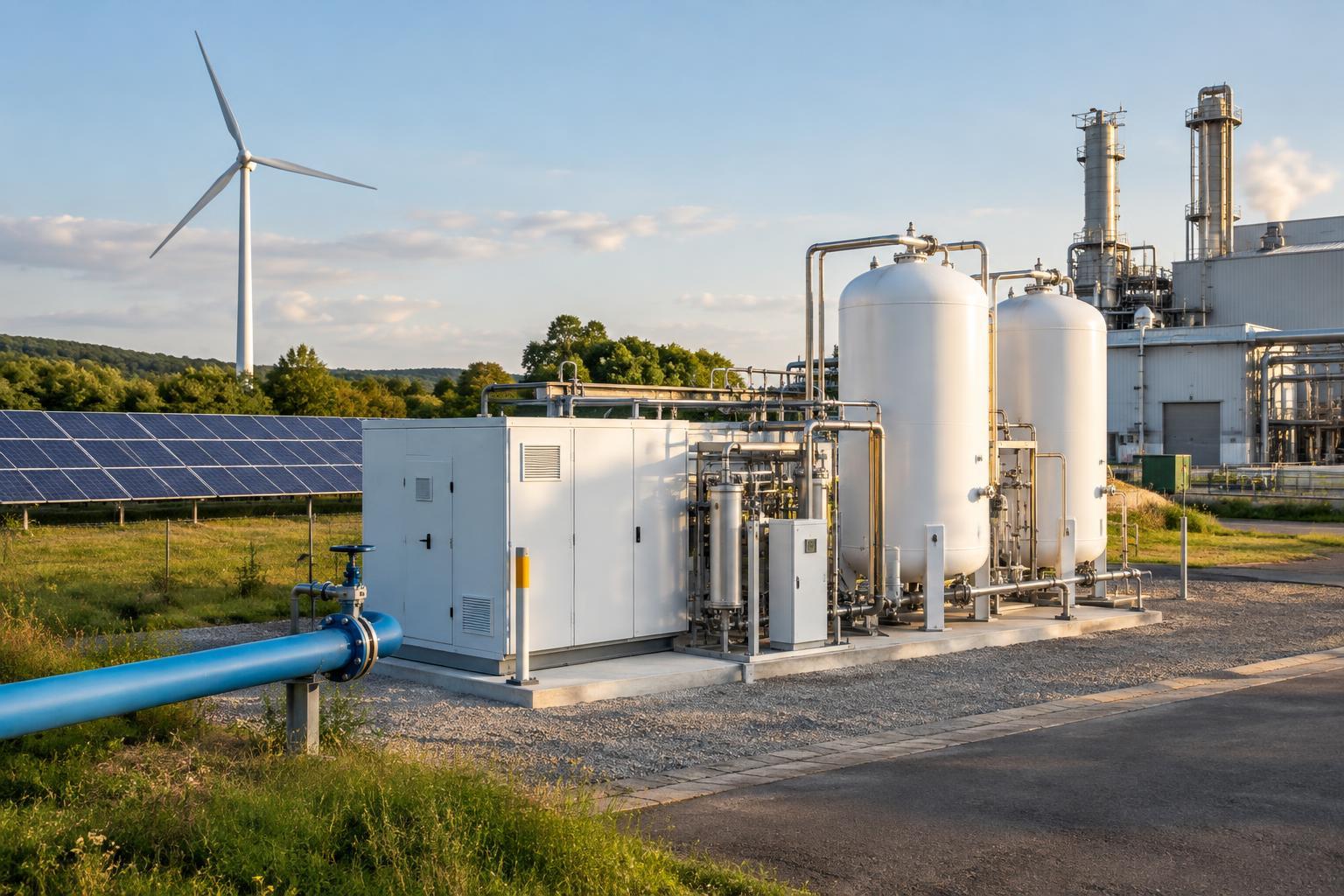
The key device is an electrolyzer. It uses electricity to split water into hydrogen and oxygen. The hydrogen can then be collected, but it usually needs further handling before anyone can use it: compression for storage in tanks, cooling to make liquid hydrogen, or conversion into another substance such as ammonia. Each step requires equipment and energy.
Water quality matters too. Electrolyzers typically need treated water, so a project may require purification. In places with scarce freshwater, a proposed plant also needs to consider where that water will come from; desalination is possible near the coast but adds infrastructure and energy demand. These requirements do not rule out green hydrogen. They make the location and design of a project important.
Why not use renewable electricity directly?
Turning electricity into hydrogen and then back into electricity loses some energy at each stage. If the goal is to move a passenger car or warm a home, directly powering an electric motor or an efficient heat pump will generally use less electricity than producing hydrogen for the same task. Batteries also store electricity without first turning it into a gas, though they have their own material, weight and charging constraints.
The better question is not whether hydrogen can do a job, but whether it offers an advantage over the available alternatives. Hydrogen may be more useful when an industrial process needs it as an ingredient, or when storing energy in a battery would be impractical because of the amount or duration of storage required. Even then, the complete system—including production, storage and delivery—needs to make sense.
Where green hydrogen may earn its place
One promising role is replacing hydrogen already used to make chemicals, including ammonia for fertilizer. In that case, the task is not to invent a new use for hydrogen but to change how an existing supply is produced. Some steelmaking methods could also use hydrogen to help remove oxygen from iron ore, potentially reducing reliance on coal in that step. Whether a particular facility can make the change depends on its equipment, electricity supply and costs.
Hydrogen-derived fuels may also help in some forms of long-distance transport where carrying enough battery capacity is difficult. Possibilities include fuels for ships and aircraft, although converting hydrogen into those fuels adds further energy losses and requires suitable engines, handling systems and supply chains. For power grids, stored hydrogen could provide electricity during extended periods of low renewable generation. That is a potential role alongside other storage and grid options, not a reason to use hydrogen for every short-term fluctuation.
A practical test for future projects
A useful way to assess a green-hydrogen proposal is to follow the energy from start to finish. Is there a credible source of renewable electricity? What would that electricity be used for otherwise? Is water available and appropriately managed? How will the hydrogen reach its user, and how much additional processing does that require? Finally, is hydrogen solving a problem that direct electricity or another approach cannot solve as well?
Green hydrogen is an established production method, while many of its proposed large-scale uses still depend on building compatible infrastructure and reducing costs. It is best understood as a targeted tool in a broader energy transition. Where hydrogen is essential or difficult to replace, making it with renewable power could be valuable. Where a device can readily run on electricity, skipping the hydrogen conversion step is often the more straightforward choice.