Two ways to keep the lights on
A home battery stores electricity for later. A backup generator makes electricity while it runs, usually by burning fuel. Either can supply power when the grid is down, but neither automatically powers every appliance for as long as you need. The useful question is not simply which one is better. It is what you need to run, for how long, and under what conditions.
A battery is quiet at the point of use and can respond quickly when paired with suitable controls. It may also serve a purpose on ordinary days, such as storing electricity from solar panels or shifting some household use to a different time. A generator is primarily a backup source: it can keep producing power as long as it has an adequate fuel supply and is operating properly. Its trade-offs include noise, exhaust, maintenance and fuel logistics.
Power and runtime are different limits
A backup system needs enough power to start and run the devices connected to it. A refrigerator, for example, may use modest power once running but need a brief surge when its compressor starts. Batteries, inverters and generators all have output limits, so adding up the normal power use of appliances is not always enough. Large loads such as electric heating, air conditioning or cooking equipment can make whole-home backup more demanding.
Runtime is a separate question. A battery has a finite amount of stored energy. If it supplies only a few essential circuits, it may last much longer than it would while powering the entire house. Once depleted, it needs a way to recharge. A generator can run for longer periods if fuel remains available, but that fuel may be difficult to replenish during a prolonged outage. Operating limits and maintenance needs also matter.
Neither option guarantees uninterrupted service. A system may require a brief switch from grid power to backup power, and the particular equipment determines how that transition works. If uninterrupted power is essential for a device, check that device’s requirements rather than assuming a general home backup system will meet them.
What changes when solar panels are involved
Solar panels can help recharge a home battery during a grid outage, but only if the solar, battery and control equipment are designed to operate together while disconnected from the grid. A standard grid-connected solar installation commonly shuts down during an outage so it does not send power onto lines that workers may be repairing. Having panels on the roof does not, by itself, mean a home will have power when the grid fails.
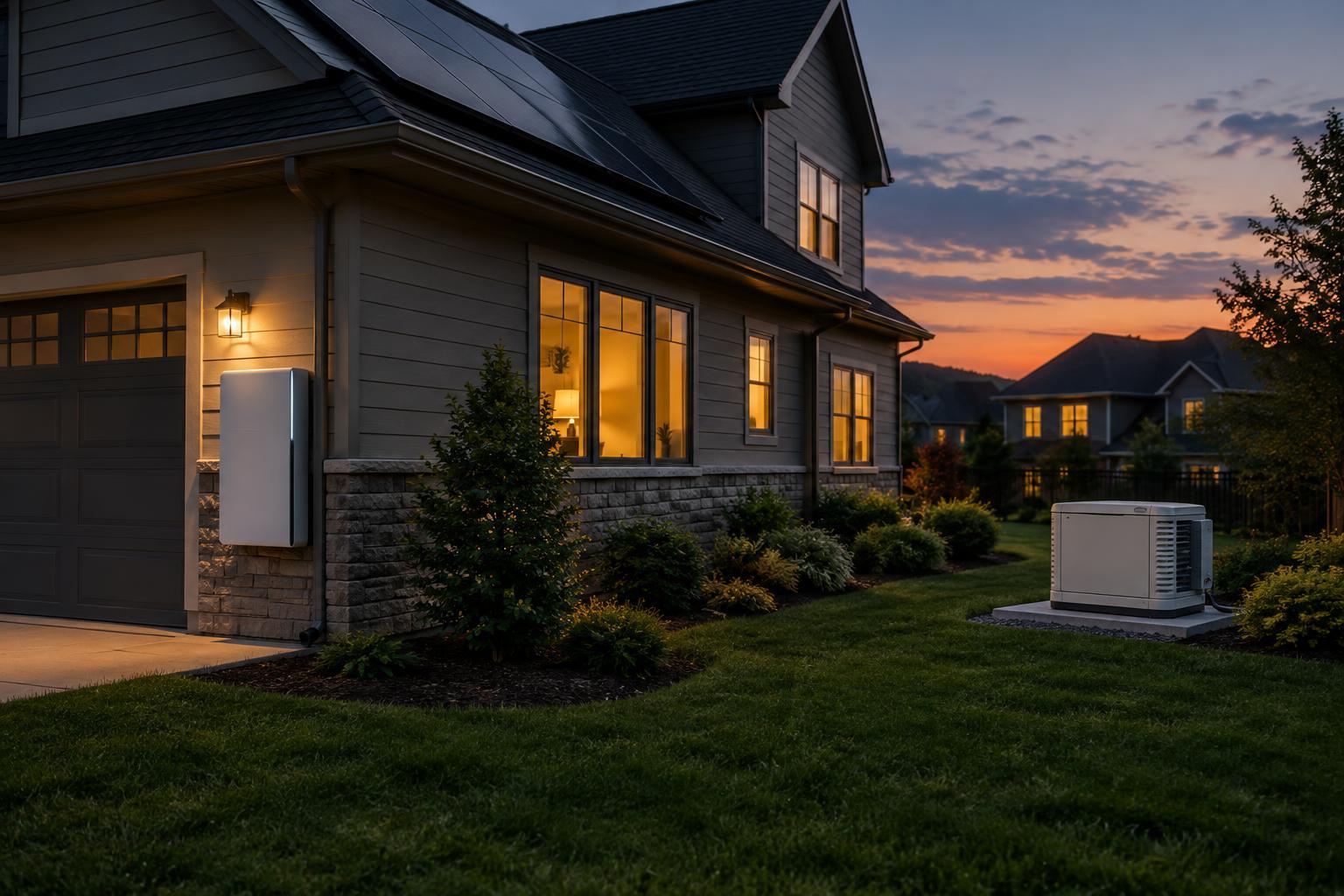
Even a solar-and-battery system depends on conditions. Short days, shade or cloudy weather may limit recharging, while household use continues. A generator is less dependent on sunlight, but it depends on fuel. Some homes use both: a battery can cover selected loads quietly, while a generator provides another source during a longer outage. Whether that combination is possible depends on compatible equipment and a suitable installation.
Everyday use, upkeep and safety
A battery may offer value between outages because it can be charged and discharged as part of normal household energy use. How useful that is depends on the home’s electricity plan, solar setup, equipment settings and patterns of use. Batteries also have a limited service life and may gradually hold less energy over time. Generators generally provide less everyday utility, and they need periodic attention so they are ready when called upon.
Safety is a major difference. Fuel-burning generators produce exhaust, including carbon monoxide, and must never be operated indoors or in an enclosed space. They also need appropriate electrical connections: an improperly connected generator can endanger people working on utility lines. Batteries avoid on-site exhaust while operating, but their installation still involves substantial electrical equipment and must meet applicable safety requirements. For either system, proper siting, connection and maintenance are as important as the equipment itself.
Choose the loads before choosing the system
Start with a realistic outage plan. List what must keep working—perhaps refrigeration, lighting, communications and a few outlets—and what can wait. Then consider how long an outage you want to prepare for, whether you can reliably obtain fuel, and whether your home has solar panels or may add them later. That exercise makes it easier to distinguish a system for essential circuits from one intended to support most of the house.
A battery suits households that value quiet operation and want stored electricity they can potentially use beyond emergencies. A generator can be a practical choice when extended backup and access to fuel matter more. Neither is a universal answer: batteries can run out of charge, and generators can run out of fuel or fail to start. The strongest plan matches a specific set of loads and outage expectations to equipment designed and installed for that job.