A heat source with a familiar job
A nuclear power plant generates electricity much like many other large power stations: it uses heat to make steam, steam to spin a turbine, and the turbine to drive a generator. The distinctive part is the heat source. Instead of burning fuel, the plant releases heat through controlled nuclear fission inside a reactor.
This distinction helps separate the nuclear process from the electrical one. The reactor does not send electricity straight into the grid. It supplies heat to a system of pumps, pipes and heat exchangers. At the end of that system, a generator converts the turbine’s motion into electrical energy.
What happens inside the reactor
Most operating nuclear power plants use uranium fuel formed into small pellets and sealed inside long metal tubes called fuel rods. The rods are grouped into assemblies in the reactor core. When the nucleus of a suitable uranium atom splits, it releases heat and neutrons. Some of those neutrons can split other atoms, creating a chain reaction.
A power reactor is designed to keep that reaction controlled. In many designs, water helps slow neutrons so they are more likely to cause further fission. Control rods absorb neutrons; moving them changes the reaction rate. Operators monitor the reactor and use engineered control systems to keep it within its operating limits. Even after fission is stopped, radioactive decay in the fuel continues to produce heat, so cooling remains essential.
The heat moves from the fuel into a coolant, commonly water. Different reactor designs handle that hot water differently, but the purpose is the same: carry energy away from the core so it can be used to produce steam.
From hot water to electricity
In a pressurized-water reactor, water circulates through the core under high pressure, which keeps it from boiling there. It passes through a steam generator, where its heat transfers across metal tubes to a separate water loop. Water in that second loop becomes steam and flows toward the turbine. Keeping the loops separate also helps limit where reactor-coolant materials can travel.
In a boiling-water reactor, water boils in the reactor vessel itself. The resulting steam is directed to the turbine after passing through equipment that reduces its water content. Although the plumbing differs, both designs use steam to push turbine blades. The spinning turbine turns the generator, which produces electricity for delivery through transformers and power lines.
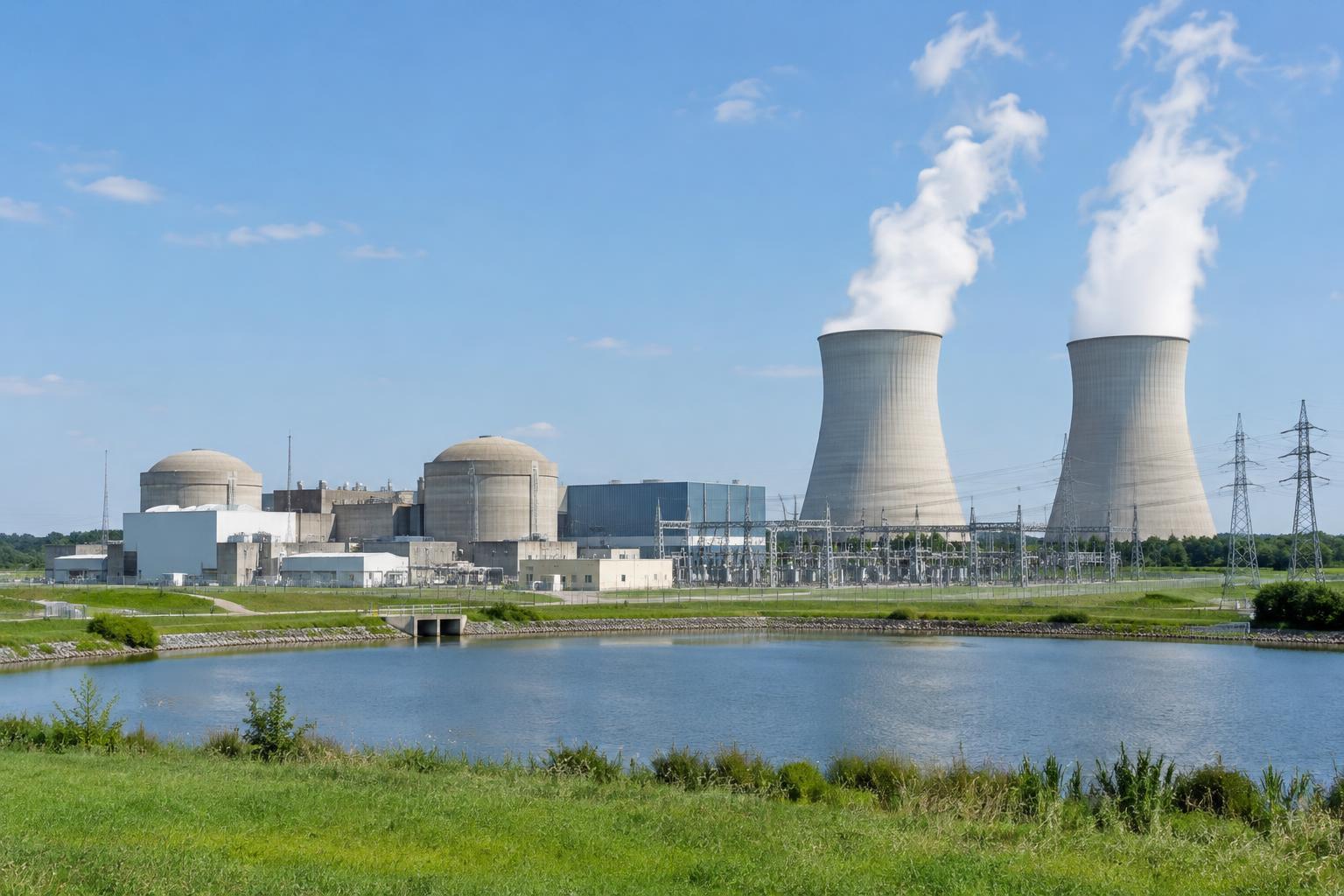
After leaving the turbine, the steam is cooled back into liquid water in a condenser and reused. A separate cooling system carries away the heat that cannot be converted to electricity. Depending on the site, that system may use cooling towers or water from a nearby source. The white plume sometimes seen above a cooling tower is primarily condensed water vapor, not smoke from combustion.
Why cooling and containment matter
A reactor must manage heat during normal operation and after shutdown. Plants therefore include cooling equipment, backup power and procedures intended to keep fuel covered and cooled if ordinary systems are unavailable. Multiple physical barriers, including the fuel’s metal cladding and the reactor’s containment structure, are designed to limit the release of radioactive materials. The details vary by plant, and no design removes risk entirely.
Generating electricity by fission does not produce carbon dioxide through fuel combustion at the plant. However, building facilities, preparing fuel and managing materials still involve environmental impacts. Nuclear plants also produce spent fuel, which remains radioactive and requires secure handling, storage and eventual long-term management. These considerations are part of assessing the technology alongside its ability to provide electricity when the plant is available to operate.
Established plants and proposed designs
The water-cooled reactors described above are established ways to generate nuclear electricity. Other approaches, including some small modular reactors and designs using different coolants, are being developed or proposed. They may change how components are built or how heat is transferred, but each still needs to control fission, remove heat and convert that heat into useful power.
For any design, the basic energy path remains a useful guide: fission heats a coolant, heat makes steam or drives another power cycle, a turbine turns, and a generator supplies electricity. Understanding that path makes it easier to evaluate claims about new reactors without confusing a promising design with a plant already operating at scale.