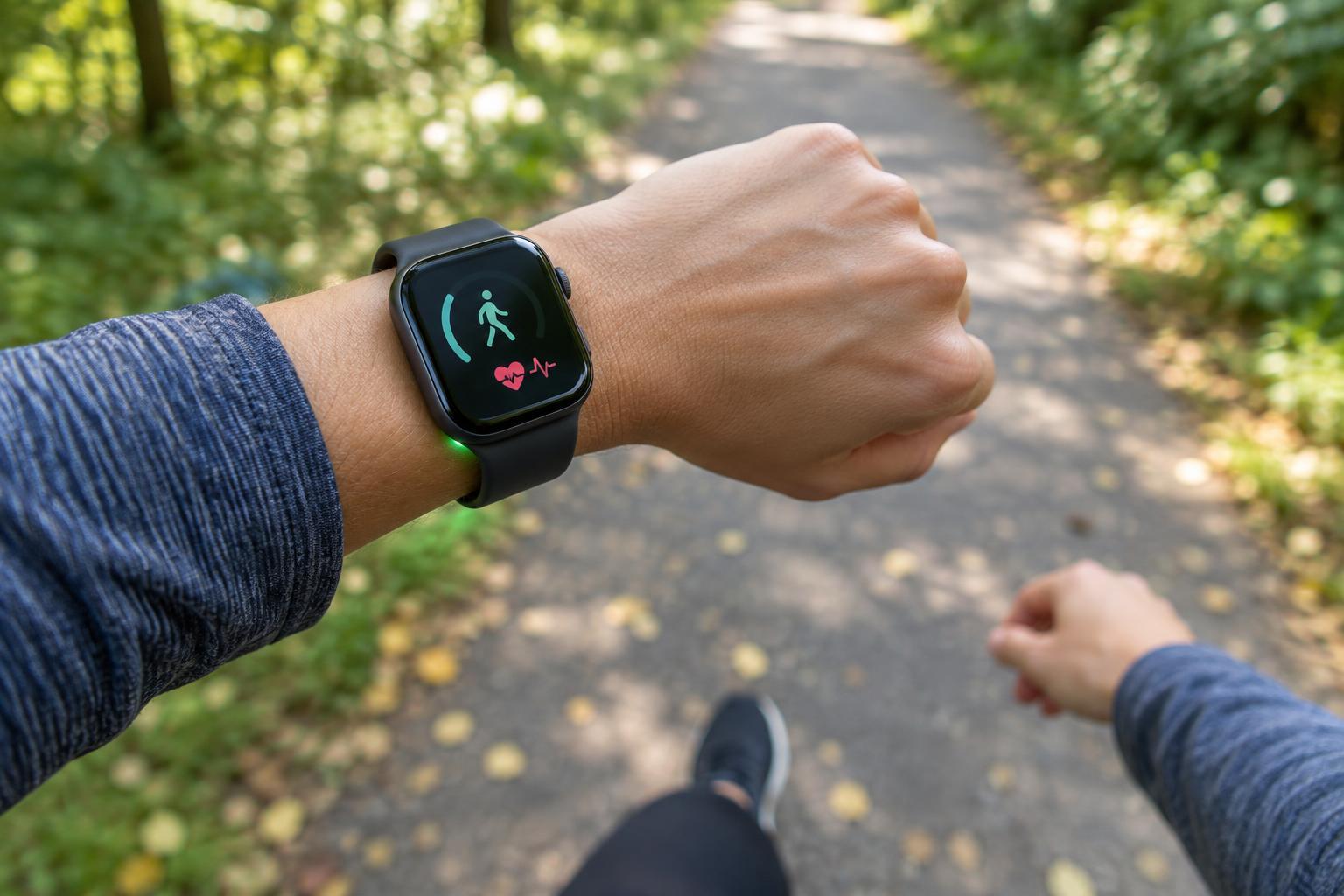
A wearable measures signals, then makes estimates
A fitness band can show a step count and heart rate within seconds, but neither number comes from a tiny observer counting each event. Sensors collect physical signals, and software interprets them. That distinction explains why a wearable can be useful without being exact.
Most step counts begin with an accelerometer, which detects changes in motion. Many devices also use a gyroscope to sense rotation. For heart rate, a wrist-worn device usually shines light into the skin and measures how much light returns. The software looks for a repeating pattern associated with blood flow. Different devices may process these signals differently, so two wearables on the same person need not display identical numbers.
How a swinging arm becomes a step count
Walking creates a repeating pattern of movement. A wearable looks for that rhythm, along with clues such as the size and timing of each motion, to decide whether to add steps. It must distinguish walking from other activities that move the wrist. Picking up objects, gesturing or travelling over a bumpy surface may sometimes resemble steps. Conversely, pushing a stroller or shopping cart can keep the wrist relatively still while the wearer walks.
Where a device is worn matters. A wrist tracker sees arm motion; a phone in a pocket sees movement closer to the legs and torso. Either can miss or add steps depending on the activity. Even two wrist devices may differ because their software uses different rules for recognizing walking and filtering out unrelated motion.
Step counts are therefore best treated as consistent estimates rather than a precise record of every footfall. If you use one device in roughly the same way each day, changes in its count may be more informative than small differences between it and another device.
How light helps estimate heart rate
Many watches use a method called photoplethysmography, often shortened to PPG. Small lights illuminate the skin, and light sensors detect changes in the returning light. As blood volume in vessels near the skin changes with each heartbeat, the reflected signal changes too. The device estimates heart rate by finding the timing of those repeated changes.
This is not the same as measuring the heart’s electrical activity. Some wearables have a separate electrical sensing feature, but the routine heart-rate number shown during the day commonly comes from optical sensing. The watch also has to separate the pulse pattern from changes caused by wrist motion, pressure and surrounding light. During steady rest, that task may be easier than during an activity with frequent arm movement.
Heart rate itself changes naturally with activity, stress, temperature and recovery. A difference between readings taken a few minutes apart does not automatically mean a sensor has failed. It helps to compare measurements taken under similar conditions.
Why the number on the screen can vary
A loose band can let the sensor shift or admit outside light. A band worn too tightly may also make readings less comfortable or less useful. Motion can disturb the optical signal, particularly when the wrist moves sharply or repeatedly. Tattoos, skin characteristics, hair and sensor placement may affect how well a particular device captures a signal; performance can vary across devices and people.
The number displayed may also be a processed result rather than an instant-by-instant measurement. To make a reading more stable, software may average signals, reject uncertain data or update the display less frequently. A watch and exercise machine can consequently show different heart rates at the same moment, even when both are working as designed. Without a suitable reference measurement, a disagreement alone does not establish which is closer.
How to use the readings wisely
For a better chance of a clear wrist reading, follow the device maker’s fit guidance and keep the sensor area clean. When checking resting heart rate, sit still and allow the reading time to settle. During exercise, expect more variation if the watch slips or the activity involves forceful wrist movement. Wearing the same device in a consistent position can make comparisons over time more meaningful.
Look for patterns rather than treating a single surprising number as a verdict. Step totals can help you notice whether you are moving more or less than usual, while heart-rate readings can provide context for activity and rest. If a value seems implausible, check the fit and measure again under calmer conditions. A wearable is a convenient feedback tool, not a diagnosis: if you have symptoms or concerns about your heart, seek appropriate medical care rather than relying on its display.