From moving air to a turning rotor
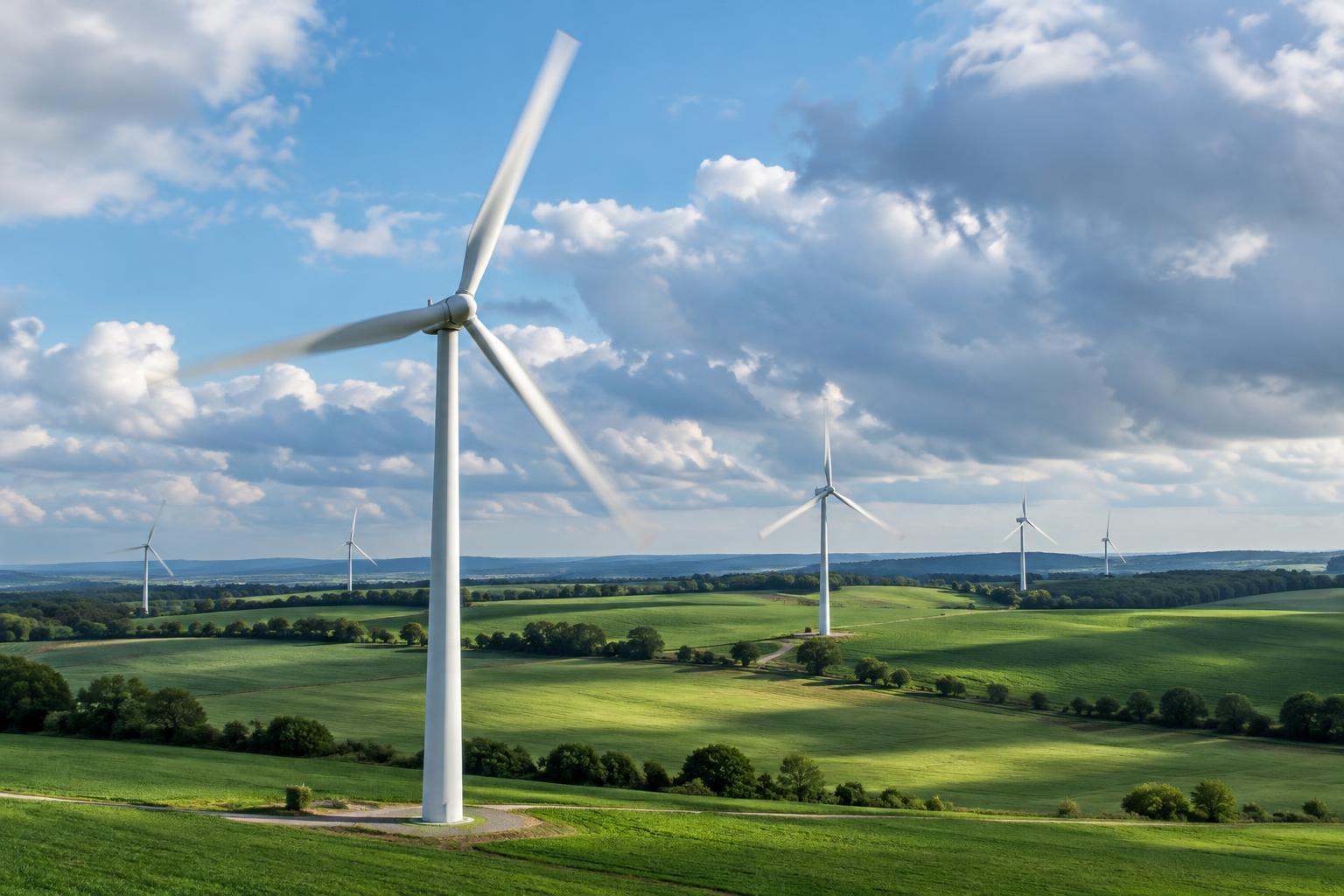
A wind turbine begins with the energy of moving air. As wind flows around its blades, their shape creates lift, much as an aircraft wing does. That force turns the rotor, which is connected to machinery inside the nacelle, the housing at the top of the tower. The blades do not simply catch the wind like sails: their curved shape helps them keep turning efficiently across a range of conditions.
The tower raises the rotor into air that is often faster and less disrupted by buildings, trees and uneven ground. Control systems can turn the nacelle to face the wind and adjust the angle of the blades. These adjustments help the turbine capture useful energy while limiting strain on its parts. They also explain why two turbines that look alike can behave differently at a given moment: each responds to the wind reaching its own rotor.
How rotation becomes usable electricity
The rotor drives a generator. In some turbine designs, a gearbox increases the relatively slow rotation of the rotor before it reaches the generator. Direct-drive designs omit that gearbox and use a generator suited to slower rotation. Both approaches perform the same basic task: moving magnets and electrical conductors relative to one another to produce electricity.
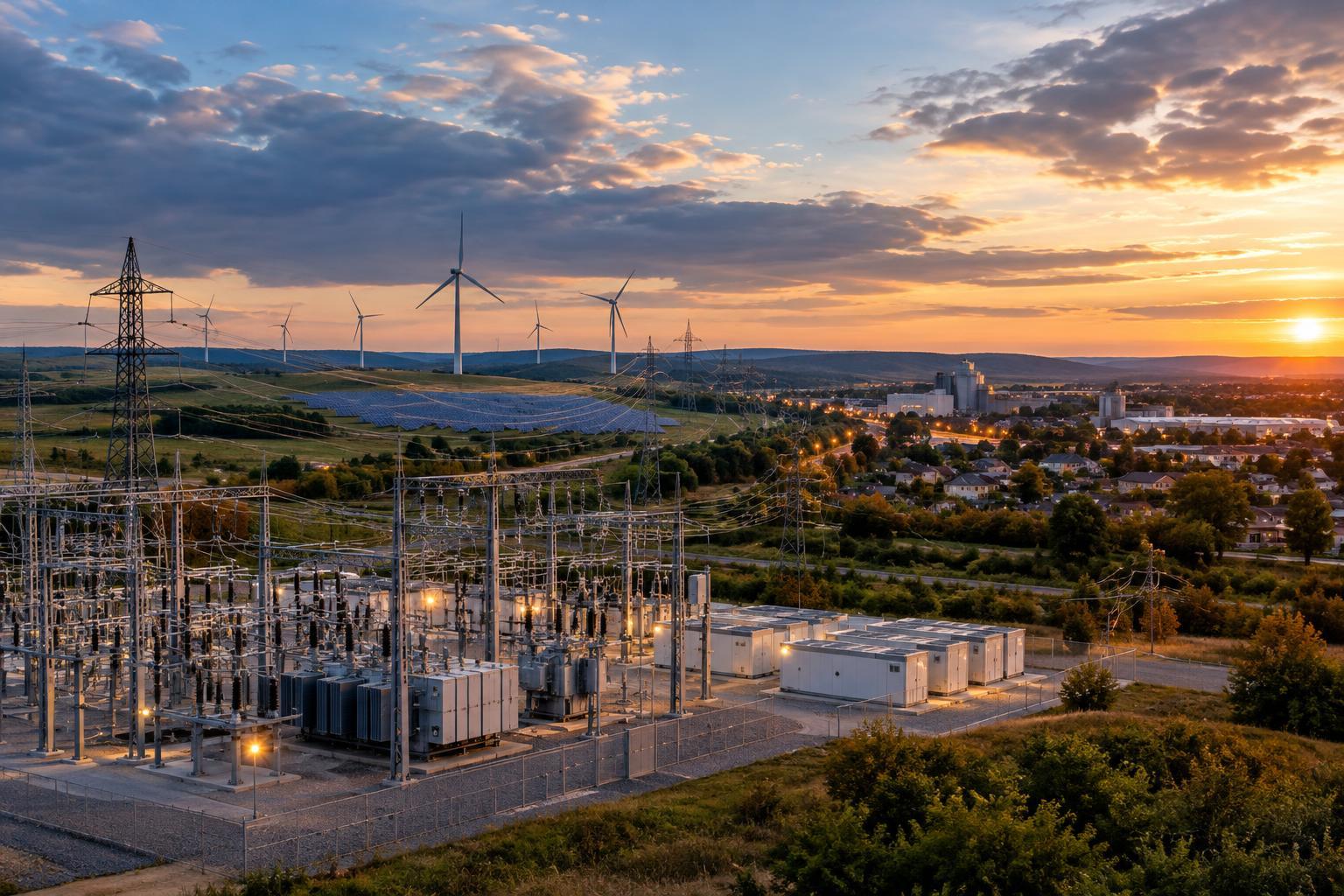
That electricity needs to be managed before it can serve homes and businesses. Power electronics help match the turbine’s output to the electrical grid, even as rotor speed changes. A transformer then raises the voltage so power can travel more efficiently through cables. A wind farm also needs shared equipment, including cables, controls and a connection to the wider grid. The spinning blades are the most visible part of the system, but they are only the beginning of the path from wind to an electrical outlet.
Why a small wind change can make a big difference
Wind speed has an unusually strong effect on the energy available to a turbine: the energy moving through a given area rises roughly with the cube of wind speed. In simple terms, a modest increase in speed can bring a much larger increase in available power. A larger rotor can also intercept more moving air because its blades sweep a wider area. Neither factor guarantees an equal increase in electrical output; no turbine can capture all the energy in the wind, and its components have operating limits.
A turbine therefore has several operating regions. Below its cut-in speed, there may not be enough wind to generate useful power. As wind strengthens, output generally rises until the turbine reaches its rated power—the level it is designed to produce under suitable conditions. Above that point, controls usually limit output rather than letting it keep climbing. In very strong winds, a turbine may shut down to protect itself. The exact speeds and control behavior depend on the model.
The same forecast can mean different output
A weather forecast might describe the wind across a broad area, but a turbine experiences the wind at its particular location and height. Hills, coastlines, buildings and neighboring turbines can change airflow. Turbulence makes wind less smooth and may cause both fluctuating output and greater mechanical loads. Air density matters too: denser air carries more energy at the same wind speed than less dense air.
Output can also fall for reasons other than calm weather. A turbine may pause for maintenance, respond to icing or other unsuitable conditions, or reduce production when a grid operator cannot take all the available power. This is why a turbine’s rated power is not the electricity it produces every hour. Rated power describes an operating capability; energy production is the amount generated over time. To compare sites or projects, it helps to consider the wind they typically receive, not just the size of the machines installed.
What variable wind means for the grid
Wind generation changes from hour to hour, and operators plan around that variability. Forecasts help them anticipate likely output, while a mix of power sources, connections between regions, flexible electricity use and storage can help balance supply and demand. Storage can shift some electricity from a windy period to a later one, although how much it helps depends on its capacity and the length of the gap it must cover.
The key distinction is between variable and unusable. Wind turbines generate electricity without burning fuel while they operate, but they cannot promise the same output on command at every moment. Understanding their components and limits makes both facts easier to hold together: a turbine is a practical power-producing machine, and the grid around it must be able to handle changing weather.