Two electric drivetrains, two ways to carry energy
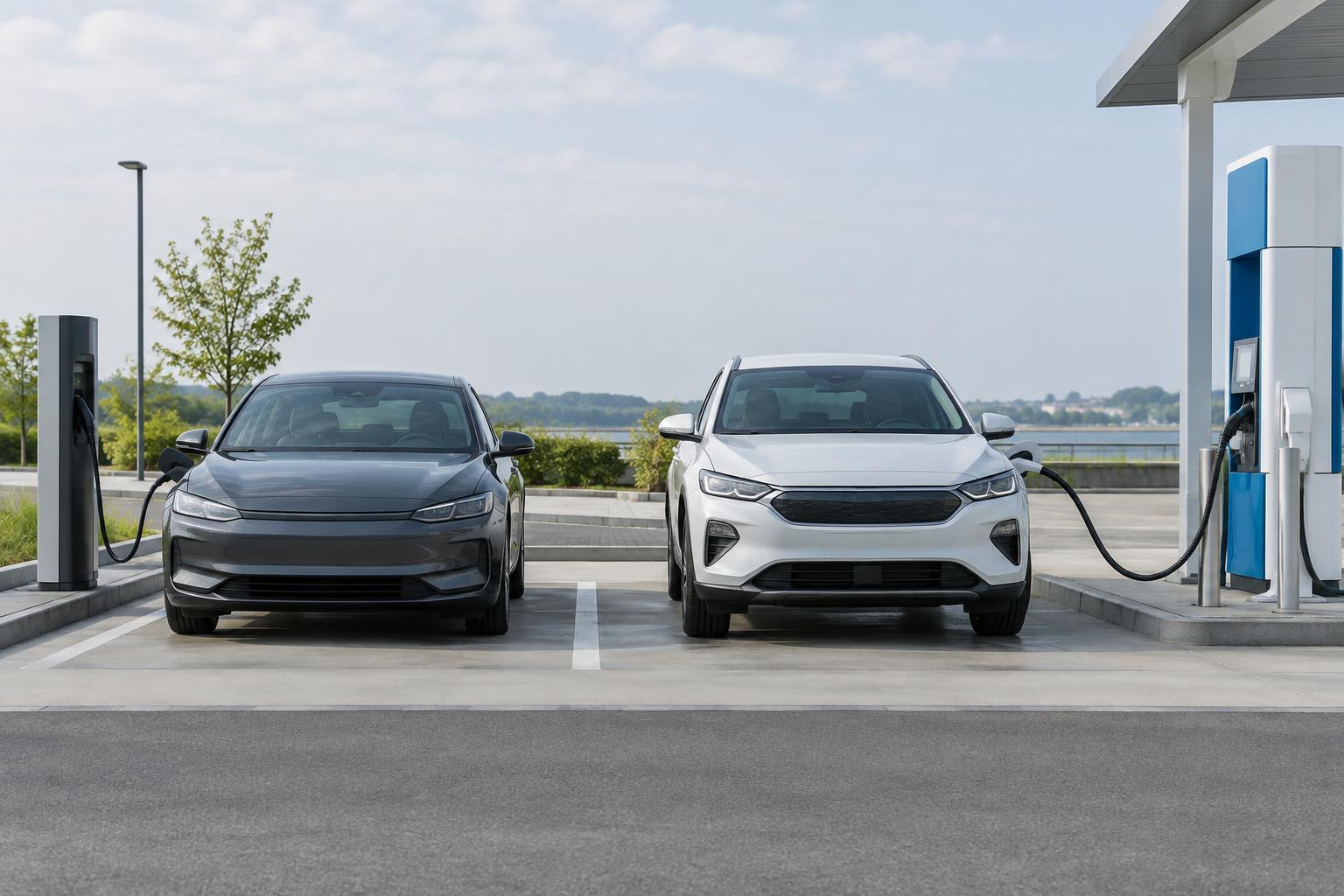
A battery electric car stores electricity in a rechargeable battery pack. That electricity flows to a motor that turns the wheels. When the driver slows down, regenerative braking can send some of the vehicle’s kinetic energy back into the battery. The battery is charged by plugging the car into an electrical supply, whether at home, at work or at a public charging station.
A hydrogen fuel-cell car also uses an electric motor, but it carries most of its energy as hydrogen gas in a high-pressure tank. Inside the fuel cell, hydrogen reacts with oxygen from the air to generate electricity. A smaller battery can store energy recovered during braking and help meet short bursts of demand. In both cars, the motor provides propulsion; the main difference is whether the car carries stored electricity or makes electricity on board from stored hydrogen.
Charging and refueling shape the daily routine
For many battery electric drivers, the most convenient stop is no stop at all: they plug in while the car is parked and leave with more charge later. This depends on having access to a suitable outlet or charger. Public fast charging can help on longer trips, but a charging stop generally takes longer than filling a conventional fuel tank, and the time varies with the car, charger, battery temperature and state of charge.
A fuel-cell car can be filled at a compatible hydrogen station in a relatively short visit. That advantage matters only if stations are available along a driver’s usual routes. Hydrogen stations are specialized facilities, and their availability varies greatly by location. Battery electric charging is also unevenly distributed, but electricity can be supplied at many kinds of parking location. Before choosing either vehicle, a driver needs to check the infrastructure they can actually use, not just the vehicle’s advertised range.
Where the energy comes from matters
Neither type of car produces exhaust from burning gasoline while driving. A battery electric car has no tailpipe emissions, while a fuel-cell car releases water from the fuel-cell reaction. Those facts describe the vehicle in use, not the full environmental impact of powering it. Generating electricity, producing hydrogen, making vehicles and building infrastructure all require materials and energy.
Battery electric cars can use electricity from a grid with a changing mix of energy sources. Hydrogen must first be produced, then compressed or otherwise prepared and delivered to a station. It can be made from fossil fuels or through electrolysis, which uses electricity to split water. The resulting emissions depend heavily on the production method and the energy used. Converting electricity into hydrogen and back into electricity also introduces losses, so using electricity directly in a battery car generally requires fewer energy-conversion steps.
Range is only part of the comparison
A useful vehicle has to fit more than a single long journey. Drivers may care about purchase price, passenger and cargo space, maintenance access, energy cost and the reliability of local charging or refueling. Cold weather, high speeds and heavy loads can affect how far a vehicle travels before it needs energy. These conditions can affect the two technologies differently, so a range figure is most useful when considered alongside the trips a driver regularly makes.
Both systems also involve engineering trade-offs. A larger battery can store more energy but adds weight and may take longer to charge under some conditions. A fuel-cell vehicle needs high-pressure hydrogen storage and a system to supply the fuel cell, as well as access to a hydrogen network. Neither design removes the need to plan for long-distance travel. The easier option depends partly on whether a driver can routinely charge where they park or reliably reach a hydrogen station.
Which technology makes sense where?
Battery electric cars are an established choice for drivers who can charge conveniently and whose journeys are served by available public chargers. Fuel-cell passenger cars are also real vehicles, rather than just a future concept, but their usefulness is closely tied to local hydrogen supply. In a place without accessible stations, quick refueling on paper offers little practical benefit.
Hydrogen may be worth exploring in some transport settings where vehicles follow predictable routes and can return to a dedicated fueling site. That possibility does not mean it will be the best answer for every car or fleet. The clearest way to compare the technologies is to ask three questions: Where can the vehicle get energy? How was that energy produced? And does the vehicle suit the journeys it will actually make?