Why the grid needs storage
Electricity supply and demand have to stay in balance. A grid may have plenty of solar generation in the afternoon but need more power after sunset, when lights, cooking appliances and other devices are in use. Storage can absorb some electricity when it is available and deliver it later. It can also respond to short-term changes, such as a sudden rise in demand or a drop in generation.
Two established ways to do this at grid scale are lithium-ion batteries and pumped hydro storage. Neither creates energy. Both consume electricity while charging or pumping, then return less than they took in because some energy is lost along the way. Their value lies in making electricity available at a more useful time.
How each system stores energy
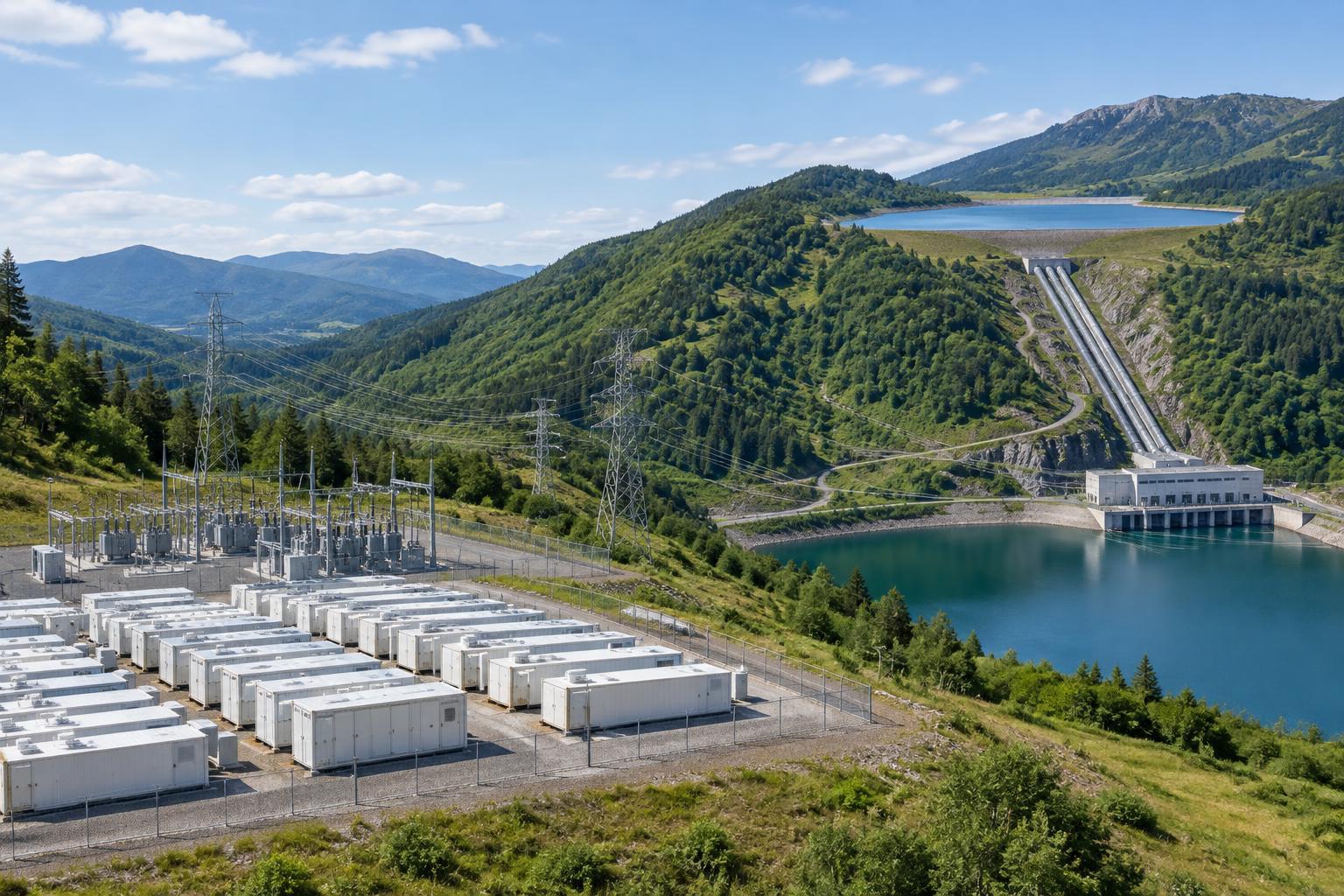
A lithium-ion storage project contains battery cells, electronics that manage them, cooling and safety systems, and equipment that connects the project to the grid. During charging, energy is stored through chemical changes inside the cells. When the grid needs power, those processes reverse and the system delivers electricity. Batteries can change their output quickly, making them useful for both brief grid adjustments and planned periods of discharge.
Pumped hydro uses two water reservoirs at different elevations. When electricity is available, pumps move water uphill. Later, water flows downhill through turbines to generate electricity. The stored energy comes from the water’s height and volume. Unlike a battery, the system depends on substantial civil works and a suitable site. Some projects use existing reservoirs; others require new ones. The design of the reservoirs, waterways and equipment determines how much energy can be stored and how quickly it can be delivered.
Duration, flexibility and location
A useful distinction is between power and energy. Power is how much electricity a system can deliver at once; energy is how much it can deliver before it needs recharging. A battery project can be designed for a particular combination of the two by selecting its electrical equipment and the amount of battery capacity. Adding capacity may extend its discharge time, but it also adds cells, space and cost. Battery systems are often attractive where fast response or a relatively compact site matters.
Pumped hydro can be designed to hold substantial amounts of energy, especially where the available height difference and reservoir sizes are favorable. That can make it a candidate for moving electricity across longer stretches of a day. Its main constraint is location: suitable terrain, water arrangements and a workable grid connection are all necessary. A battery installation generally has more possible locations, though it still needs land, permits, a grid connection and appropriate safety planning.
Costs and environmental trade-offs
Comparing the two by a single price tag can be misleading. A grid operator may care about construction cost, operating costs, expected service life, maintenance, energy losses and the value of the services a project can provide. Battery projects can be built in modular stages, but their cells degrade with use and age and may eventually need replacement. Pumped hydro can involve major upfront construction and long development times, while its equipment and structures can be maintained or renewed over time.
Both options have environmental considerations. Lithium-ion batteries rely on mined and processed materials; manufacturing, transport, fire safety and end-of-life handling all matter. Pumped hydro can alter land and water systems, with impacts that depend heavily on the site and design. A project using existing infrastructure may pose different questions from one involving new reservoirs. Neither technology is impact-free, so comparisons should account for the specific project rather than assume one is always cleaner.
Why a grid might use both
Imagine a sunny afternoon followed by a busy evening. A battery could store some afternoon electricity and begin supplying it promptly as demand rises. A pumped hydro plant could also pump water uphill during that period and release it later. Which project offers more value depends on the shape of demand, the available generation, the local terrain and the services the grid needs—not just on how much energy each can store.
In practice, storage is one part of a broader toolkit that can include stronger transmission links, flexible electricity use and generation that can adjust its output. Lithium-ion batteries and pumped hydro are not simply rivals for one universal job. Batteries offer adaptable siting and rapid response; pumped hydro offers a different route to large-scale storage where geography and project conditions allow it. The best choice starts with a clear question: what grid problem needs solving, for how long, and in which place?