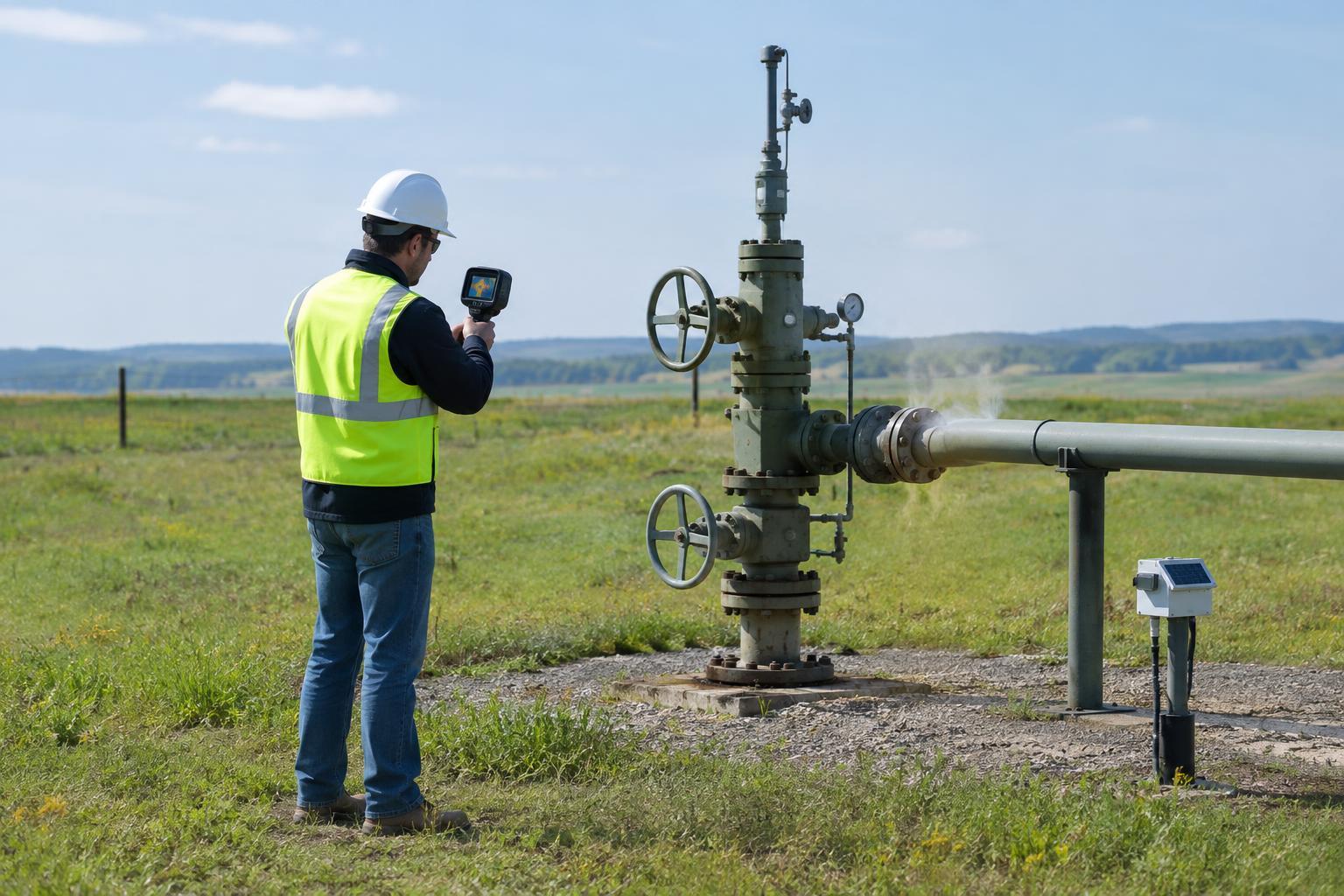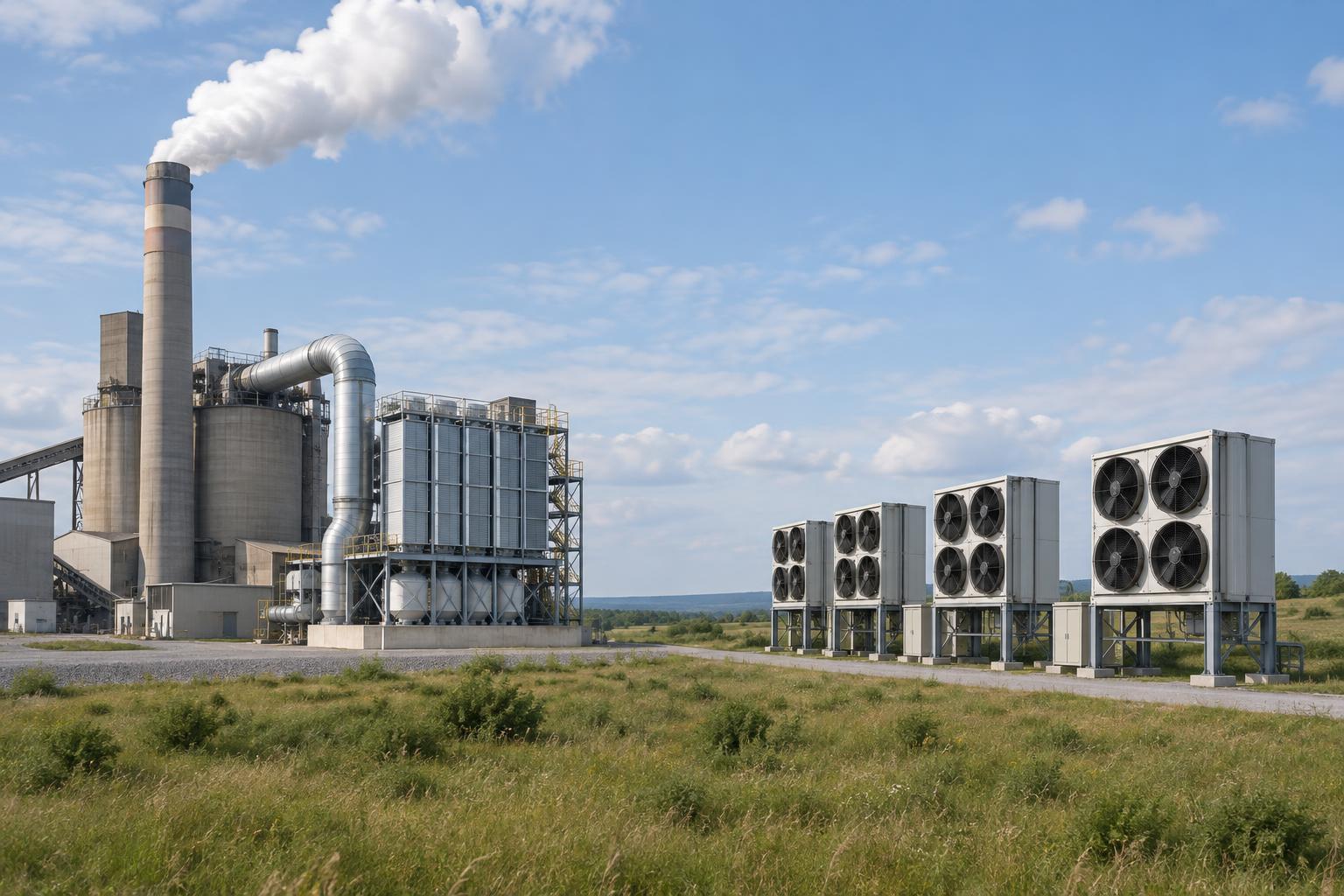
Two approaches, two starting points
Imagine a factory chimney and the open air outside your home. Both contain carbon dioxide, but the gas leaving the chimney can be far more concentrated. Point-source carbon capture separates carbon dioxide from a facility’s exhaust or another process stream before it enters the atmosphere. Direct air capture, or DAC, separates carbon dioxide that has already mixed into the surrounding air.
That distinction shapes what each approach can accomplish. Point-source capture can reduce emissions from a particular operation, such as cement production or certain chemical processes. DAC can potentially remove previously emitted carbon dioxide, regardless of where it originated. But neither approach makes energy use or other emissions disappear. To judge its climate benefit, you have to consider the whole system: the capture equipment, its energy supply, what happens to the captured gas and any emissions that remain.
How point-source capture works
At a point source, equipment can be fitted to an existing facility or incorporated into a new one. Depending on the process, the system might use a liquid solvent, a solid material or a membrane to separate carbon dioxide from other gases. The carbon dioxide is then collected for transport, use or storage. Because it is intercepted at a specific facility, operators can measure the incoming and outgoing gas streams to assess how much the capture system catches.
The main advantage is access to a relatively concentrated stream. That generally makes separation less demanding than pulling the same amount of carbon dioxide from ordinary air. Still, capture equipment needs energy and maintenance, and it may not collect every emission from a site. It also does not address emissions elsewhere in a product’s life cycle. If a fossil-fuel facility captures most of its chimney emissions, for example, emissions associated with obtaining and transporting its fuel still need to be considered.
Why capturing carbon from air is harder
DAC systems draw in large volumes of ambient air and pass it over materials that bind with carbon dioxide. Heat, a change in pressure or another process then releases a more concentrated stream, allowing the material to be reused. The basic separation methods are real, but their performance in practice depends on plant design, operating conditions and the energy used to run them.
Air contains much less carbon dioxide than an industrial exhaust stream. A DAC plant therefore has to process more gas to collect a given amount, which adds demands for fans, equipment and energy. Its potential advantage is flexibility: it does not need to sit beside the facility that originally emitted the carbon. It does, however, need suitable energy, water where required by the design, and a practical route for moving or storing the captured carbon dioxide.
Capturing carbon is not the same as storing it
After either type of capture, carbon dioxide can be compressed and sent for geological storage, or used to make a product. These outcomes are not equivalent. If carbon dioxide is used in a fuel that is later burned, it returns to the air. Some products may hold it longer, but the duration and net benefit depend on how they are made and used. For long-lasting climate benefit, secure storage and credible monitoring are especially important.
The climate accounting differs, too. Capturing carbon dioxide from a fossil-fuel plant usually prevents some new emissions; it does not normally remove past emissions from the atmosphere. DAC paired with durable storage can count as carbon removal, but only after accounting for emissions from its construction, operation, energy supply and transport. Even a high-performing capture unit may offer a limited net benefit if the rest of the system produces substantial emissions.
Where each approach may fit
Point-source capture may be useful for industrial activities whose process emissions are difficult to eliminate through cleaner electricity or redesigned production. DAC may have a different role: removing some residual carbon dioxide from the atmosphere while broader efforts cut emissions at their sources. Neither is a substitute for avoiding emissions where practical, because preventing carbon dioxide from entering the air can be simpler than collecting it afterward.
When comparing a project, ask a few grounded questions. What gas stream does it treat, and how much carbon dioxide escapes capture? Where does its energy come from? What happens to the collected gas, and for how long will it stay out of the atmosphere? Clear answers reveal more than a headline capture figure. The central difference remains simple: point-source systems intercept carbon dioxide on its way out, while DAC tries to retrieve it after it has dispersed.