Where the energy goes when a vehicle slows down
A moving car has kinetic energy. To slow down, that energy has to go somewhere. In a conventional braking system, friction between brake components turns much of it into heat, which escapes into the surrounding air. Regenerative braking offers another route: an electric motor helps slow the vehicle while generating electricity that can be stored in its battery.
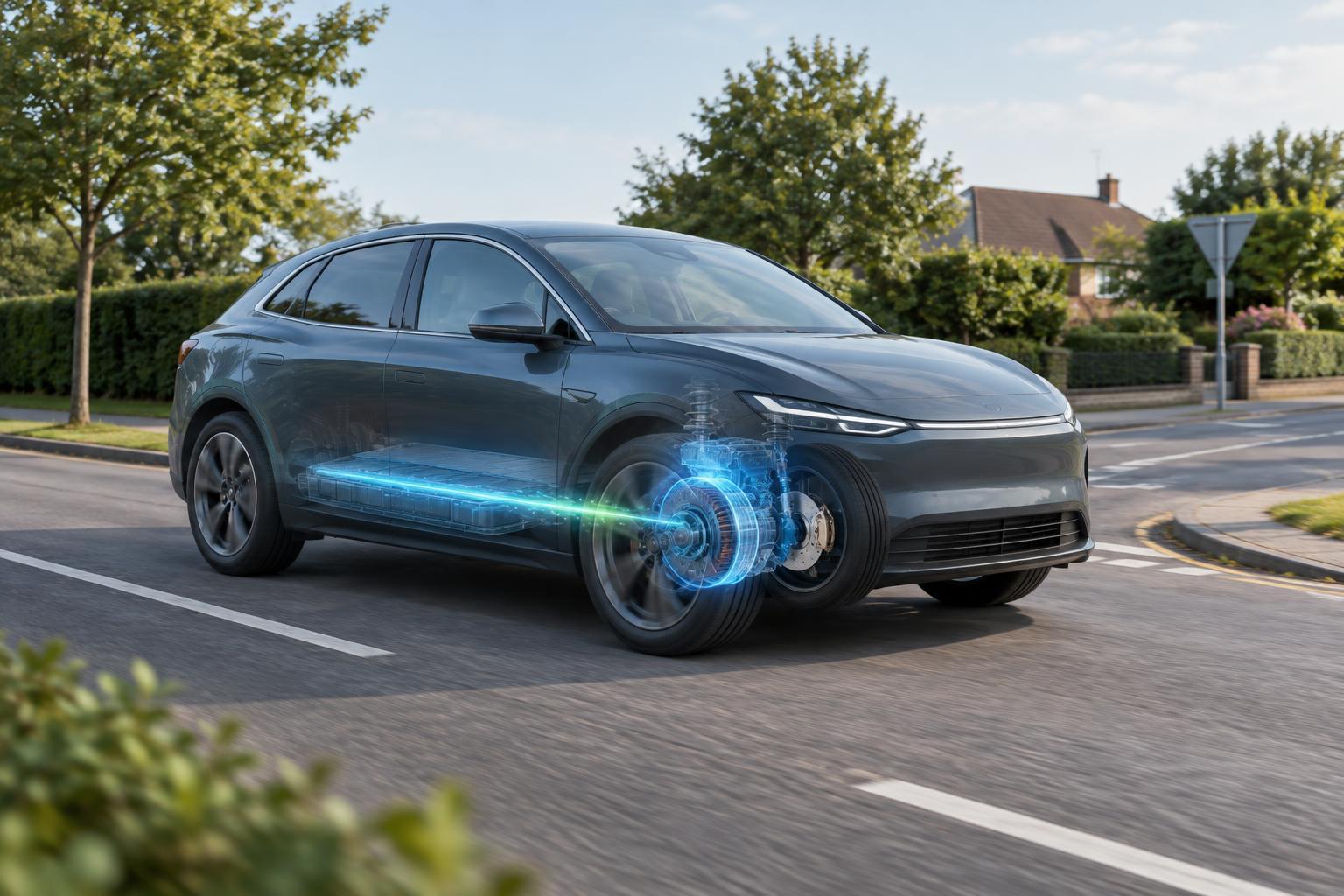
The process reverses part of what happens during acceleration. When powered by the battery, the motor drives the wheels. During regeneration, the turning wheels drive the motor, which acts as a generator. That change creates resistance at the wheels and sends electrical energy toward the battery. Regeneration is common in electric and hybrid cars, although the amount of braking it provides and the way it feels vary by vehicle.
What regeneration can recover
Regenerative braking is most useful when a vehicle has energy to shed: approaching a junction, slowing for traffic or descending a hill. In stop-and-go driving, repeated slowdowns create repeated opportunities to recover energy. That electricity may later help the vehicle accelerate or power other electrical systems, reducing the energy it needs from fuel or an external charge.
A useful way to picture it is as a partial refund, not a full recharge. Some energy has already been lost to air resistance, rolling resistance and the vehicle’s electrical and mechanical components before braking begins. More is lost while the motor generates electricity, the power electronics manage it and the battery stores it. When the battery supplies that energy again, there are further losses. Regeneration can improve efficiency, but it cannot return all the energy used to get up to speed.
Why recovery changes from one slowdown to the next
The battery must be able to accept the electricity being generated. If it is nearly full, the vehicle may limit regeneration, particularly on a long descent. A cold battery may also accept charge less readily until conditions change. Drivers might then notice less slowing when they lift off the accelerator, depending on how the vehicle manages its brakes.
Speed and grip matter too. Regeneration depends on the motor and wheels turning, so its ability to bring a vehicle to a complete stop differs across designs; some vehicles use friction brakes for the final part of a stop. On a slippery surface, the vehicle may reduce regenerative braking to help maintain control. And when a driver needs to stop quickly, regeneration alone may not provide enough braking force.
Not every moving vehicle has the same opportunity to recover energy. Electric cars, hybrids, buses and some electric two-wheelers can use regeneration if their drivetrains and batteries support it. The benefit depends on the design and the trip. A long, steady journey with few slowdowns generally offers fewer chances to recover braking energy than a route with frequent changes of speed.
Why conventional brakes remain essential
Most regenerative vehicles also have friction brakes. Depending on the design, the vehicle may combine motor braking with friction braking during a single press of the brake pedal. This is often called blended braking. The driver asks the vehicle to slow down; the control system decides how much of that work regeneration can do under the conditions.
Friction brakes cover situations regeneration cannot handle on its own, including hard stops, limited battery charge acceptance and low-speed braking. They also provide a way to hold the vehicle still. Because regenerative braking may reduce how often friction brakes are used, owners should still follow their vehicle’s maintenance guidance: components that see less routine use do not become maintenance-free.
How to make sense of it as a driver
Some vehicles begin regenerating as soon as the driver lifts off the accelerator; others let drivers choose a stronger or weaker response. Strong lift-off braking is sometimes part of a “one-pedal” driving mode. These settings change how the vehicle responds, but they do not remove the need to stay ready to use the brake pedal. The owner’s manual is the best guide to a particular vehicle’s controls and behavior.
For everyday efficiency, smooth, anticipatory driving is more useful than repeatedly accelerating and braking to collect energy. If you can avoid an unnecessary slowdown safely, you avoid losses that regeneration could only partly recover. Think of regenerative braking as a valuable way to waste less energy when slowing is necessary—not as a way to create extra energy or make braking limits disappear.