Start with a clear route
A robot vacuum can take care of routine floor cleaning, but it cannot put away the things in its path. Before its first run, walk through each room at floor level. Pick up charging cables, socks, small toys and lightweight mats that might bunch up under the machine. Move fragile objects away from furniture edges where the robot could nudge them. This quick preparation is often more useful than changing a setting in an app.
Look for narrow gaps beside chairs and under furniture. A robot may fit beneath a sofa but struggle to turn around once it gets there. If a space repeatedly traps it, block the entrance or use a no-go zone if your model supports one. Door thresholds and thick rugs can also interrupt a route; whether the vacuum crosses them depends on its design and the height and shape of the obstacle. Test troublesome spots during an early run rather than assuming every room is reachable.
Give the dock a dependable home
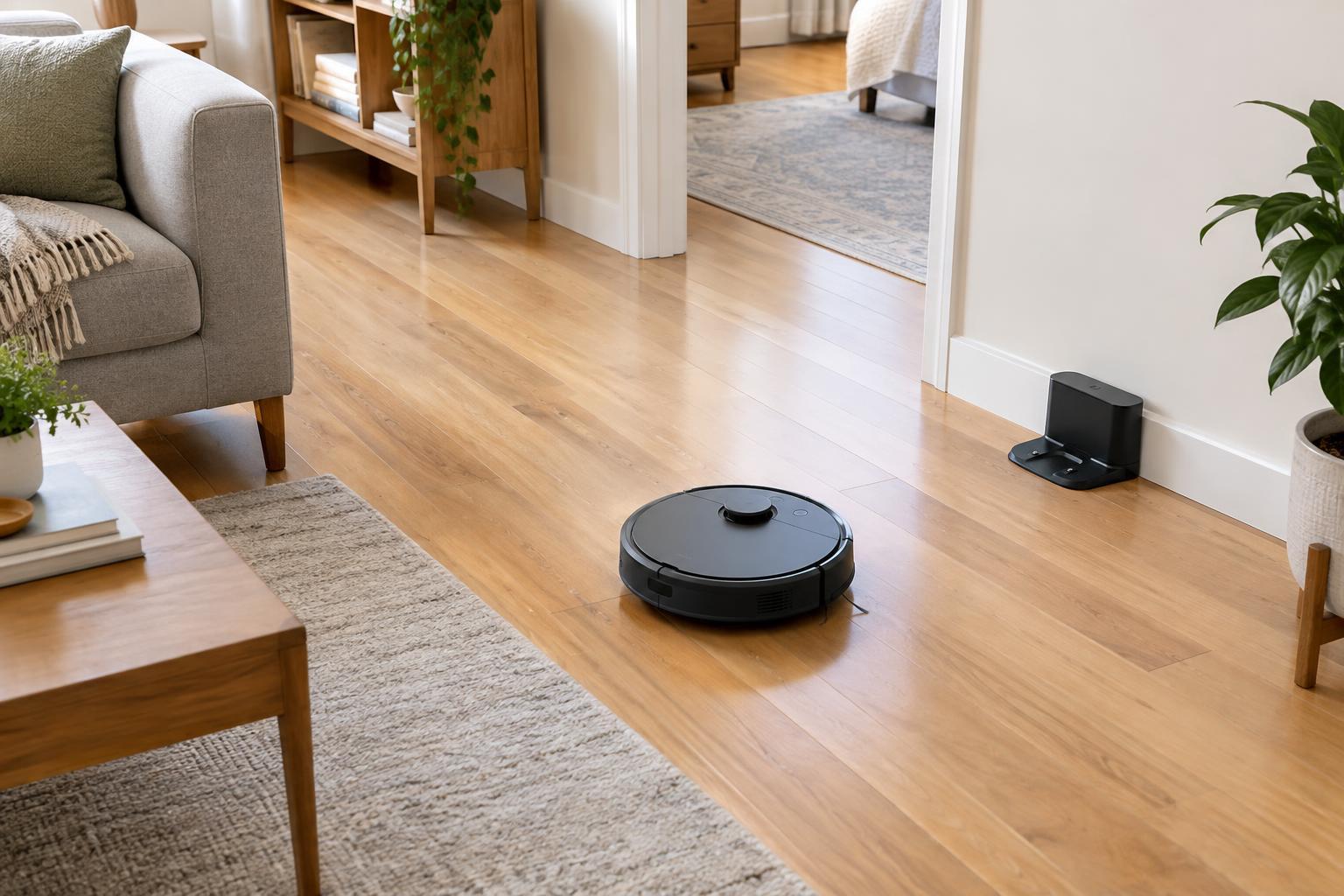
Place the charging dock on a level surface against a wall, with an open approach in front of it. Follow the manufacturer’s clearance guidance for the sides and front; some robots need more room than others to return reliably. Avoid hiding the dock behind a door or placing it where furniture is frequently moved. If the dock uses power, keep its cable tucked away so the vacuum cannot pull it into the cleaning path.
A central location is not essential, but a consistent one helps. Moving the dock after the robot has mapped the home may confuse its return route or require a new map, depending on the model. On the first few runs, check that the robot can leave the dock, reach the intended rooms and return without help. If it repeatedly stops near the dock, clear the approach before trying to adjust its software settings.
Map rooms, then set sensible boundaries
Many robot vacuums use sensors to navigate, while some models also create room maps in an app. If yours maps the home, make its first mapping or cleaning run when doors to the intended rooms are open and the layout is fairly typical. Check the resulting map before setting room names or schedules. A chair temporarily blocking a doorway can make a room appear inaccessible, while a closed door can leave it out of the map entirely.
Use no-go zones for places that regularly cause trouble, such as a cluster of computer cables or a rug with loose fringe. If the robot also mops, set any available no-mop zones around carpets that should stay dry. Virtual boundaries are useful, but they are not a substitute for checking a hazard: an app update, map change or positioning error may affect where the robot thinks it is. Review boundaries after moving large furniture.
Choose a cleaning routine the home can support
Regular short runs can be easier for a robot to complete than an occasional run through a heavily cluttered home. Schedule cleaning for times when floors are usually clear and people are less likely to move chairs or leave bags in its way. If someone works from home, consider room-by-room cleaning instead of sending the robot through the entire home at once. Keep doors open to scheduled rooms and check that the machine has enough charge for the task.
Pets call for extra planning. Pick up small pet toys and check for accidents before starting a run; a vacuum cannot reliably distinguish every mess it encounters. If a pet is uneasy around the machine, begin with supervised runs rather than scheduling it to start unexpectedly. For a vacuum-mop combination, use the cleaning solution and water-handling instructions specified for that model, and remove damp pads when the manufacturer recommends it.
Maintain the machine and keep expectations realistic
Reliable cleaning depends on routine maintenance. Empty the dustbin or check the collection bag, remove hair wound around brushes and wheels, and clean filters and sensors as directed in the manual. Inspect the brush area if the robot becomes louder, leaves debris behind or stops more often than usual. Small obstructions can affect performance even when the machine still appears to run normally.
A robot vacuum is best treated as a helper for accessible floor areas, not a replacement for every cleaning task. It may miss tight corners, stairs and spaces behind closed doors, and it cannot move heavy furniture. After a few runs, note where debris remains and adjust the layout or schedule if that helps. Use a conventional vacuum or other cleaning tools for places the robot cannot reach. The goal is not a perfect map or a spotless floor after every trip, but a repeatable setup that lets the robot do useful work with less intervention.