A camera gives a robot an image, not an understanding
A robot that uses a camera begins with a collection of pixels. Software must turn those pixels into useful information: where a doorway is, whether an object is within reach, or which parts of the floor are clear. That task becomes harder when an object blends into its background, falls into shadow or is partly hidden. Even a capable vision system depends on what its camera can actually capture.
Consider a robot approaching a chair. From one angle, its legs may be easy to distinguish from the floor. From another, a leg may disappear behind a table, while the chair’s shadow looks like a separate object. The robot may use other sensors or past observations to help interpret the scene, but neither can guarantee a clear view. Lighting and camera placement shape the information available before any recognition software gets to work.
Lighting changes the evidence
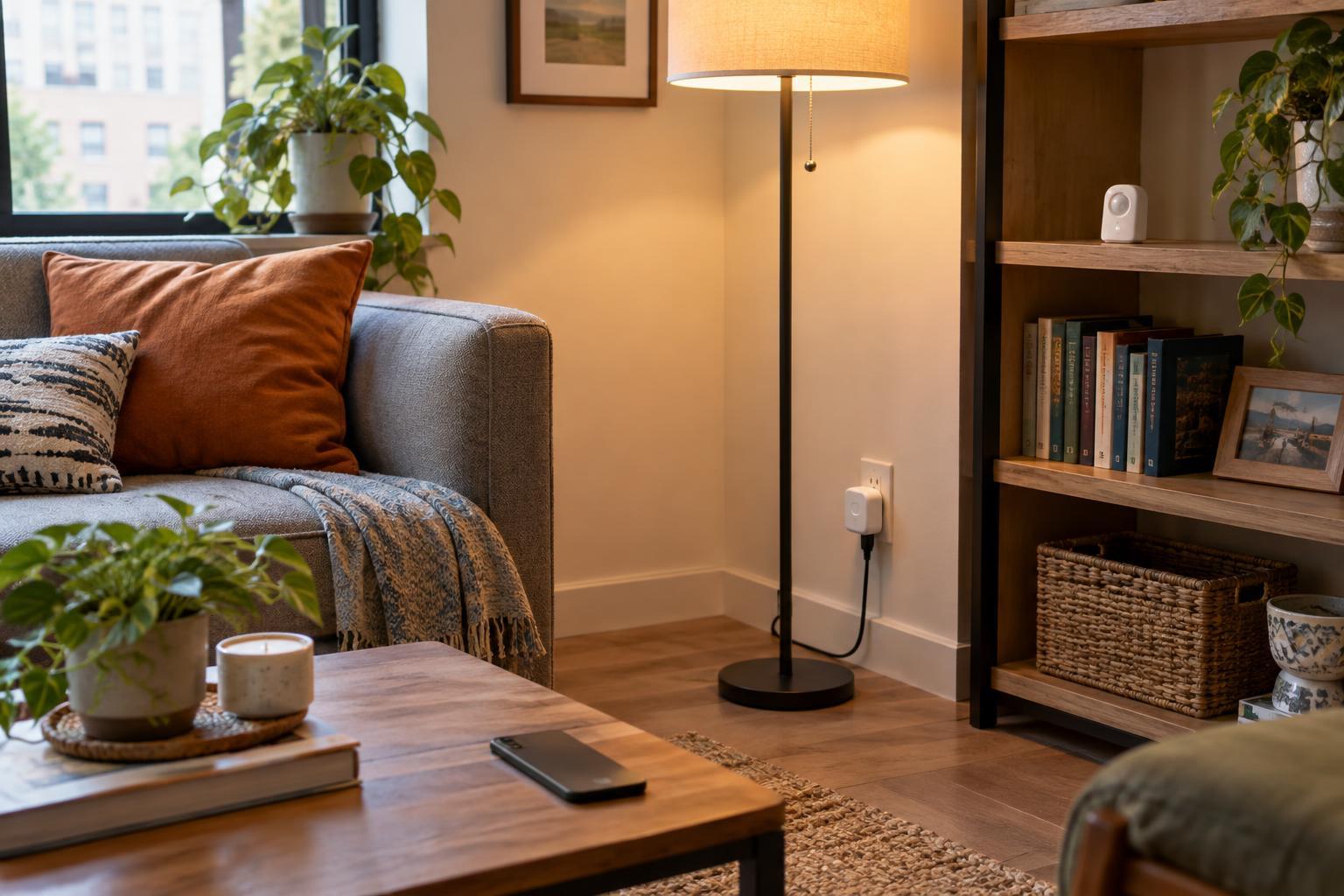
Good lighting is not simply a matter of making a space brighter. A camera needs enough light to capture useful detail without losing it in glare or harsh contrasts. A shiny floor may reflect a window or lamp; a dark object against a dark shelf may have little visible outline. Strong light from behind an object can leave the side facing the camera in shadow. In each case, the object is present, but some of the visual clues the robot needs are missing.
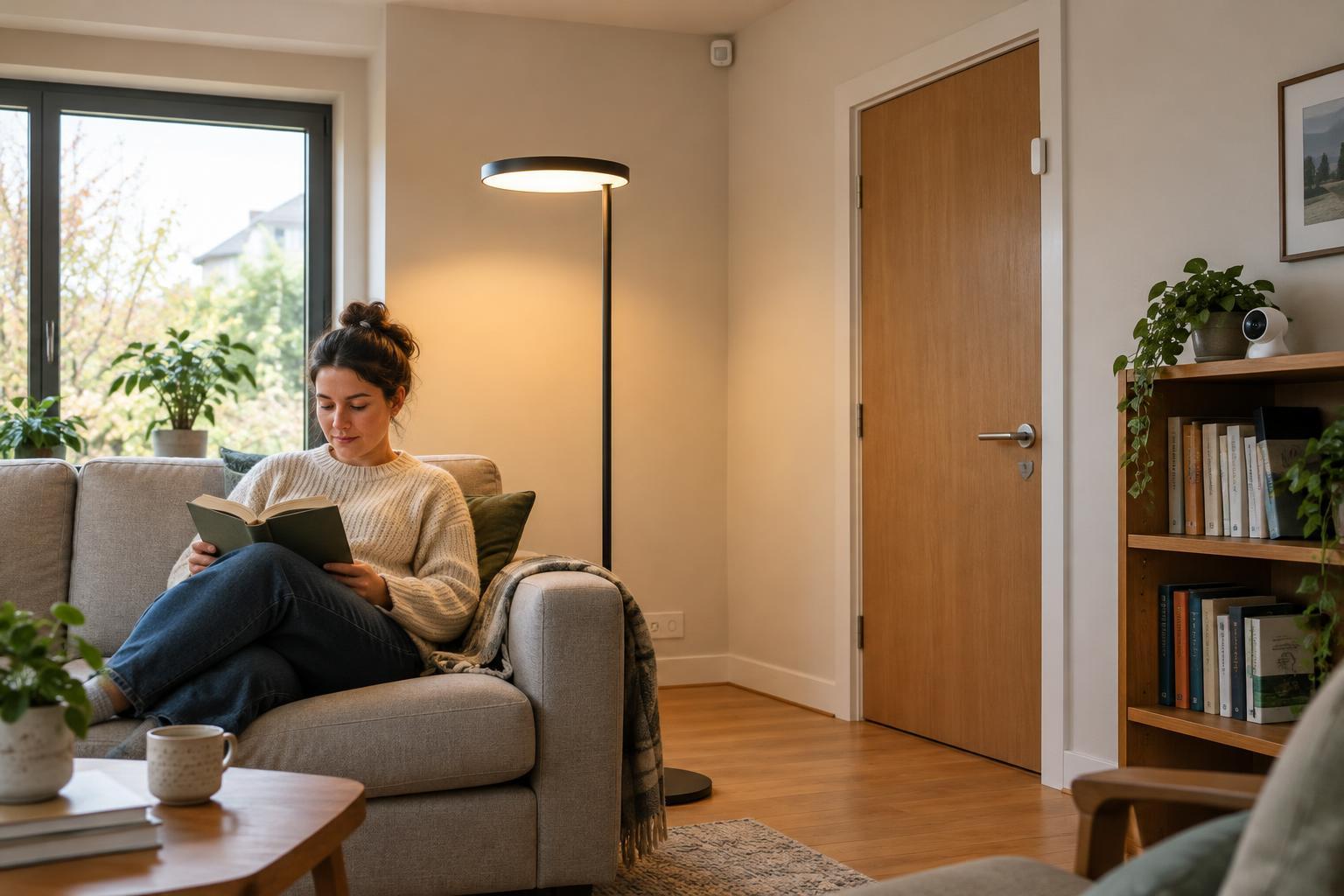
Consistency also matters. A robot that travels between a sunlit hallway and a dim room must cope with changing exposure and color. Camera settings and image-processing software can adjust, but abrupt changes can still make a scene difficult to interpret. In a workspace designed for a repeated task, diffuse, steady lighting can make an object’s edges and position easier to detect. That does not eliminate errors; it gives the vision system a more reliable starting point.
Placement determines what the robot can see
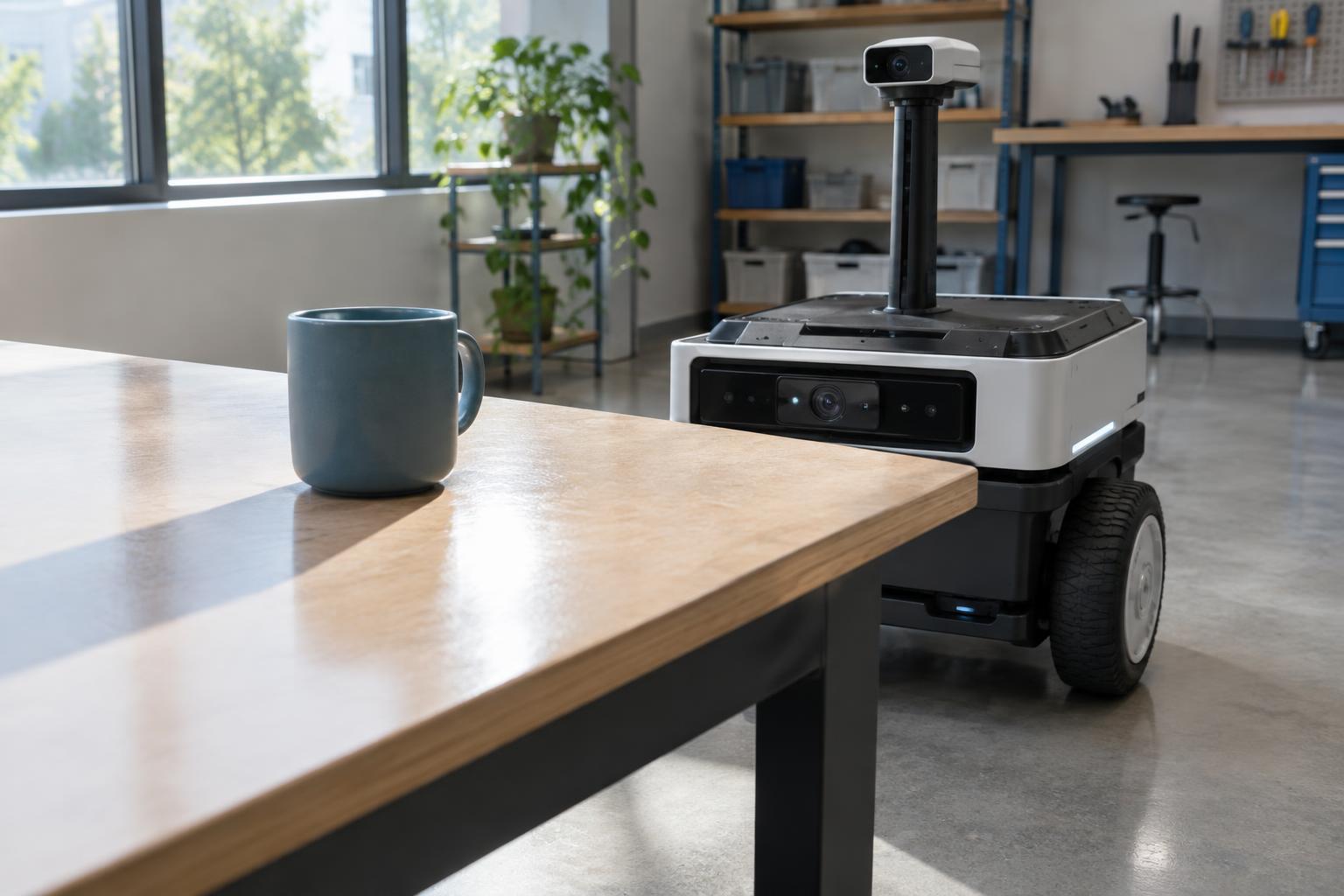
A camera mounted high on a mobile robot may offer a broad view of a room, helping it spot furniture and openings ahead. That same position might miss a low obstacle close to the robot’s wheels. A low-mounted camera can reveal details near the floor but may have its view blocked by a chair or a person’s legs. The useful position depends on the job, not on a single ideal height.
Angle and distance matter too. A camera looking straight down at a work surface may show where items lie but struggle to reveal their height or the shape of their sides. A camera on a robot arm can move closer for a detailed view, though the arm itself may sometimes block the image. Designers may combine viewpoints or add a depth sensor when the task calls for more spatial information. Each addition has practical costs, including space, power use and the need to coordinate the resulting data.
Navigation and handling need different views
For navigation, a robot needs to notice obstacles early enough to respond and to keep track of its surroundings as it moves. A forward-facing camera can help with that broad task, but corners, glass surfaces and objects entering from the side remain challenging. A wider field of view covers more space while often showing less detail about any one small object. The design is a trade-off between seeing broadly and seeing precisely.
For picking up an item, the priorities change. The robot needs a clear view of the object and the place where a gripper might make contact. A cup handle facing away from the camera may be hard to locate, even when the cup itself is obvious. Moving the camera, rotating the object or taking another look from a new position may help. This is why some robots do not just process images passively: they move to gather a more useful view.
Design the scene as well as the robot
Many vision improvements come from straightforward choices about the environment. Keeping a camera lens clean, reducing direct glare, leaving important objects unobstructed and providing contrast between an item and its background can all make a task easier. In a controlled setting, designers can test a robot at different times of day and from the positions it will actually use. A system that works from one carefully chosen viewpoint may behave differently when the lighting or layout changes.
Cameras, depth sensing and image-recognition software are established tools in robotics, but their performance depends on the task and conditions. A future household robot might adapt to varied rooms with little preparation; that is a more demanding scenario than handling objects in a consistent workspace. The basic lesson applies to both: before asking whether a robot can recognize something, ask whether it has a clear, useful view of it.