Control is a spectrum, not a switch
A teleoperated robot is controlled by a person at a distance. The operator might steer it with a controller, watch its camera feed and decide how to move an arm. An autonomous robot makes at least some decisions itself, such as choosing a route around an obstacle. These descriptions are useful, but they do not divide robots into two neat groups. A remotely driven machine may automatically keep its balance, while a robot that navigates independently may stop and ask a person what to do next.
The more revealing question is which decisions belong to the machine and which belong to a person. Consider a robot inspecting a building. An operator may select the rooms to visit, the robot may plan a path between them, and a person may review the images afterward. Calling that robot autonomous describes part of its work, not the entire job. It is worth asking who sets the task, who handles surprises and who can stop the machine.
What a teleoperator does
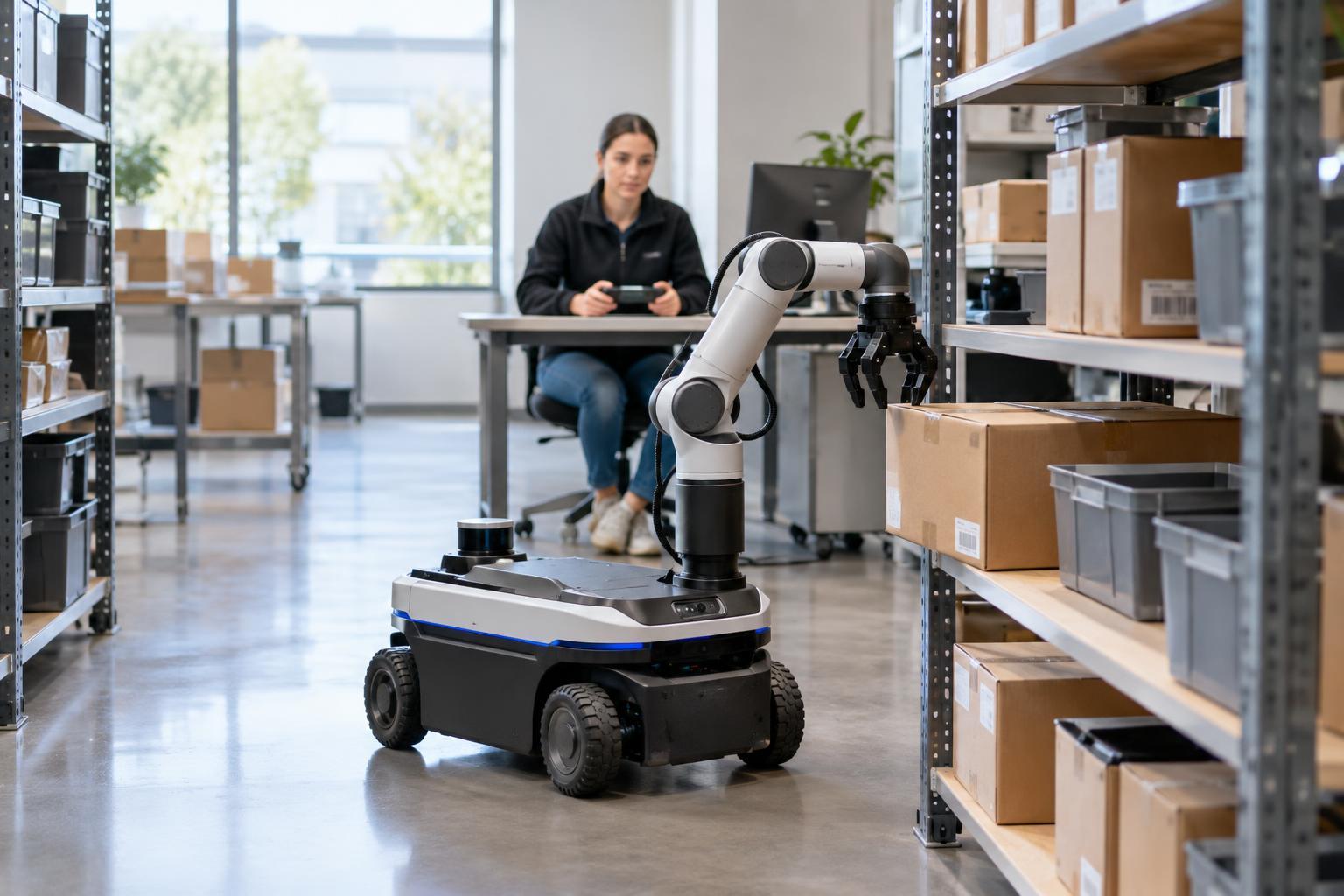
Teleoperation is valuable when a task calls for human judgment or dexterity in a place a person would rather not enter. A remote operator can inspect an awkward space, guide a camera toward something unusual or carefully position a gripper. The robot extends the operator’s reach; it does not replace the operator’s decisions. Onboard software can still help by smoothing motion, limiting speed or preventing an obvious collision.
Working through a robot is different from standing beside the task. Camera views can hide depth or objects outside the frame, and a connection may introduce delay or drop out. The operator may need to move slowly, request another view or pause until communication returns. Good teleoperation therefore depends on more than a joystick: it also needs clear feedback, controls that fit the task and a plan for what the robot should do if contact is lost.
What an autonomous robot still needs from people
An autonomous robot usually works within a defined task and environment. A floor-cleaning robot, for example, can cover accessible areas and navigate around many obstacles without someone steering every turn. A warehouse robot may travel between designated points while following site rules. Neither example implies that the robot understands every object it encounters or can decide for itself what work matters most.
People still prepare the workspace, specify goals and set boundaries. They may mark areas a robot must avoid, choose when it may operate, replenish supplies or clear a blocked route. They also maintain equipment and review results: did the cleaning robot miss a room, or did an inspection robot capture an image that is useful? Automation can remove repetitive steering while leaving planning, upkeep and evaluation with humans.
The handoff when something unexpected happens
Many robots combine routine autonomy with human assistance for exceptions. A robot may follow its planned route until it finds an unfamiliar obstacle. It can stop, alert an operator and provide camera images. The operator might direct it around the obstruction, change its destination or decide that the task should wait. This is supervised autonomy: the person does not drive every metre but remains available when the machine reaches a limit.
That handoff needs careful design. An alert should make clear what the robot detected, what it has already done and what options remain. If a person is monitoring several robots, an urgent request should not be buried among minor notifications. The robot also needs a predictable fallback if nobody responds. Depending on the setting, stopping safely may be better than continuing with an uncertain plan. The appropriate response depends on the task and the risks nearby.
How to judge a claim of autonomy
When a robot is described as autonomous, ask what it can do without intervention and under which conditions. Can it complete a route only after a person maps the space? Does it need remote help when an entrance is blocked? Can someone interrupt it promptly? These questions are more informative than a single label because capability in one controlled setting does not guarantee the same performance elsewhere.
Operators are likely to remain important even as robots handle more movement and manipulation on their own. Their work may shift from continuous control toward setting tasks, monitoring progress, resolving exceptions and checking outcomes. A useful robot is not necessarily one that eliminates human involvement. It is one whose division of work with people is clear, practical and suited to the environment where it operates.