What does it mean to store heat or cold?
A battery stores electrical energy for later use. Thermal energy storage takes a different route: it stores heat or creates a supply of cold that a building can draw on later. A familiar example is a hot-water tank. Water is heated first, then kept insulated until someone needs it. Larger systems apply the same basic idea to space heating or air conditioning.
Storing “cold” does not mean putting a substance called cold into a container. It means removing heat from a material, such as water, so the material can absorb heat later. A building might chill water when cooling equipment has spare capacity, then circulate that water to help cool rooms at another time.
The key distinction is between when energy is used to prepare the store and when the building receives the heating or cooling. Shifting those moments can be useful even if the total amount of energy consumed stays similar.
Three ways buildings can hold thermal energy
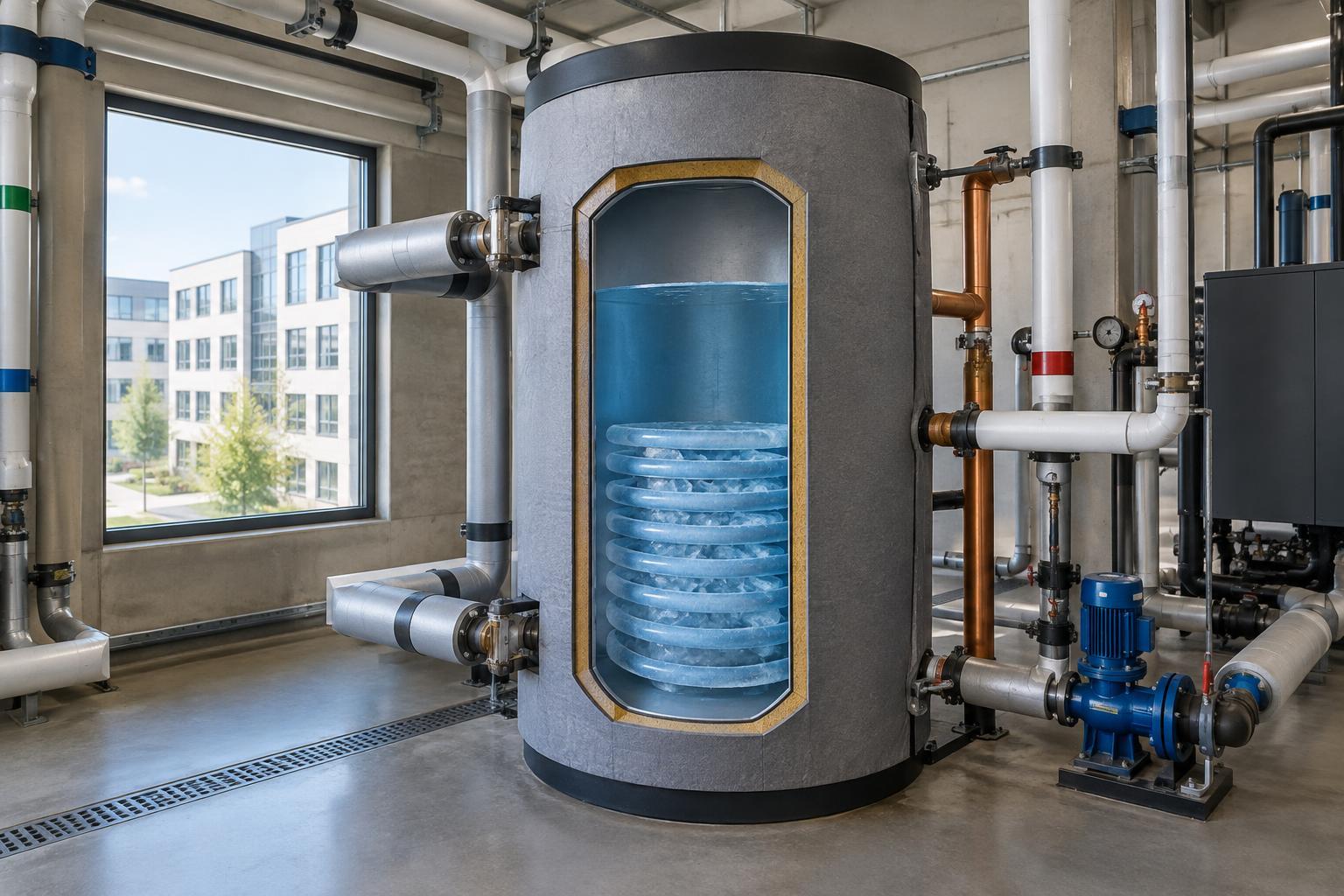
Water is a common storage material because it can hold a substantial amount of heat and move through pipes. A well-insulated tank can supply hot water or contribute to a heating system after the heater has stopped running. Chilled-water tanks work in the opposite direction: water is cooled in advance and later absorbs heat from the building.
Ice storage is another option for cooling. Equipment freezes water, often during a planned charging period. As the ice melts, it absorbs heat and helps cool the building. Ice can store useful cooling in a relatively compact space, but making it requires equipment that can operate at freezing temperatures. Whether that trade-off is worthwhile depends on the system and how it is used.
Some designs use phase-change materials, which absorb or release heat as they change between solid and liquid. These materials can be placed in dedicated storage units or incorporated into building components. Their usefulness depends on matching the temperature at which they change phase to the building’s needs. Ordinary walls and floors also store some heat, although they are less precisely controlled than a purpose-built tank.
Why shift heating or cooling to another time?
Heating and cooling demand varies throughout the day. In a building with suitable equipment, storage can reduce how hard the heater or chiller must work during a busy period. For example, a cooling system could chill water ahead of a hot afternoon and use some of that stored cooling when occupants need it most. Storage may also help a building make use of electricity at a time when its price is lower, if its tariff makes that possible.
Shifting demand is not the same as reducing energy use. Tanks lose heat or gain unwanted heat despite insulation, pumps use electricity, and charging ice storage can require more work from a chiller than producing chilled water at a warmer temperature. On the other hand, operating equipment under favorable conditions may improve its efficiency in some systems. The outcome depends on the equipment, controls, weather, and operating schedule.
Nor does shifting automatically reduce emissions. That depends in part on how electricity is generated at the times the system charges and discharges. A building needs a clear goal—such as limiting peak demand, lowering operating costs, or providing flexibility—before deciding whether storage is a good fit.
What makes a system practical?
The first question is how much heating or cooling the building needs and for how long. Storage must be sized for both capacity and delivery rate. A tank might hold enough energy overall yet be unable to deliver it quickly enough during a short, intense cooling period. Space for the tank, insulation, piping, and controls matters too.
Controls determine when to charge the store and when to draw from it. A simple schedule can work for predictable routines, but a building with changing occupancy or weather may need more responsive control. Charging too early can increase losses; charging too late may leave too little stored energy. Existing heating and cooling equipment must also be compatible with the temperatures the storage system can provide.
For a home, a well-managed hot-water tank may be the most recognizable example. Larger cooling-storage systems are more likely to be considered where cooling demand is substantial and there is room for dedicated equipment. In either case, comfort remains the priority: shifting energy use should not leave occupants without the heating, cooling, or hot water they expect.
Storage is a timing tool, not an energy source
Thermal storage cannot generate heat or cooling by itself. It needs a heater, heat pump, chiller, or another source to charge it, and some stored energy will be lost before use. Its value lies in separating the time that equipment runs from the time a building needs the result.
That makes thermal storage one possible tool in a flexible building, alongside insulation, efficient equipment, and sensible controls. The useful question is not simply “How much can this tank hold?” but “What demand can it meet, when, and with what losses?” Answering that question helps distinguish a practical storage project from an appealing idea that does little for a particular building.