Why the range estimate changes
An electric vehicle’s range is the distance it can travel using the energy available in its battery. An official range rating offers a useful way to compare vehicles, but it cannot predict every trip. The number on the dashboard is also an estimate: the car may adjust it based on recent driving, battery charge and other conditions. Two drivers can leave with the same charge level and travel different distances.
It helps to separate battery energy from energy use. A larger usable battery can generally support a longer trip, but the vehicle’s efficiency determines how quickly that energy is spent. A compact EV and a larger, heavier EV may therefore behave differently even when their dashboards show similar remaining range. Treat the display as a planning aid rather than a guarantee, especially when a trip will use most of the available charge.
Speed, acceleration and the road ahead
Highway speed is one of the clearest reasons real-world range may fall short of expectations. As a car moves faster, it must push more air out of the way. Sustained high-speed driving can use considerably more energy than a slower route of similar length. Rapid acceleration also draws more power, although the effect depends on how often the driver speeds up and slows down.
Hills and traffic complicate the picture. Climbing uses energy to lift the vehicle; descending can recover some of it through regenerative braking, but not all of it. In stop-and-go traffic, an EV can recapture some energy while slowing, so congestion does not affect it in quite the same way as steady high-speed travel. Carrying extra passengers or cargo adds weight, while a roof box or bike rack can increase air resistance. For a long trip, the route and what is attached to the car can matter as much as the distance shown on a map.
Weather and cabin comfort
Cold weather can reduce the range available on a trip for several reasons. A cold battery may operate less efficiently until it warms, and heating the cabin takes energy. Defrosting windows and keeping passengers comfortable are worthwhile uses of power, but they leave less for driving. Hot weather can have an effect too, because air conditioning and battery cooling consume energy.
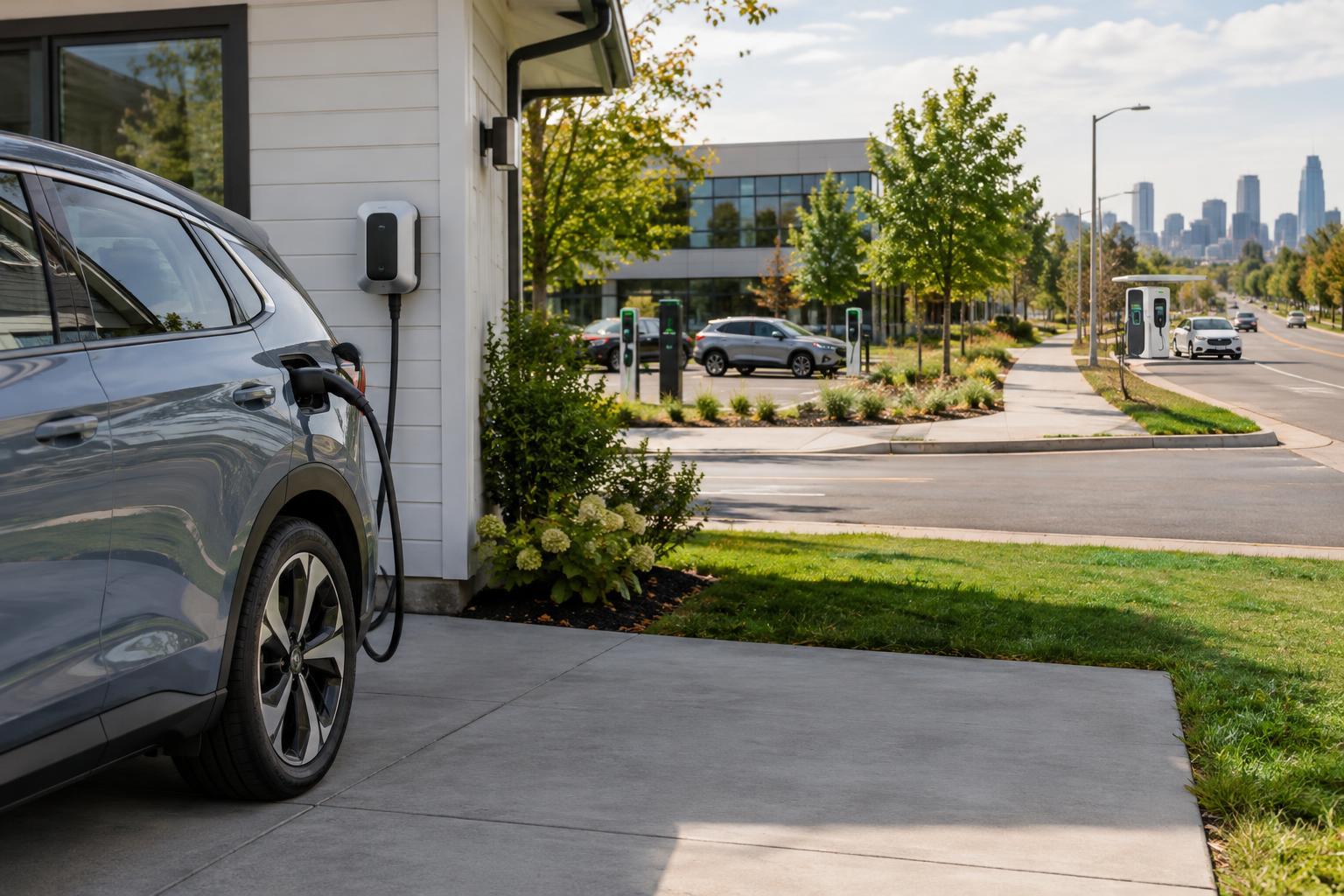
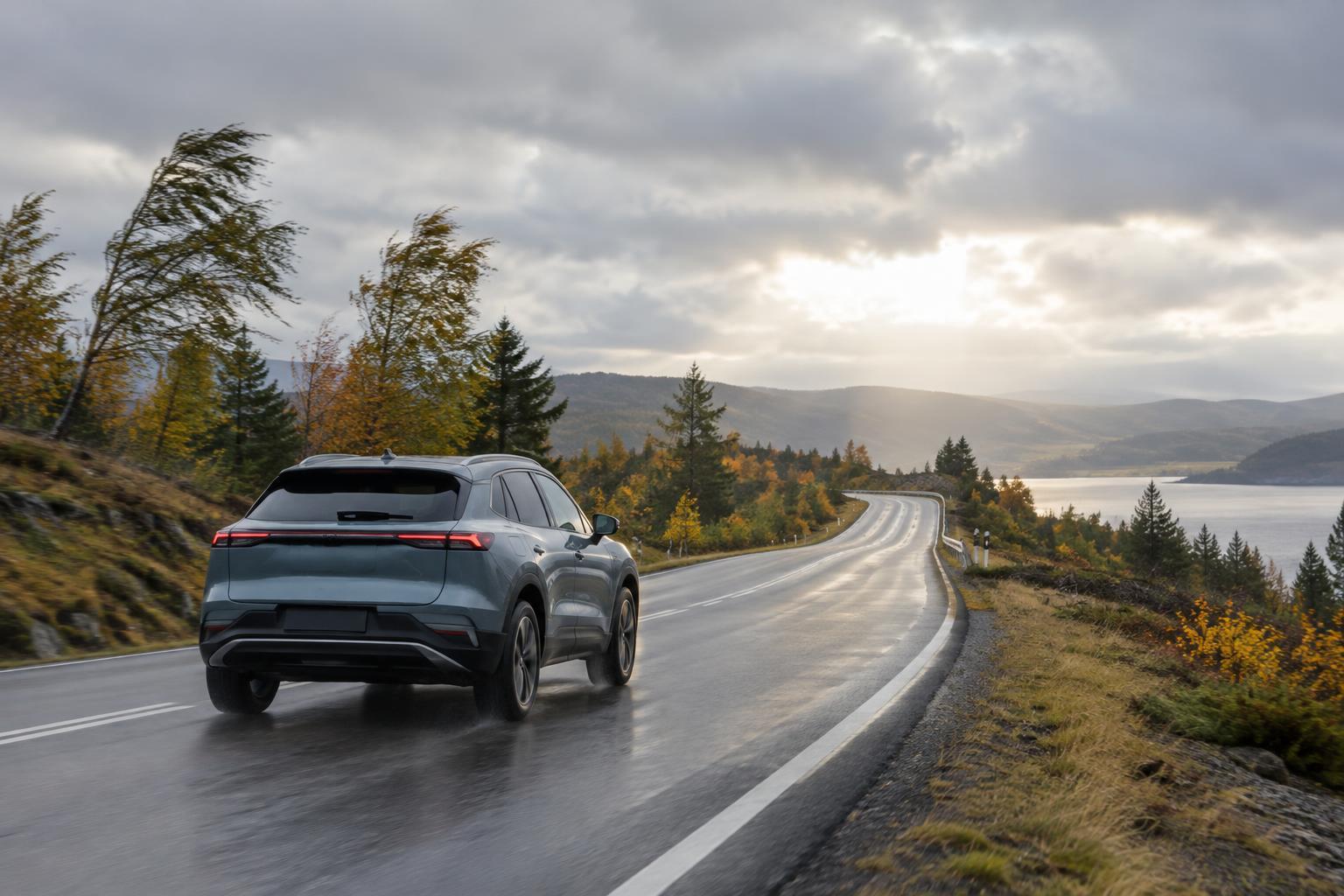
Conditions outside the car also matter. A strong headwind increases the work needed to maintain speed; wet or snowy roads can increase rolling resistance. These effects are variable, so a single weather rule will not fit every journey. Some EVs can warm the cabin or battery while still plugged in. When that feature is available, using it before departure may preserve more of the battery’s charge for driving. Comfort and visibility should still come first: saving energy is not a reason to avoid essential heating or defogging.
Tires, maintenance and battery condition
Tires influence how easily a vehicle rolls. Underinflated tires can increase energy use and wear, so checking pressures against the vehicle’s guidance is a simple maintenance habit. Tire type and wheel size can also affect efficiency, though their impact varies by vehicle and driving conditions. Keeping up with routine checks, including alignment when needed, helps the car perform as intended.
Battery capacity can gradually decline with age and use, which may reduce the range available from a full charge over time. That is different from a temporary drop caused by a cold day or a fast highway trip. If range seems unexpectedly low, compare similar journeys and conditions before assuming the battery has changed. The car’s energy-use display, where provided, can help show whether recent driving has required more energy than usual.
Plan for the trip, not just the rating
The most useful range estimate is one that reflects the journey ahead. Before setting out, consider motorway speeds, elevation changes, weather, passengers, cargo and whether you will need heating or cooling. On an unfamiliar or demanding route, leave a comfortable charge margin rather than planning to arrive with almost nothing remaining. If the vehicle has route planning that includes charging stops, use it as a guide and check its assumptions as conditions change.
Drivers can often extend range by maintaining a steady, appropriate speed, anticipating slowdowns and removing unused external carriers. Regenerative braking helps recover energy, but it cannot make repeated acceleration free. The goal is not to drive uncomfortably or treat every trip as an efficiency test. Understanding why range changes makes the dashboard estimate more useful—and makes ordinary EV journeys easier to plan.