A small space with many jobs
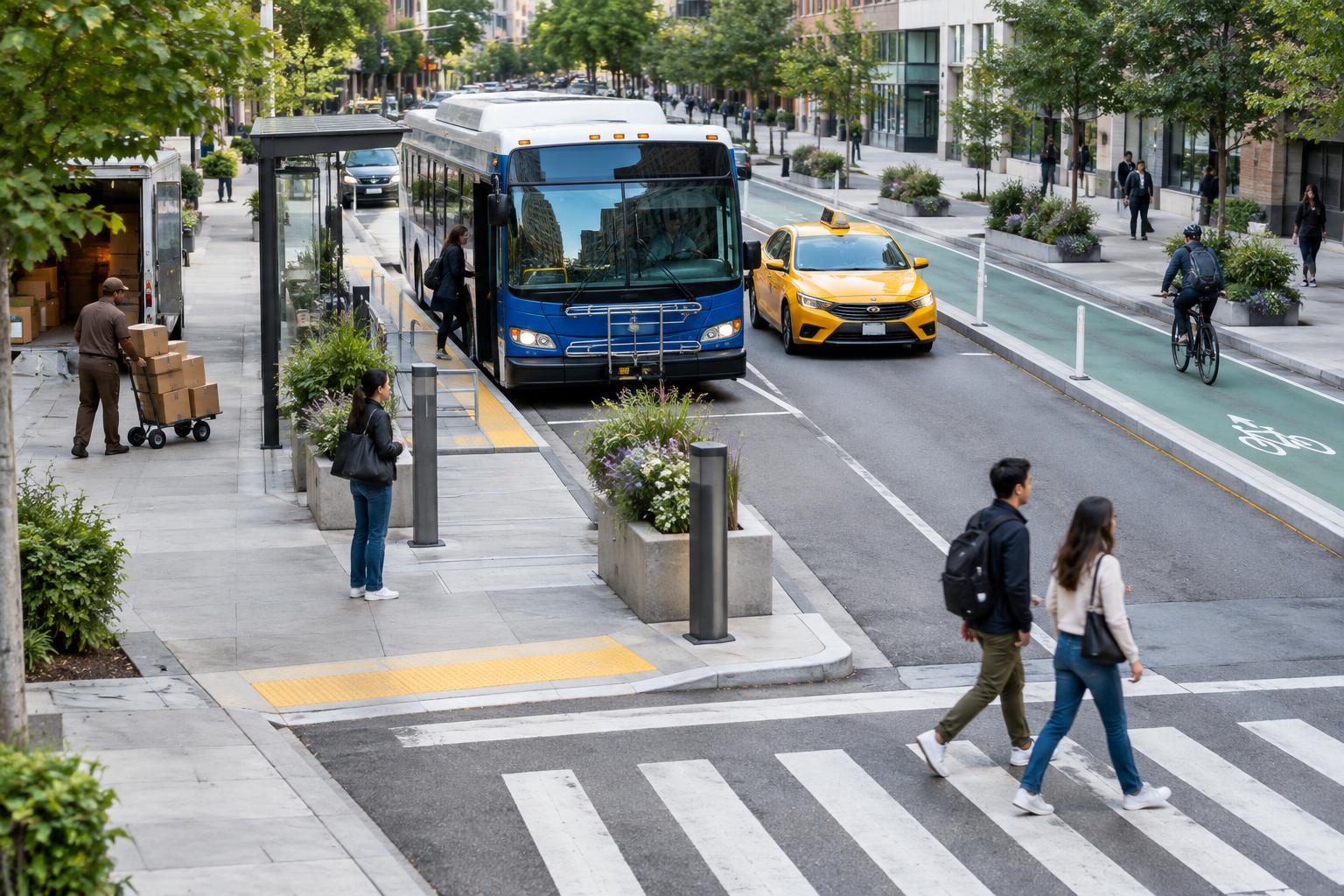
Picture a busy street outside a train station. A bus needs to pull in close enough for passengers to board. A delivery driver needs a place to unload. A taxi passenger is looking for a safe pickup point, while a cyclist is travelling past. Each trip may work well until it reaches the curb. If that space is blocked or confusing, people end up waiting, crossing between vehicles or making an extra loop around the block.
Curb space is limited because the same stretch of street serves several purposes. It may be used for parking, loading, bus stops, bicycle access, outdoor seating or a clear path for emergency vehicles. Adding more kinds of transport does not automatically create more room. A city can introduce electric buses or app-based rides, but passengers still need somewhere practical to get on and off.
This makes the curb a useful way to think about future mobility. Instead of asking only whether a vehicle is faster or cleaner, it helps to ask how it fits into the street at the start and end of a trip.
Start with the trip, not the vehicle
Different curb users have different needs. A bus stop must be easy to find and offer enough space for boarding, including for people using mobility aids. A freight vehicle may need room to open its doors and move goods without blocking a sidewalk. A short passenger pickup needs a clear location, but usually not a space reserved all day. These needs can conflict even when every driver follows the rules.
One practical approach is to map what happens on a block throughout the day. A street near shops may need loading space in the morning and more passenger pickup space in the evening. Near a school, safe walking routes and predictable drop-off behavior may matter most at particular times. Observing when vehicles stop, how long they stay and where people walk can reveal problems that a street plan alone might miss.
The goal is not to give every service its own permanent zone. It is to decide which uses must be kept separate for safety and which can share space under clear conditions. Good signs and road markings matter here: a rule that people cannot understand at a glance is less useful on a busy street.
Changes cities can make now
Many curb improvements rely on established street-design tools. A designated loading bay can reduce double-parking if it is close enough to the businesses it serves. A pickup area a short walk from a crowded entrance can keep stopping vehicles away from a bus stop. A protected bicycle lane needs particular care at crossings and loading points, where turning or stopped vehicles may otherwise interrupt it.
Access should be part of the design from the beginning. Moving a pickup point farther from a doorway may ease traffic but make a trip harder for someone who cannot walk that distance. Clear paths, suitable boarding space and places to wait can matter as much as vehicle availability. Testing a layout with the people who use it can uncover difficulties that are easy to overlook on a map.
There are trade-offs. Converting parking to loading space may help deliveries but inconvenience residents who park on the street. Moving ride pickups around a corner may reduce congestion at an entrance but create a new crowd at the corner. A useful change is one that considers where the activity will go, not just what it removes from one spot.
Where digital tools might help
Digital maps can already tell drivers where a designated pickup point is, and booking systems can direct passengers toward it. In principle, better information about curb rules could reduce the time spent searching for a legal place to stop. That benefit depends on the rules being accurate, easy to interpret and consistent with signs on the street. An app cannot fix a loading bay that is too small or a crossing that feels unsafe.
A more experimental idea is flexible curb allocation: a space could be assigned to deliveries at one time and passenger pickups at another, with digital information showing the current use. Such systems may suit some busy locations, but they raise practical questions. What happens when a driver has no app, a sign is unclear or a delivery takes longer than expected? Physical signs, enforcement and simple fallback rules would still be needed.
Future automated shuttles would face the same basic issue. Even if a vehicle could drive without a human at the controls in a suitable area, it would still need a safe place to stop and a passenger who knows where to meet it. That is a planning challenge, not just a driving challenge.
A simple test for better curb design
When judging a proposed transport change, follow one ordinary trip from sidewalk to vehicle and back again. Can the person find the correct stopping place? Is there a clear route that does not force them into traffic? Can a bus, delivery vehicle or cyclist pass without an awkward maneuver? Think through the same questions for someone carrying bags, travelling with a child or using a mobility aid.
The curb may not look like advanced technology, but it shapes whether new transport options are convenient in daily life. Better coordination of stops, loading and walking space can make existing services work more smoothly. Emerging tools may help manage demand, yet the strongest starting point is a street layout people can understand and use safely.